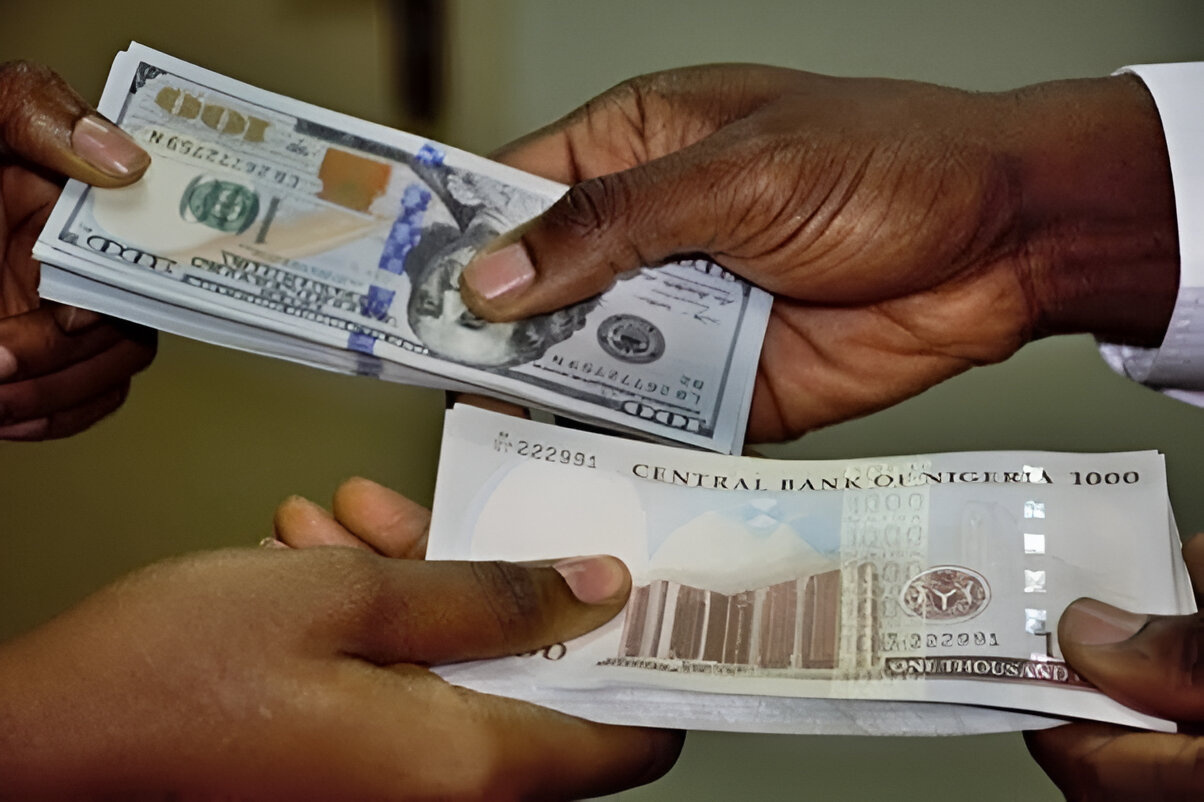
The Nigerian Naira faced a subtle easing against the US Dollar on Monday, reflecting a period of moderate volatility in both official and parallel markets.
Data from the Nigerian Foreign Exchange Market (NFEM) and informal trading channels paint a picture of a currency navigating through a mix of domestic strengths and external headwinds, as investors weigh Nigeria’s robust foreign reserves against rising global uncertainties.
Opening the week at ₦1,384.74 per dollar in the early morning session, the Naira saw incremental fluctuations, climbing to ₦1,391.83 by mid-morning. By 5:30 AM WAT, rates had stabilized around ₦1,391.58, marking a slight improvement from the previous week’s close of ₦1,398.00 on March 6.
This marginal appreciation underscores the currency’s resilience, even as parallel market rates in key cities like Lagos, Kano, and Abuja hovered between ₦1,400 and ₦1,410 per dollar, highlighting a persistent but narrowing gap between official and unofficial channels.
Analysts attribute this stability to a confluence of positive economic indicators. Nigeria’s gross foreign reserves have recently breached the $50 billion threshold, reaching a multi-year high of $50.45 billion, providing a substantial buffer against external shocks. “This reserve level is a testament to prudent fiscal management and steady inflows from oil exports,” noted Dr. Aisha Bello, a senior economist at the Lagos-based Center for Economic Policy Research.
The country’s crude oil production, maintaining levels near 1.46 million barrels per day amid stable global prices, has ensured consistent foreign exchange earnings, bolstering the Naira’s defenses.
Further supporting the currency is a slowdown in headline inflation to 15.10% in January, a significant drop from the elevated rates seen in 2024 and 2025. This has enhanced the real value of the naira, making it more appealing to both local and international investors.
Additionally, Nigeria’s narrowing trade deficit and expanded domestic refining capacity have alleviated pressure on foreign exchange demand, particularly for petroleum imports. “By ramping up local refining, we’re insulating the economy from volatile international oil markets,” Bello added, emphasizing how these developments reduce the need for dollar-denominated imports.
However, the Naira is not immune to broader global dynamics. Renewed pressure from the British pound has emerged, driven by heightened safe-haven demand amid geopolitical tensions in the Middle East and seasonal spikes in international remittances.
In the official NFEM window, the Naira opened at ₦1,846.10 per pound, experiencing moderate swings that pushed it to a high of ₦1,852.28 before settling at ₦1,856.06 by 6:00 AM WAT. The official mean rate trended near ₦1,851.40, while parallel market dealings ranged from ₦1,865 to ₦1,880 per pound.
The Central Bank of Nigeria (CBN) remains committed to its “willing-buyer-willing-seller” framework, which promotes market-driven pricing. A recent 50-basis-point reduction in the Monetary Policy Rate (MPR) to 26.5% has prompted a minor recalibration in currency valuations, aiming to stimulate economic activity without stoking inflation.
Market liquidity continues to be a priority for authorized dealers, with the CBN’s ongoing interventions—such as supplying foreign exchange to Bureau De Change (BDC) operators—effectively mopping up excess retail demand and keeping the spread between official and black market rates at a historically low 1.3%.
Despite these measures, experts caution that external factors could intensify volatility. Rising tensions in the Middle East have prompted investors to flock to safe-haven assets like the pound and dollar, indirectly weighing on emerging market currencies like the naira. “While Nigeria’s reserves act as a formidable shield, global events remind us of the interconnectedness of markets,” said Victor Okafor, a forex trader in Abuja. He pointed to the potential for further remittance-driven demand, particularly as diaspora Nigerians prepare for seasonal transfers.
Looking ahead, the outlook for the Naira appears cautiously optimistic. With inflation on a downward trajectory and domestic production bolstering forex inflows, the currency’s real value remains stronger than in recent years.
Policymakers at the CBN are expected to monitor these trends closely, potentially adjusting interventions to maintain stability. As trading resumes throughout the day, all eyes will be on whether the naira can hold its ground amid these evolving dynamics.
This development comes at a pivotal time for Nigeria’s economy, which has shown signs of recovery post the challenges of the mid-2020s. Investors and citizens alike will be watching for sustained progress in these key metrics to ensure long-term currency stability.
WHAT YOU SHOULD KNOW
The Naira showed only mild depreciation against the US dollar on March 9, 2026, closing the morning around ₦1,391–1,392 in the official market.
Nigeria’s foreign reserves have climbed above $50 billion—a multi-year high—providing a strong buffer that, together with falling inflation, steady oil output, and growing domestic refining, continues to anchor currency stability despite global pressures and seasonal demand.