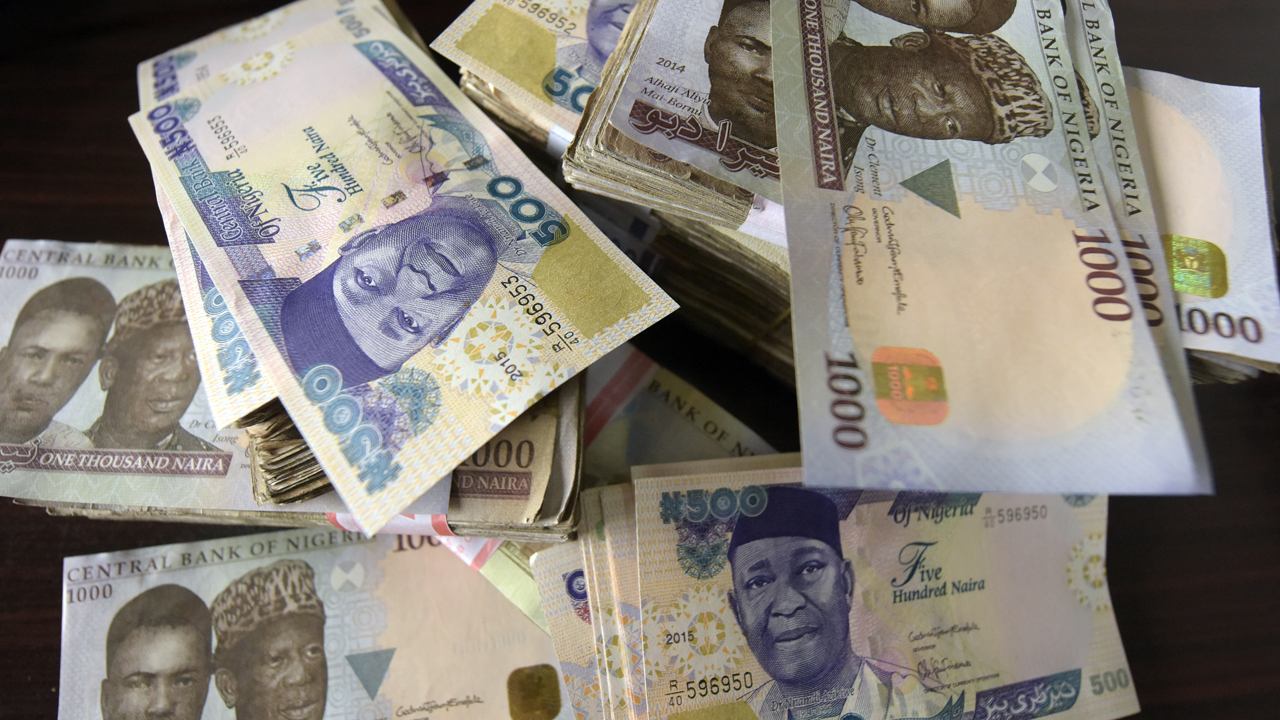
The Nigerian naira concluded a volatile trading week with divergent movements across official and parallel markets, reflecting the complex economic forces shaping Africa’s largest economy as foreign reserves continue their downward trajectory.
Tale of Two Markets
The currency painted a contrasting picture across Nigeria’s dual exchange rate system. In the official market, overseen by the Central Bank of Nigeria (CBN), the naira experienced a modest recovery, strengthening to N1,545 per dollar on Friday from Thursday’s rate of N1,546.
This represented a marginal but symbolic gain after the currency had weathered midweek pressure that saw it weaken to N1,547.5 on Wednesday from relatively stable levels of N1,541 recorded on both Monday and Tuesday.
However, the parallel market—commonly known as the black market—told a different story entirely. Street traders in Lagos witnessed the naira surrender earlier gains, with the currency sliding from Monday’s N1,590 per dollar to close at N1,605 on Friday.
The decline was particularly pronounced on the week’s final trading day, breaking three consecutive sessions of stability at N1,600 from Tuesday through Thursday.
This divergence between official and parallel rates, maintaining a spread of approximately N60 per dollar, underscores the persistent challenges facing Nigeria’s foreign exchange management despite ongoing reform efforts.
Reserve Pressure Mounts
Adding to concerns, Nigeria’s foreign reserves continued their steady erosion throughout the week. CBN data reveals a consistent daily decline from Monday’s $37.823 billion to Thursday’s $37.713 billion—a cumulative drop of $110 million over four trading days. This downward trend raises questions about the sustainability of the central bank’s market interventions and the country’s ability to meet foreign currency obligations.
The reserves decline comes at a critical juncture when Nigeria needs robust foreign currency buffers to support economic stability and investor confidence.
Inflation Provides Silver Lining
Despite currency pressures and dwindling reserves, economic analysts point to encouraging developments in Nigeria’s inflation trajectory as a fundamental positive for the naira.
The National Bureau of Statistics reported that headline inflation continued its deceleration, dropping to 22.97% in May 2025 from April’s 23.71%. This marks the second consecutive month of decline, suggesting that price pressures may finally be peaking after prolonged periods of elevated inflation.
The inflation moderation provides the CBN with more policy flexibility and could support currency stability in the medium term, according to market watchers.
Oil Market Boost
Nigeria’s petroleum-dependent economy received an unexpected boost from geopolitical tensions in the Middle East. Oil prices surged over the weekend following Israel’s large-scale preemptive strike on Iran, sparking fears of broader regional conflict and potential disruptions to global oil supply chains.
For Nigeria, which relies heavily on crude oil exports for foreign exchange earnings, higher oil prices represent a crucial lifeline. The price rally could provide much-needed support for the naira’s fundamentals, potentially offsetting some of the pressure from declining reserves.
Market Outlook
The week’s mixed performance reflects Nigeria’s ongoing economic transition as policymakers attempt to balance exchange rate stability with market-oriented reforms. While the official market showed resilience, the parallel market’s weakness suggests underlying demand-supply imbalances persist.
Currency analysts will be closely monitoring whether the combination of moderating inflation and higher oil prices can provide sustained support for the naira in the coming weeks, particularly as foreign reserves face continued pressure.
The central bank’s ability to manage these crosscurrents while maintaining market confidence remains crucial for Nigeria’s economic stability in an increasingly challenging global environment.
WHAT YOU SHOULD KNOW
Nigeria’s naira faces a critical juncture: while declining inflation and rising oil prices offer hope, the persistent gap between official and black market rates—coupled with steadily falling foreign reserves—signals underlying economic vulnerabilities that require urgent policy attention.
The currency’s mixed weekly performance reflects a nation caught between positive fundamentals and structural challenges that could determine its economic trajectory in the months ahead.