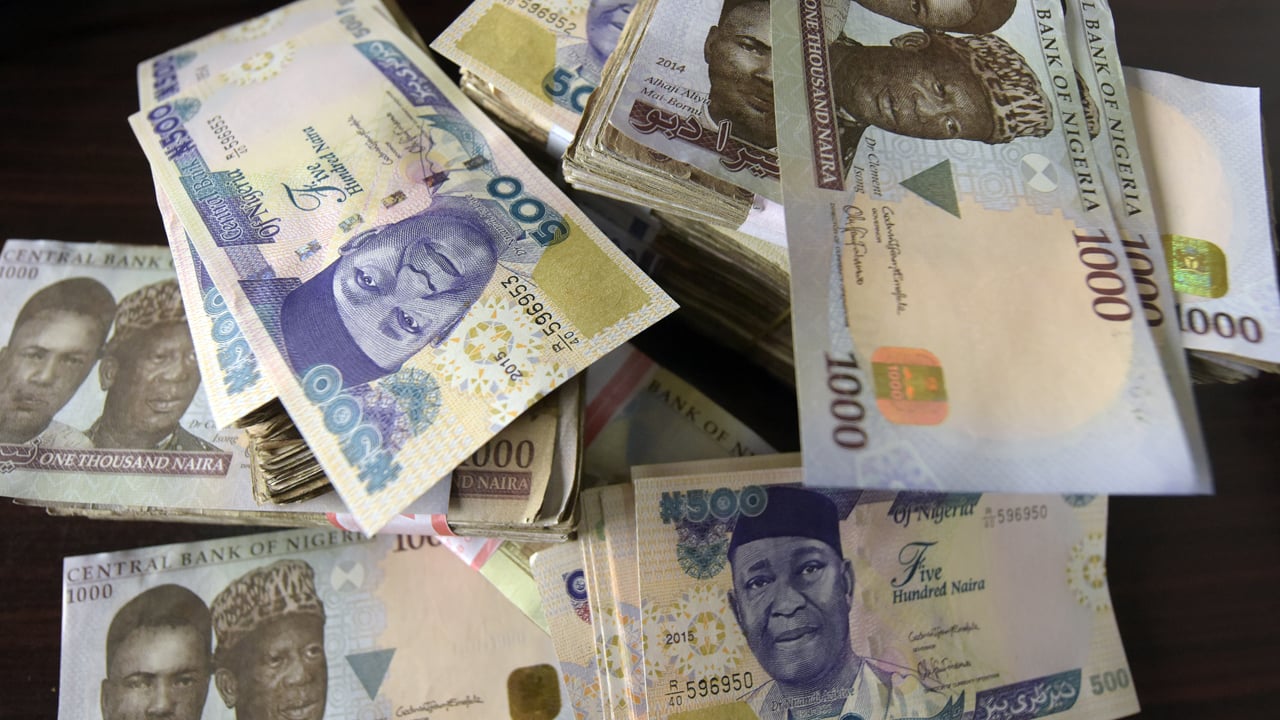
The naira opened the 2026 trading year on a slightly weaker footing at the official foreign exchange market, easing to N1,431 per dollar on Friday, January 2, as trading resumed after the New Year holiday.
Data tracked by Nairametrics from the Nigerian Foreign Exchange Market (NFEM) shows that the local currency depreciated marginally from N1,429/$1 recorded on Wednesday, December 31, 2025—the final trading session of the previous year. The N2 day-on-day decline, representing a 0.14 percent weakening, reflects a mild pullback following the naira’s strong finish in 2025.
Market participants attributed the slight depreciation to renewed caution as the FX market reopened, with pent-up demand resurfacing after the extended holiday break. While the movement was modest, it marked a pause in the appreciation trend that characterized the closing days of last year.
A review of recent trading sessions underscores the naira’s resilience toward year-end. The currency traded at N1,446.4/$1 on Monday, December 29, before strengthening to N1,445/$1 on Tuesday, December 30. By December 24, the naira had exchanged at N1,451/$1, reflecting a steady appreciation as the year drew to a close.
Despite the early dip in 2026, the naira ended 2025 with a notably strong annual performance. Closing at N1,429/$1 on December 31, the currency appreciated by 7.4 percent compared to the N1,535/$1 rate recorded on the final trading day of 2024.
Analysts attribute the year-end strength largely to sustained foreign exchange reforms, improved price discovery at the official market, and intermittent FX inflows from exporters and foreign portfolio investors. The narrowing gap between the official and parallel market rates also helped curb speculative activities, lending additional support to the currency.
In a broader context, the naira’s current level represents a significant improvement from the start of 2025, when it traded at N1,538.50/$1 on January 2. This trajectory highlights the gains achieved over the past year despite persistent structural pressures on Nigeria’s foreign exchange market.
Market watchers say the modest depreciation at the start of 2026 is not unusual, noting that demand often rebounds after long public holidays. “The naira’s relative stability in recent weeks suggests that volatility could remain limited in the near term,” said Dotun Adedira, an Abuja-based market analyst.
Looking ahead, analysts note that the naira’s performance will be shaped by several key factors, including the Central Bank of Nigeria’s policy direction, global oil price movements, and the pace of foreign exchange inflows. If FX supply improves and policy consistency is maintained, they believe the currency could sustain its recent stability in the early months of 2026.
WHAT YOU SHOULD KNOW
The naira’s slight dip to N1,431/$1 at the start of 2026 reflects a mild, post-holiday adjustment rather than a reversal of its gains, as the currency remains fundamentally stronger on the back of sustained FX reforms, improved market alignment, and a solid 7.4% appreciation recorded in 2025.