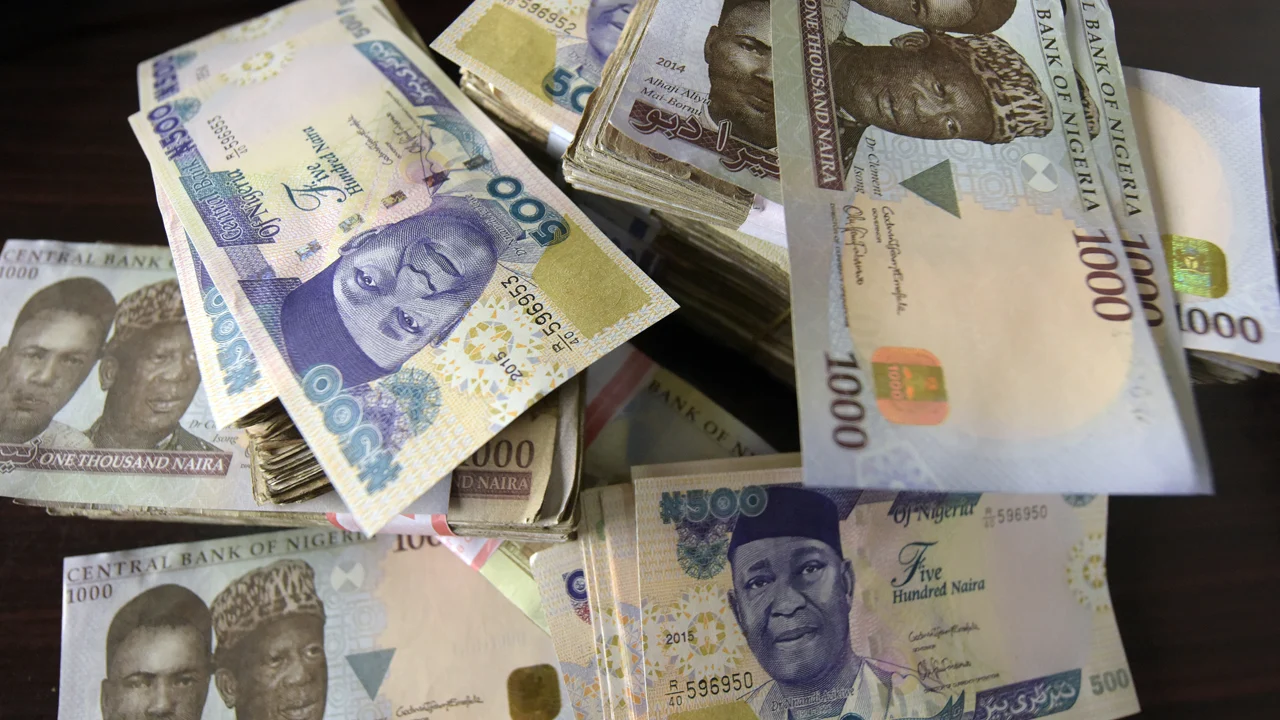
Nigeria’s naira posted its strongest performance against the US dollar in nearly seven months on Wednesday, closing at N1,394 to the dollar at the Nigerian Foreign Exchange Market (NFEM), according to data from the Central Bank of Nigeria.
The appreciation represents a significant turnaround for the embattled currency, which gained N15.5, or 1.1 percent, from Tuesday’s closing rate of N1,409.5 per dollar. It marks the naira’s best showing at the official window since late May 2024, when it traded at N1,329.65 on May 29.
Wednesday’s gains have injected cautious optimism into a market that has weathered weeks of turbulence, suggesting that recent policy interventions and improved liquidity conditions may be offering temporary relief to Africa’s largest economy.
The naira’s recovery comes after months of sustained pressure that saw the currency swing wildly at the official market, driven by persistent dollar shortages, speculative trading, and weak oil revenues. Analysts tracking the NFEM say the recent stabilization reflects both improved foreign exchange supply and potentially more effective CBN intervention strategies.
Data compiled by Nairametrics Research indicates the strengthening represents a reversal of recent trends that had threatened to push the naira toward record lows. However, market watchers remain divided on whether this represents a sustainable turnaround or merely a reprieve.
“We’re seeing some signs of short-term stability at the official window,” said one Lagos-based currency analyst who requested anonymity. “But the real test will be whether this momentum can be sustained beyond the immediate term.”
While the official market showed improvement, the parallel or black market—where most retail transactions occur—painted a more complex picture of Nigeria’s foreign exchange challenges.
The naira traded at N1,490 per dollar on the parallel market on Wednesday, marginally stronger than Tuesday’s N1,491 rate. That modest gain, however, left a yawning N96 gap between official and unofficial exchange rates—the widest differential since early February, when the spread peaked at N105.
This persistent divergence underscores the structural distortions plaguing Nigeria’s dual exchange rate system. While official channels have benefited from regulatory reforms and enhanced liquidity, the parallel market continues to reflect unmet demand from businesses and individuals unable to access dollars through formal banking channels.
The wide spread also suggests that speculative pressures and confidence issues remain entrenched in the informal market, where traders and Bureau de Change operators cater to retail demand that official sources cannot satisfy.
Despite Wednesday’s gains, economists warn that fundamental challenges continue to threaten the naira’s stability. Nigeria’s foreign exchange reserves, while improved from crisis levels, remain under pressure from import demand that far outstrips dollar inflows from crude oil exports and foreign investment.
The country’s heavy dependence on oil revenues—which account for roughly 90 percent of foreign exchange earnings—leaves the naira vulnerable to global crude price fluctuations. Recent volatility in international energy markets has complicated the CBN’s efforts to build sustainable reserves and maintain exchange rate stability.
Additionally, ongoing dollar scarcity in key sectors of the economy continues to fuel demand in the parallel market, where businesses turn when official allocations fall short. This structural mismatch between supply and demand explains why improvements at the NFEM have not translated into similar gains on the street.
Market participants will be watching closely to see whether the CBN can sustain recent momentum or whether Wednesday’s performance represents an isolated bright spot in an otherwise challenging environment.
The central bank has implemented several reforms aimed at unifying Nigeria’s fragmented foreign exchange markets and improving transparency, including measures to boost liquidity and crack down on speculative trading. However, progress has been uneven, and previous attempts at stabilization have proven short-lived.
For now, the naira’s seven-month high offers a glimmer of hope that official-market conditions may be improving. But with the parallel market premium still elevated and broader economic challenges unresolved, analysts caution against reading too much into a single day’s trading.
The coming weeks will reveal whether Nigeria’s currency has turned a genuine corner—or whether Wednesday’s strength was simply a brief pause in a longer struggle for stability.
WHAT YOU SHOULD KNOW
Nigeria’s naira strengthened to its best level in seven months at N1,394 per dollar on Wednesday, offering cautious hope after weeks of volatility. However, the widening N96 gap between official and parallel market rates—the largest since early February—reveals the currency’s recovery remains fragile and unevenly distributed.
While official reforms may be providing short-term relief, deep structural problems, including dollar scarcity and unmet demand, persist, meaning sustained stability is far from guaranteed. The naira’s fate will ultimately depend on whether the Central Bank can address these fundamental imbalances, not just manage day-to-day fluctuations.