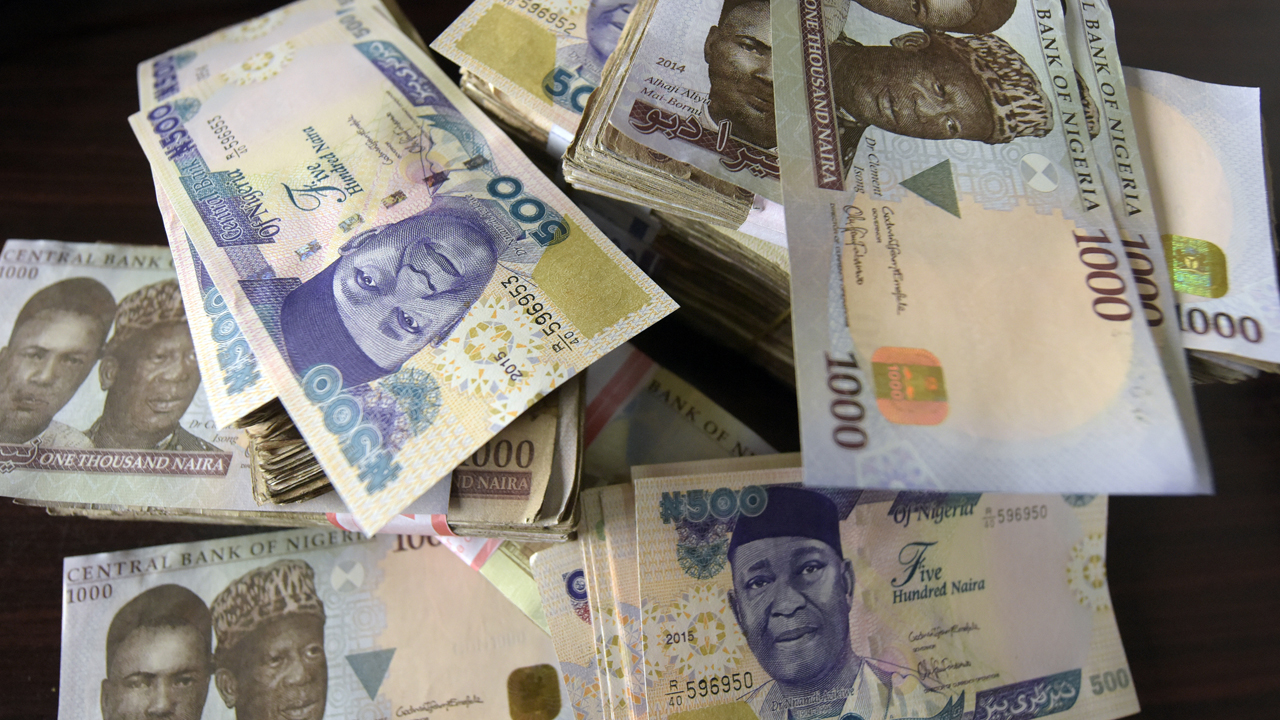
The Nigerian naira experienced a marginal setback at the start of the trading week, depreciating to N1,467.01 against the US dollar on Tuesday from Monday’s closing rate of N1,460 to the dollar, according to official exchange rate data published on the Central Bank of Nigeria’s website.
The modest decline represents a slight reversal from the currency’s recent momentum, coming just days after the naira posted its strongest performance since 2024. On Friday, the local currency closed at N1,458 to the dollar, marking what analysts described as a significant milestone in the apex bank’s ongoing campaign to stabilize Nigeria’s volatile foreign exchange market.
Market data from the previous week shows the naira opened at N1,464/$1 on Monday before slipping to N1,472/$1 by Tuesday, illustrating the persistent volatility that has characterized Nigeria’s currency markets in recent months.
Parallel Market Activity
In the parallel market, where rates typically reflect unmet demand for foreign exchange, the naira traded in a relatively narrow band between N1,498 and N1,504 to the dollar. The gap between official and parallel market rates—often viewed as an indicator of FX liquidity stress—remains a key concern for monetary authorities seeking to unify exchange rate mechanisms.
Reserve Position Strengthens
In a positive development, Nigeria’s foreign exchange reserves continued their upward trajectory, rising to $42.6 billion from the previous day’s $42.5 billion, CBN data revealed. This represents part of a sustained upward trend that has been underway since mid-July 2025, driven primarily by improved revenues from oil exports—Nigeria’s principal source of foreign exchange earnings.
Currency market analysts view the steady accumulation of reserves as critical to the central bank’s ability to defend the naira against speculative attacks and maintain orderly market conditions. A stronger reserve position provides the CBN with greater firepower to intervene in the foreign exchange market when necessary and offers a crucial buffer against external shocks.
Revised Forecasts Signal Optimism
Standard Bank, one of Africa’s largest financial institutions, has revised its naira forecast in a bullish direction, reflecting growing confidence in the currency’s trajectory. In its latest economic outlook, the bank now projects the naira will trade at N1,458.8 against the dollar by year-end, with a forecast of N1,473.0 by December 2026.
“While the risks remain evident, we now again lower our year-end FX forecasts,” Standard Bank stated in its research note, using the term “lower” to indicate a stronger naira position. The bank added that continued reserve accumulation “should increase the CBN’s ability to support the currency and ensure orderly exits whenever foreign investors exit the market”—a reference to the portfolio flows that can create sudden pressure on emerging market currencies.
Inflation Outlook Brightens
Beyond the currency markets, attention is shifting to Nigeria’s inflation trajectory, with analysts widely expecting the National Bureau of Statistics to report a sixth consecutive month of declining inflation when it releases September’s Consumer Price Index data on Wednesday.
According to projections from the Nairametrics Research Team, September could mark another milestone in the country’s battle against inflation, building on the progress achieved through what experts describe as a coordinated policy mix combining fiscal discipline, tighter monetary policy, and foreign exchange reforms.
Nigeria’s headline inflation rate has been on a steady decline, dropping to 20.12% in August from 21.88% in July—the fifth straight monthly decrease. The NBS noted that this represents a deceleration in the rate of price increases, meaning prices are still rising but at a slower pace than in previous months.
Analysts attribute the expected continued moderation in inflation to several factors: a more stable exchange rate that reduces import costs, improved food supply chains that have eased pressure on food prices, and relatively stable energy prices that have prevented cost-push inflation from accelerating.
Policy Implications
The twin objectives of currency stability and inflation control remain central to the CBN’s monetary policy framework under Governor Olayemi Cardoso’s leadership. The apparent progress on both fronts suggests that the central bank’s aggressive tightening cycle—which has seen benchmark interest rates rise significantly—may be beginning to yield desired results.
However, challenges remain. The naira’s mild depreciation this week serves as a reminder that currency stability is fragile and requires continued vigilance. Market watchers will be closely monitoring oil prices, foreign investment flows, and global risk sentiment—all factors that can quickly alter Nigeria’s foreign exchange dynamics.
As markets await Wednesday’s inflation data, the combination of rising reserves, improving inflation metrics, and more optimistic bank forecasts paints a cautiously positive picture for Africa’s largest economy, even as policymakers remain alert to both domestic and external risks that could test recent gains.
WHAT YOU SHOULD KNOW
The naira weakened slightly to N1,467/$1 on Tuesday, after achieving its best performance since 2024 the previous Friday at N1,458/$1. However, the underlying fundamentals remain positive: Nigeria’s foreign reserves have risen to $42.6 billion, strengthening the CBN’s ability to defend the currency, while inflation continues its downward trend for a sixth consecutive month, dropping to 20.12% in August.
Standard Bank has revised its forecast favorably, projecting the naira at N1,458.8/$1 by year-end. The combination of growing reserves, declining inflation, and exchange rate stability suggests Nigeria’s monetary reforms are gaining traction, though vigilance remains necessary to sustain these gains.