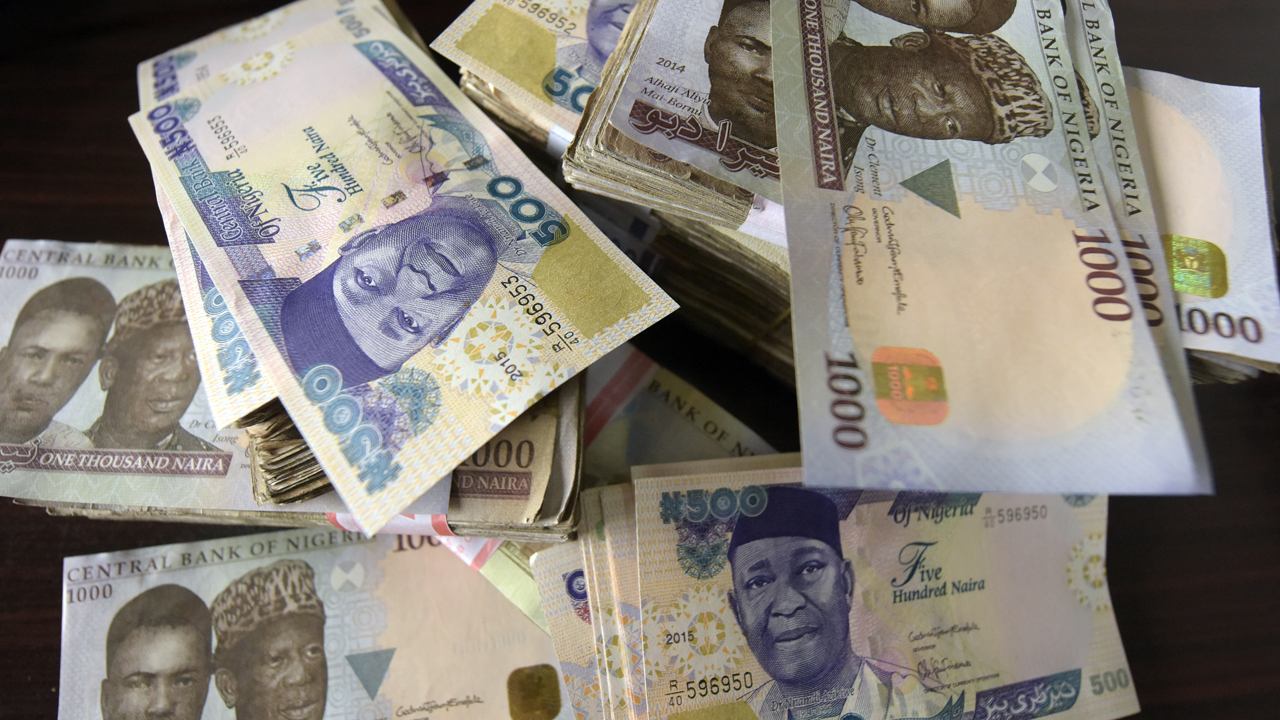
The Nigerian naira experienced renewed volatility this week as demand pressures and a strengthening U.S. dollar index reignited speculation in the foreign exchange market, highlighting persistent challenges in Nigeria’s currency management despite months of relative stability.
The parallel market rate closed at N1,565/$ on Thursday, representing a significant divergence from the official Nigerian Foreign Exchange Market (NFEM) rate, which ended July at N1,533.5/$, according to Central Bank of Nigeria (CBN) data released on Thursday.
The official market showed remarkable resilience throughout July, weakening by a modest 0.25% compared to the closing rate of N1,529.71 per $ in June. This performance underscores the CBN’s success in maintaining stability through targeted interventions and policy reforms implemented over the first seven months of 2025.
The currency’s trajectory during July painted a picture of initial strength followed by gradual retreat. Mid-month, the naira surged to a four-month high of N1,518/$ on July 14th—its strongest performance since March 14, 2025, and the first time it had traded below N1,520/$ since that date. However, this momentum proved temporary as the currency subsequently retraced to the N1,530-1,535/$ range by month’s end.
Seasonal Pressures and Market Dynamics
The recent volatility appears driven by seasonal demand patterns typical of Nigeria’s summer period. Travel demands from the country’s upper-middle class and elite population seeking to vacation abroad traditionally spike during these months, creating additional pressure on foreign exchange reserves and market liquidity.
This seasonal dynamic, combined with a robust U.S. dollar index globally, has tested the CBN’s ability to maintain the stability achieved through its ongoing reforms. The central bank had successfully created incentives to boost foreign investor inflows and achieved convergence between official and parallel market rates earlier in the year.
However, the current spread of approximately N30/$ between official and parallel markets suggests renewed arbitrage opportunities and potential pressure points in the foreign exchange system.
Outlook Remains Mixed
Market analysts present conflicting views on the naira’s trajectory for the remainder of 2025. Renaissance Capital projects a bearish outlook, forecasting the currency could lose approximately 26% of its value despite recent improvements and convergence efforts when measured against its historical real effective exchange rate.
Conversely, United Capital Research maintains a more optimistic stance, attributing potential stability to improving investor sentiment and market confidence. Their analysis suggests the naira could close 2025 within the N1,490-1,520/$ range, contingent on sustained positive investor flows and continued market sentiment improvements.
The divergent forecasts reflect the complex interplay of factors affecting Nigeria’s currency, including global dollar strength, domestic economic reforms, oil price fluctuations, and seasonal demand patterns. As the CBN continues its reform agenda, market participants will closely monitor whether the central bank can maintain the stability achieved in the first half of 2025 while managing persistent structural pressures on the foreign exchange market.
The coming weeks will likely prove crucial in determining whether current volatility represents a temporary seasonal adjustment or signals broader challenges to Nigeria’s exchange rate management strategy.
WHAT YOU SHOULD KNOW
The Nigerian naira is experiencing renewed volatility, with the parallel market rate hitting N1,565/$, while the official rate remains relatively stable at N1,533.5/$. Despite seven months of CBN-led stability, seasonal summer travel demand from Nigeria’s wealthy class and a strong U.S. dollar are creating pressure on the currency.
Renaissance Capital predicts a 26% decline, while United Capital Research forecasts the naira closing 2025 between N1,490 and N1,520. The widening N30/ gap between official and parallel markets signals returning arbitrage opportunities and tests the central bank’s reform efforts.