The U.S. dollar is headed for its strongest weekly performance in over a month as escalating warfare between Israel and Iran sends global markets scrambling for safe-haven assets, with traders increasingly concerned about potential American military intervention in the region.
Iranian missiles have hit a major hospital in southern Israel and struck residential buildings in Tel Aviv, wounding 240 people, marking a dramatic escalation in what has become the most sustained direct military confrontation between the two Middle Eastern powers in decades.
The violence, now entering its second week, has fundamentally altered the geopolitical landscape and created ripple effects across global financial markets.
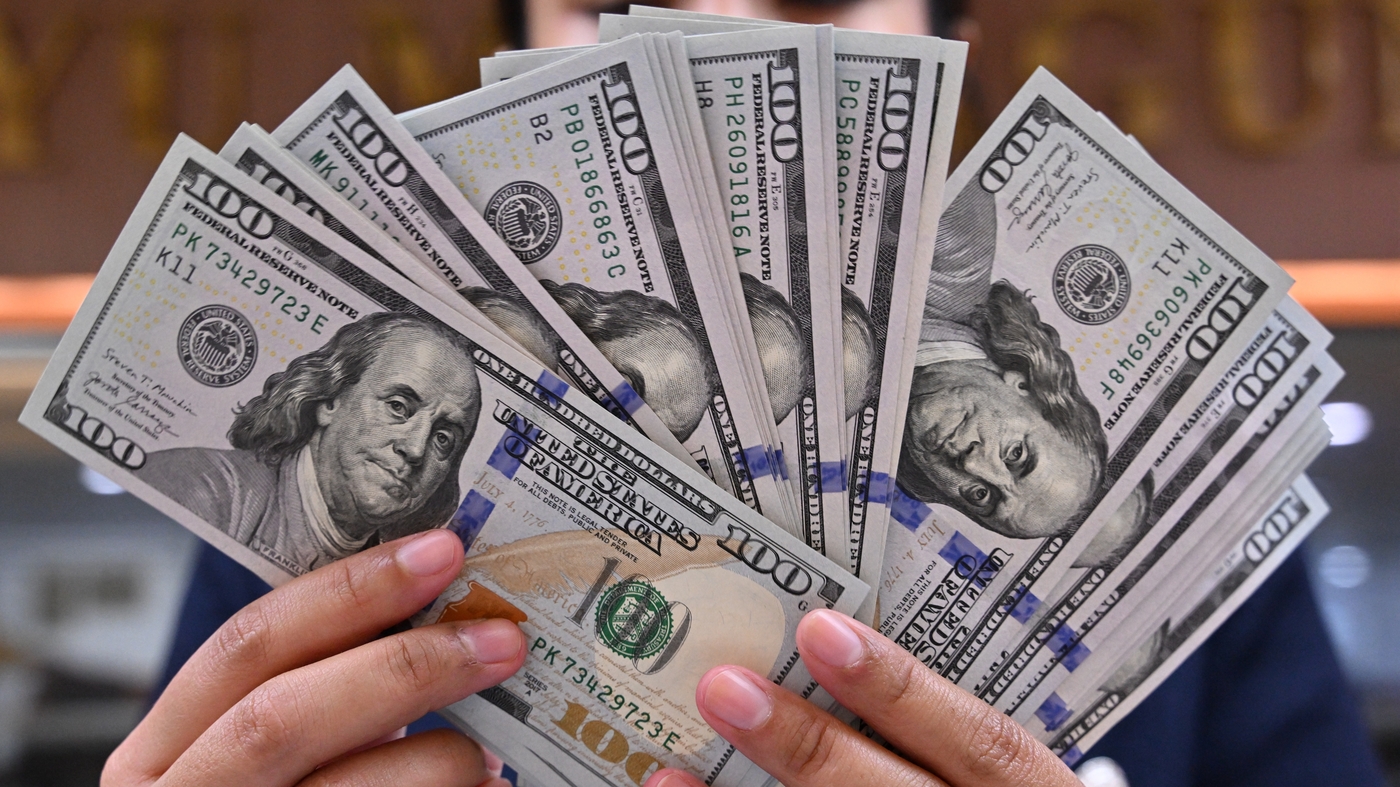
The dollar index, which tracks the greenback against six major currencies, including the euro, yen, and Swiss franc, is positioned to climb 0.55% this week—its most significant gain since mid-May.
This surge reflects a fundamental shift in investor sentiment as uncertainty over the conflict’s trajectory drives capital flows toward traditional safe-haven assets.
The stakes have been raised considerably by President Donald Trump‘s indication that a decision on potential U.S. military involvement will come within the next two weeks.
This timeline has created a state of suspended anxiety in financial markets, where traders are positioning for multiple scenarios ranging from diplomatic resolution to a broader regional war that could draw in American forces.
“Everything that we’re watching is defying expectations,” Aaron Stein, president of the Foreign Policy Research Institute, told NPR, noting that Israel has established control over significant portions of Iranian airspace faster than military analysts had anticipated possible.
The conflict’s economic implications extend far beyond currency markets. Oil prices, while retreating over 2% from recent peaks, remain elevated at $77 per barrel for Brent crude – dangerously close to January’s highs.
This price level introduces a complex new variable for central banks worldwide, who must now navigate between supporting weakening economic growth and preventing energy-driven inflation from taking hold.
“Rising oil prices introduce inflation uncertainty at a time when growth is weakening,” explained Charu Chanana, chief investment strategist at Saxo. “That makes central banks’ jobs much harder—do they ease to support growth or hold back to avoid fueling inflation? Most seem to be prioritizing growth concerns for now, assuming that crude gains may not be sustained.”
The currency market’s response has been nuanced, with oil-importing economies seeing some relief as crude prices pulled back from their peaks. The euro strengthened 0.17% to $1.1515, while the Japanese yen gained 0.1% to 145.33 per dollar, benefiting from both lower oil prices and domestic inflation data that exceeded expectations.
Japan’s position is particularly noteworthy, as hotter-than-expected inflation figures have reinforced expectations for continued interest rate increases by the Bank of Japan. Minutes from this week’s policy meeting revealed that policymakers remain committed to gradually raising rates from their historically low levels, providing additional support for the yen.
The Federal Reserve’s messaging has also contributed to dollar strength this week. Despite maintaining its forecast for two interest rate cuts this year, Fed Chair Jerome Powell’s warning of “meaningful” inflation ahead was interpreted by analysts as a hawkish tilt that could delay or reduce the magnitude of expected rate reductions.
European currencies faced additional pressure beyond the geopolitical tensions. The Swiss franc remained flat at 0.816 per dollar but is positioned for its largest weekly decline since mid-April after the Swiss National Bank reduced interest rates to zero percent. Even more surprising was Norway’s unexpected 25-basis-point rate cut by the Norges Bank, sending the krone down more than 1% against the dollar for the week.
Francesco Pesole of ING noted in a client communication that “The FX market has taken the somewhat lower probability of the US intervening in Iran already this weekend as an opportunity to re-enter USD short positions, especially against European currencies,” suggesting that some traders are betting on a de-escalation scenario.
However, the fundamental uncertainty surrounding the conflict’s trajectory means that market volatility is likely to persist. The current situation represents an unprecedented direct military confrontation between Israel and Iran, moving beyond the proxy warfare that has characterized their relationship for decades. Israel and Iran have been enemies for decades, but this is their most sustained direct fighting ever, according to analysis from The Washington Post.
The timing of this crisis coincides with a period when global central banks were already grappling with complex economic crosscurrents, including the potential impact of renewed U.S. trade policies on international commerce. The addition of energy price volatility and geopolitical risk premiums creates an even more challenging environment for monetary policymakers worldwide.
As markets head into the weekend, all eyes remain on diplomatic efforts and military developments in the Middle East, with investors acutely aware that the next phase of this conflict could reshape global economic conditions for months to come.
The dollar’s current strength reflects not just its safe haven status, but also the market’s assessment that the United States may soon find itself more directly involved in Middle Eastern affairs than at any point in recent years.
WHAT YOU SHOULD KNOW
The U.S. dollar is experiencing its strongest weekly gain in over a month as the escalating direct military conflict between Israel and Iran drives investors toward safe-haven assets.
This conflict is creating a perfect storm for global markets: oil prices remain dangerously high near $77/barrel, threatening to reignite inflation just as central banks were considering rate cuts to support weakening growth.
The unprecedented nature of this direct Israel-Iran warfare, moving beyond decades of proxy conflicts, has fundamentally altered risk calculations across all asset classes.