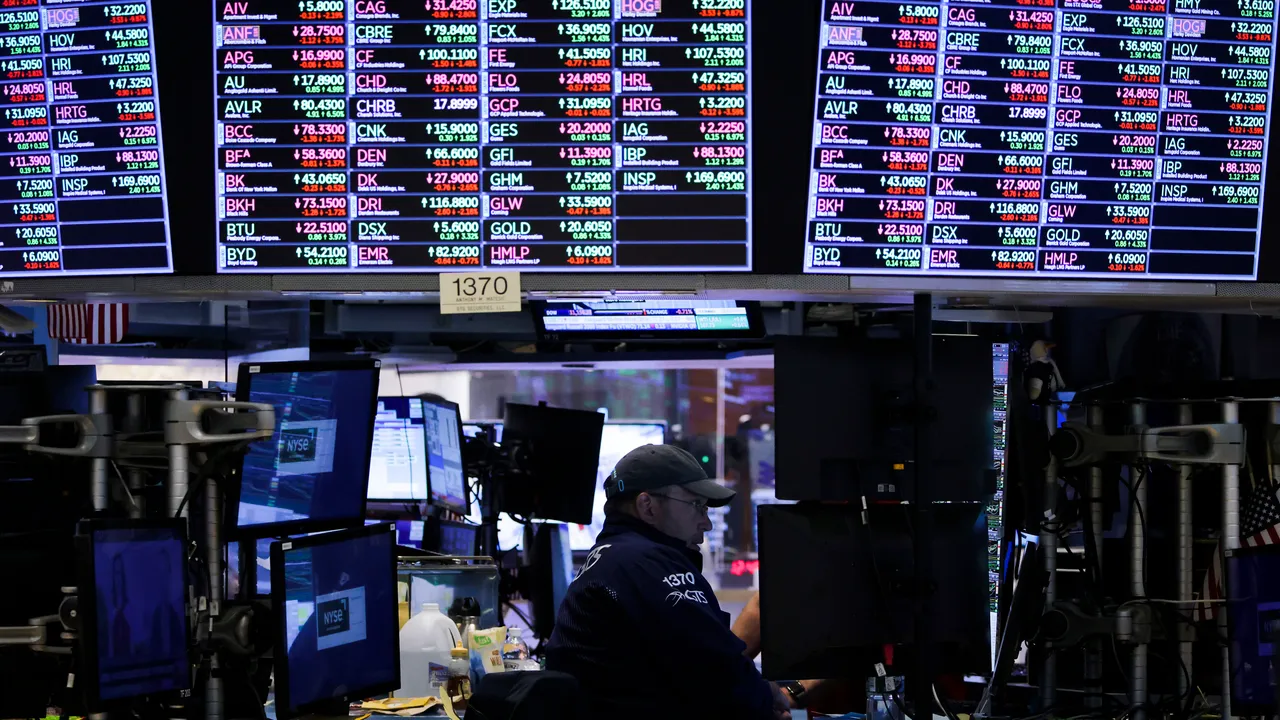
U.S. stock futures catapulted to unprecedented levels on Wednesday morning, with S&P 500 contracts touching a record high fueled by Oracle Corporation’s explosive rally after the enterprise software giant delivered what may be the most stunning growth projection in cloud computing history.
Oracle’s shares rocketed nearly 29% in premarket trading following the company’s bombshell announcement that its remaining performance obligations soared to $455 billion, up by a staggering 359% from a year earlier.
The company boldly projected that booked revenue at its Oracle Cloud Infrastructure business would exceed half a trillion dollars, a forecast that sent shockwaves through the technology sector and reinforced investor confidence in the artificial intelligence revolution.
The Cloud Infrastructure Gold Rush
Oracle’s meteoric rise reflects the unprecedented demand for AI-powered infrastructure services. The company reported signing four multi-billion-dollar contracts with three different customers in the first quarter, helping drive a 12% increase in revenue to $14.93 billion. Perhaps most significantly, OpenAI signed an agreement with Oracle to develop 4.5 gigawatts of U.S. data center capacity during the quarter, underscoring the massive scale of infrastructure buildout required to support next-generation AI applications.
The company’s remaining performance obligations—a critical metric representing contracted revenue not yet recognized – represent what industry analysts are calling an unprecedented backlog in enterprise cloud services. This massive pipeline suggests Oracle has positioned itself as a key beneficiary of the ongoing digital transformation and AI adoption across corporate America.
Tech Ecosystem Rallies in Sympathy
Oracle’s extraordinary performance created a powerful ripple effect across the technology landscape. Semiconductor leaders joined the advance, with AI powerhouse Nvidia climbing 2%, while Advanced Micro Devices surged 3.3% and Broadcom added 2.2%. This broad-based strength in chip stocks signals sustained optimism about the infrastructure investments driving the AI boom.
The enthusiasm extended beyond traditional technology players to companies positioned to capitalize on the massive power requirements of modern data centers. Constellation Energy advanced 1.4%, Vistra Corp jumped 2.8%, and GE Vernova climbed 2.5%, reflecting growing investor recognition that the digital economy’s expansion requires substantial energy infrastructure investments.
Critical Inflation Data Looms
While Oracle dominated morning headlines, traders remained intensely focused on the Producer Price Index report scheduled for release later Wednesday. This wholesale inflation gauge carries heightened significance as markets attempt to assess the early impact of President Trump’s tariff policies and their potential influence on Federal Reserve monetary policy
The data comes at a crucial juncture for Fed policy expectations. Recent labor market indicators have confirmed a notable slowdown in U.S. job creation, prompting traders to price in at least a 25-basis-point rate cut at the central bank’s September 16-17 meeting. More aggressive bets on a 50 basis point reduction currently stand at 10% probability, according to CME’s FedWatch tool, though Wednesday’s inflation data could shift those calculations significantly.
Thursday’s Consumer Price Index release will complete the critical inflation picture ahead of next week’s Fed decision, making this a potentially market-moving 48-hour period.
Political Tensions Add Uncertainty
Complicating the Fed’s deliberations, a federal judge on Tuesday temporarily blocked President Trump’s attempt to remove Fed Governor Lisa Cook, marking an early setback for the administration in what legal experts describe as an unprecedented challenge to the central bank’s traditional independence. This legal battle could introduce additional uncertainty into monetary policy deliberations at a critical moment.
Mixed Signals in Early Trading
Despite the futures rally, early trading showed divergent signals across major indices. At 5:15 a.m. ET, Dow E-minis declined 115 points, or 0.25%, while S&P 500 E-minis rose 9.25 points, or 0.14%, and Nasdaq 100 E-minis added 18.25 points, or 0.08%. This divergence highlights the tech-heavy nature of Wednesday’s rally and suggests investors are making selective bets on AI-related infrastructure plays.
Defying September’s Historical Weakness
The morning’s gains build on Wall Street’s surprisingly strong start to September, traditionally the worst month for U.S. equities. Historical data shows the benchmark S&P 500 has averaged a 1.5% decline in September since 2000, yet markets have posted gains to start the month, extending Monday’s record closes across all three major indices.
Investment bank Barclays reflected this renewed optimism by raising its year-end 2025 S&P 500 target to 6,450 from 6,050—marking the second such increase in three months and signaling institutional confidence in continued market momentum despite economic uncertainties.
Winners and Losers
Not all technology names participated in the rally. Synopsys plummeted 20% in premarket trading after the chip design software provider missed third-quarter revenue estimates, dragging peer Cadence Design Systems down 3.8% in sympathy. These declines serve as a reminder that even within the hot technology sector, execution and guidance matter significantly to investors.
In a surprising bright spot outside technology, GameStop rallied 8.3% after the video game retailer reported higher second-quarter revenue, suggesting some resilience in consumer discretionary spending despite broader economic headwinds.
The Road Ahead
As markets await the producer price data, the convergence of Oracle’s historic cloud projections, evolving Fed policy expectations, and continued AI infrastructure investment creates a complex backdrop for investors. Oracle’s performance serves as a powerful reminder of the transformative potential driving technology valuations, even as broader economic and political uncertainties persist.
The critical question now is whether Wednesday’s inflation data will support the case for aggressive Federal Reserve easing or suggest policymakers should proceed more cautiously—a decision that could reshape the trajectory carrying markets to these record levels and determine whether Oracle’s cloud computing revolution can sustain its remarkable momentum.
WHAT YOU SHOULD KNOW
Oracle’s explosive 29% surge drove S&P 500 futures to record highs on Wednesday after the company projected over $500 billion in cloud infrastructure revenue, reflecting massive AI-driven demand.
While this tech rally energized markets, investors remain focused on Wednesday’s inflation data, which could determine whether the Federal Reserve cuts rates by 25 or 50 basis points next week.
Oracle’s historic cloud backlog signals the AI boom is translating into real revenue, but broader market direction hinges on inflation trends and Fed policy decisions in the coming days.