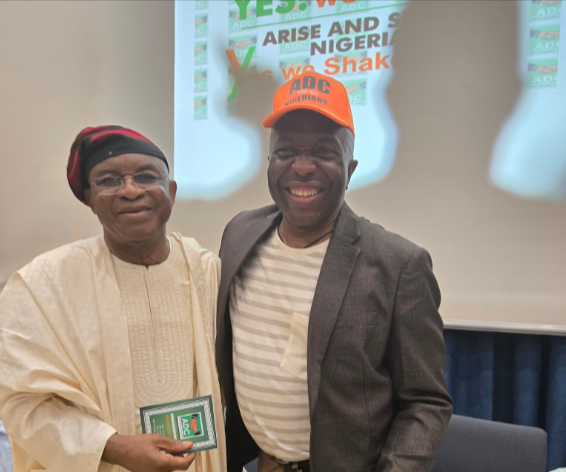
The African Democratic Congress (ADC) was officially unveiled as the unified platform for Nigeria’s opposition coalition at the Shehu Yar’Adua Centre in Abuja on Wednesday, following the abrupt cancellation of the event at the Wells Carlton Hotel earlier that day due to alleged political interference.
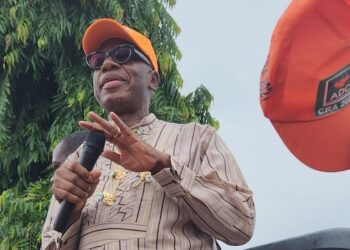
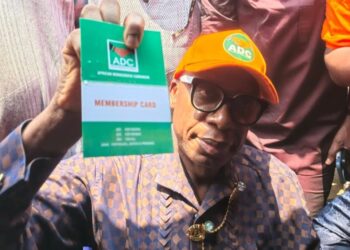
Former ADC National Chairman Chief Ralph Nwosu formally handed over leadership to former Senate President David Mark, appointed interim National Chairman, and former Osun State Governor Rauf Aregbesola, named interim National Secretary.
The coalition, aimed at unseating the All Progressives Congress (APC) in the 2027 general elections, adopted the ADC after the Independent National Electoral Commission (INEC) delayed registration of the proposed All Democratic Alliance (ADA).
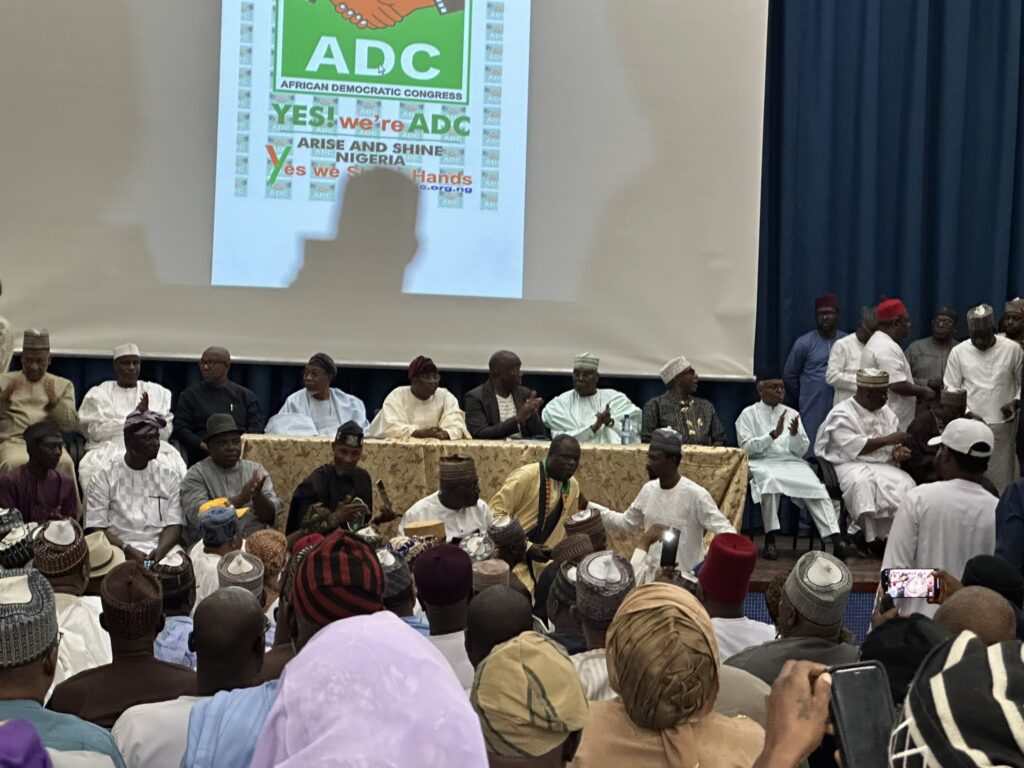
The unveiling drew prominent opposition figures, including former Vice President Atiku Abubakar (PDP), Labour Party’s 2023 presidential candidate Peter Obi, former Kaduna Governor Nasir El-Rufai, former Rivers Governor Rotimi Amaechi, former Benue Governor Gabriel Suswam, former Deputy Speaker Emeka Ihedioha, Senator Dino Melaye, Senator Ireti Kingibe (LP, FCT), former Sports Minister Solomon Dalong, former Chief of Air Staff Air Marshal Sadique Abubakar (retd.), and media mogul Dele Momodu. Other attendees included former governors Sule Lamido (Jigawa), Aminu Tambuwal (Sokoto), Liyel Imoke (Cross River), Sam Egwu (Ebonyi), Olagunsoye Oyinlola (Osun), and politicians from the PDP, Social Democratic Party (SDP), and Labour Party (LP).
David Mark, who resigned from the PDP on June 27, 2025, citing its leadership crisis, presided over the event.
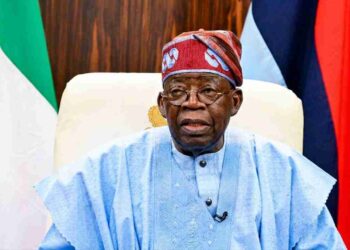
In a communiqué, he criticized the APC’s governance under President Bola Tinubu, highlighting economic hardship and insecurity, and positioned the ADC as a platform to “rescue Nigeria.” Peter Obi proposed a single four-year presidential term to streamline governance, while supporters like Yunusa Tanko emphasized the coalition’s commitment to integrity.
Nwosu praised Mark as a “detribalised Nigerian,” expressing confidence in his leadership to rebuild the ADC, which has struggled since its founding in 2005, polling only 0.24% in the 2023 presidential election.
The coalition faces challenges, including selecting a 2027 presidential candidate amid North-South power rotation debates, with Atiku’s potential candidacy opposed by some southern factions advocating for regional balance until 2031.
The ADC’s adoption follows months of planning, including a July 1 meeting at the Transcorp Hilton Hotel, and reflects frustration with the PDP’s internal strife, exemplified by disputes over Acting Chairman Umar Damagum and the National Secretary role.
APC’s Bala Ibrahim dismissed the coalition as ineffective, but analysts see it as a potential disruptor if it unifies diverse factions, including possible NNPP involvement with Rabiu Kwankwaso.
What You Should Know
- The ADC was unveiled as the opposition’s 2027 platform on July 2, 2025, at the Yar’Adua Centre after a hotel cancellation sparked interference allegations.
- David Mark (interim Chairman) and Rauf Aregbesola (interim Secretary) were formally installed, with Mark resigning from the PDP due to its leadership crisis.
- Key attendees included Atiku Abubakar, Peter Obi, Nasir El-Rufai, Rotimi Amaechi, and other PDP, LP, and SDP figures.
- The coalition aims to challenge the APC, criticizing Tinubu’s governance, with Obi proposing a single-term presidency.
- Challenges include candidate selection, regional power dynamics, and integrating diverse opposition factions for 2027.