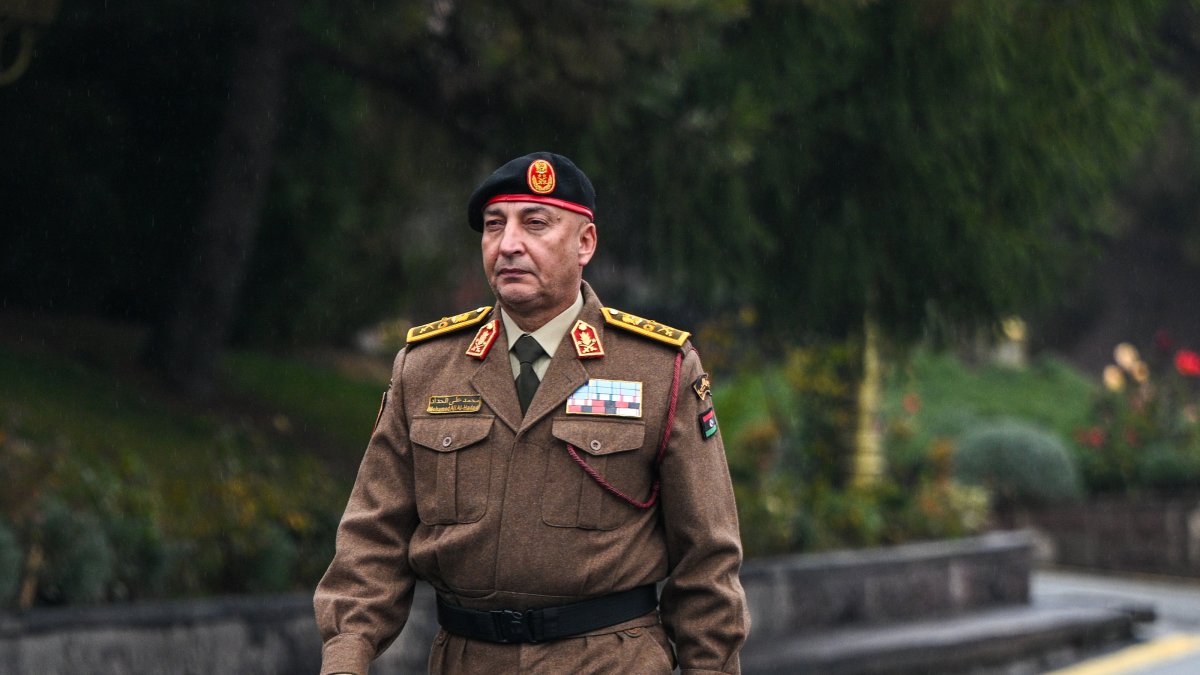
The remains of Libya’s chief of staff and his advisers who lost their lives in a plane crash close to Ankara will be returned home on Saturday, according to the Turkish defence ministry.
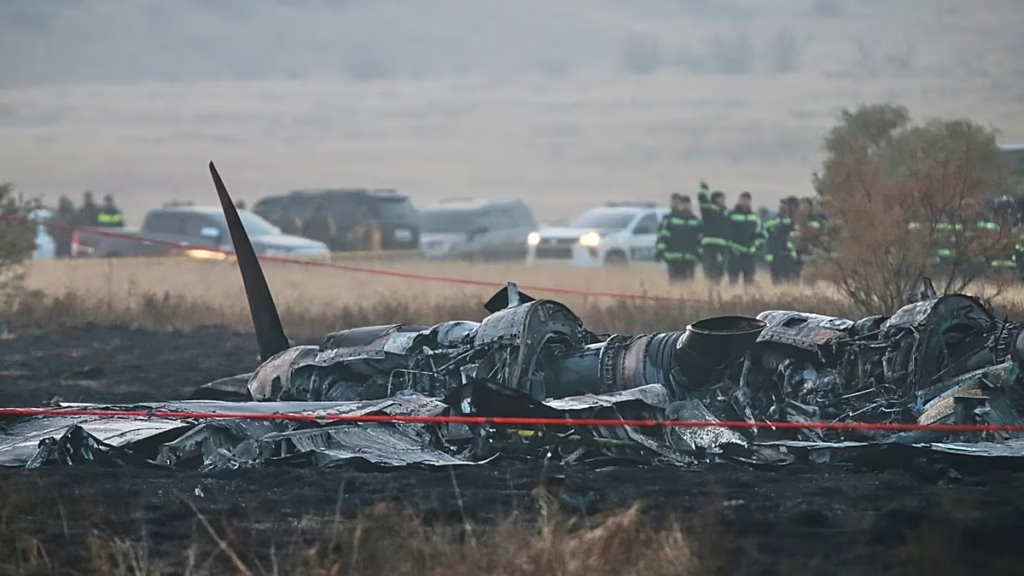
General Mohamed Al-Haddad of the Tripoli-based government, alongside four of his advisers and three crew members, died after the Falcon 50 aircraft they were aboard went down less than forty minutes after departing on Tuesday.

Turkey’s Defence Minister, Yasar Guler, led a brief official ceremony at the Murted air base near Ankara, the ministry disclosed in a statement shared on X.
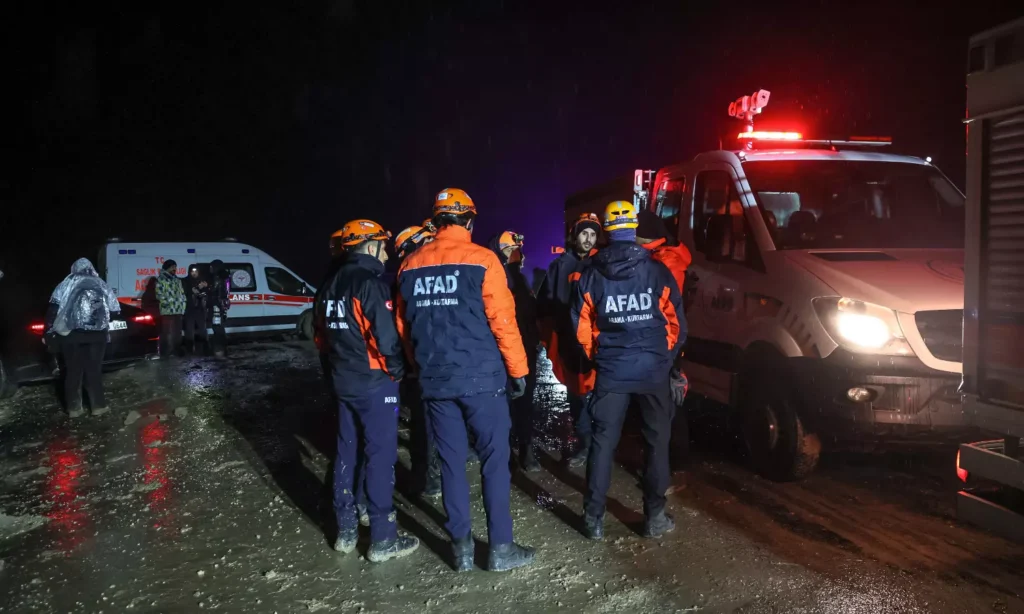
Authorities confirmed that the aircraft’s black box was recovered from farmland close to the crash site. Turkish officials said the jet experienced an electrical failure but noted that the probe into the exact cause of the crash would be handled by a “neutral country”, with Germany mentioned as a possible lead investigator.
A French diplomatic source revealed that two French citizens were among the crew members on board. The aircraft was chartered from Harmony Jets, a Malta-based aviation company whose fleet is maintained in Lyon, France.
In an uncommon display of solidarity, Libya’s rival political authorities — the Government of National Unity in Tripoli and the eastern-based administration in Benghazi under the control of Marshal Khalifa Haftar — announced three days of national mourning.
Libya has remained politically fragile since the overthrow of Muammar Gaddafi in 2011, with competing governments continuing to struggle for authority and control.
Turkey, which has long backed the Tripoli administration, has in recent years also worked to mend and expand its relationship with Haftar as part of broader regional diplomatic efforts.
What you should know
The crash that claimed the lives of Libya’s top military official and his team has drawn international attention due to the involvement of multiple countries, including Turkey, France and Malta.
The decision to allow a “neutral country” to investigate reflects sensitivities surrounding Libya’s internal divisions and foreign alliances.
The rare joint declaration of national mourning by rival Libyan authorities underscores the significance of the loss and highlights ongoing attempts, however limited, to bridge political divides in a country still grappling with instability more than a decade after Gaddafi’s fall.