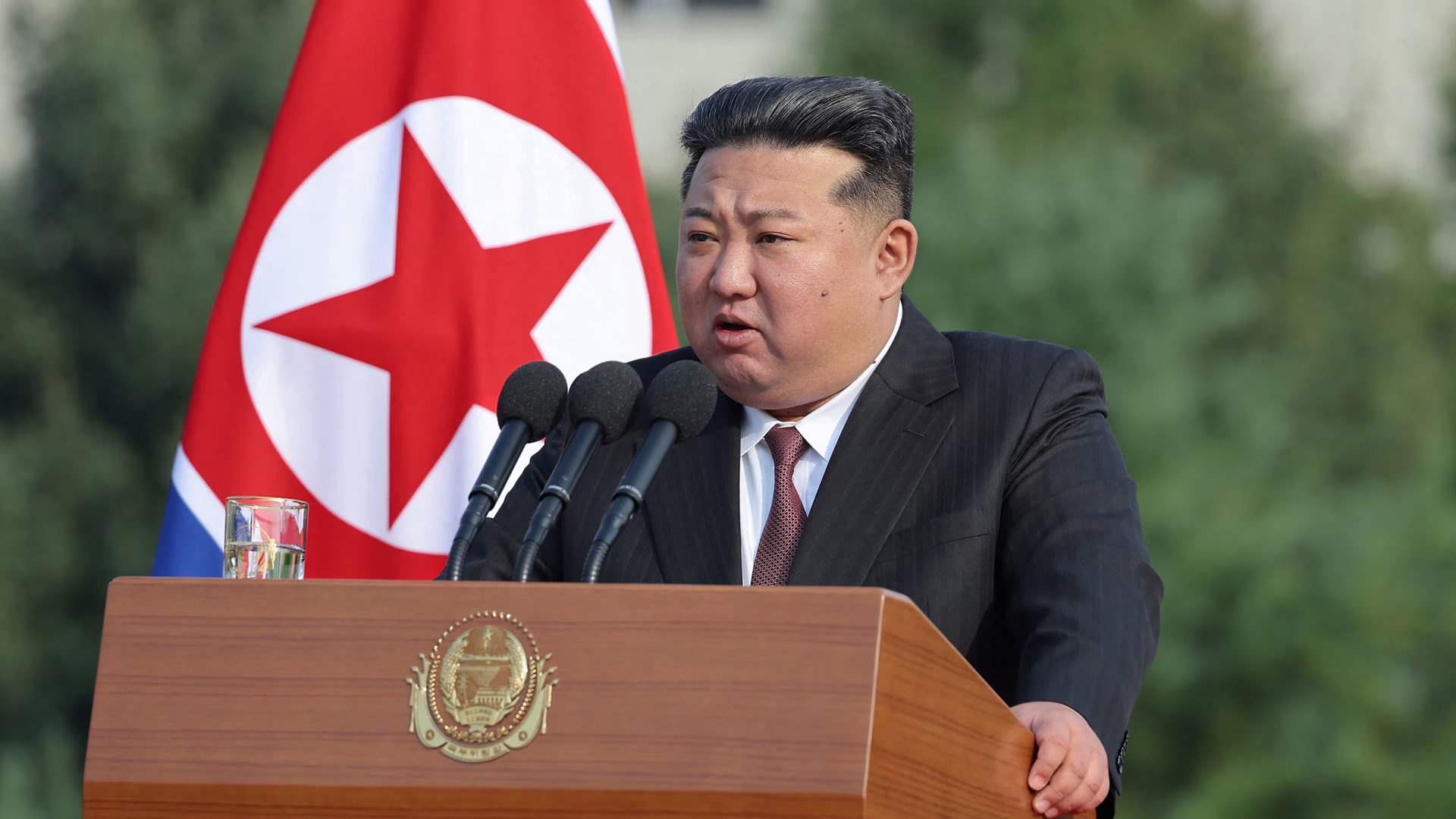
North Korean leader Kim Jong Un will be present at a major military parade in China next week to mark the 80th anniversary of the end of World War II, both nations confirmed on Thursday.
The event, set to take place in Beijing’s Tiananmen Square, will gather 26 world leaders, including Russian President Vladimir Putin and Iranian President Masoud Pezeshkian. The parade will highlight China’s most advanced military equipment, with President Xi Jinping leading an inspection of the troops.
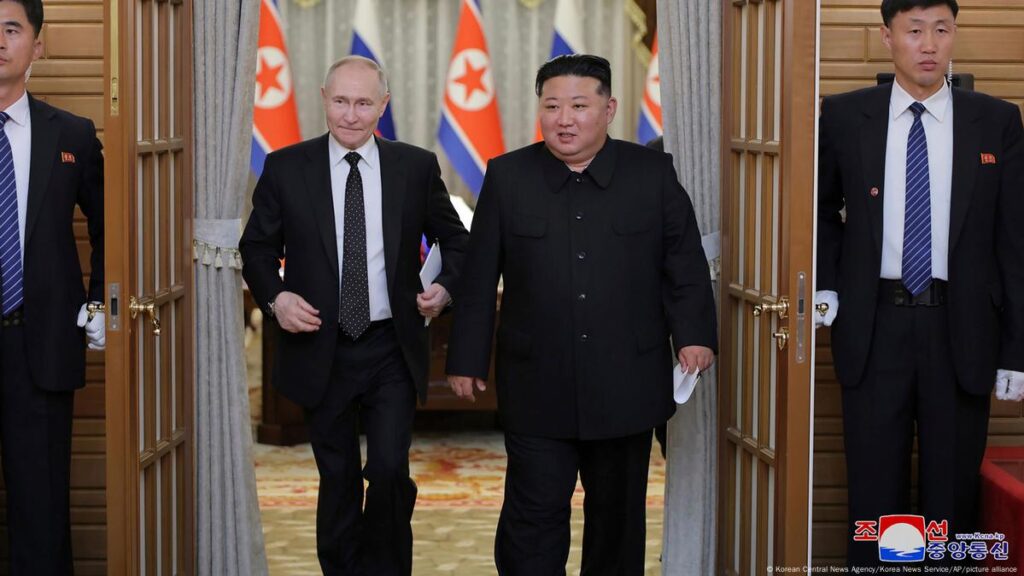
The commemoration holds deep significance for China, as millions of its citizens were killed during its prolonged war with imperial Japan throughout the 1930s and 40s. That conflict expanded into a global war after Japan’s attack on Pearl Harbor in 1941. In recent years, the Communist Party in Beijing has staged grand events to honor its wartime resistance, emphasizing that China must never again be forced into submission.
The September 3 parade will feature elaborate displays of military power, from ground forces marching in tight formations to armored vehicles, aerial squadrons, and cutting-edge weaponry. Authorities have presented the event as a demonstration of solidarity among nations.
China’s assistant foreign minister, Hong Lei, formally announced Kim’s participation during a Thursday press briefing. “The Chinese people will join hands with the people of all countries to firmly defend the victories of World War II,” Hong said, stressing that today’s global climate is marked by uncertainty and rising challenges to peace.
North Korea’s state-run Korean Central News Agency also confirmed the trip, stating that Kim would attend “at the invitation of Comrade Xi Jinping.”
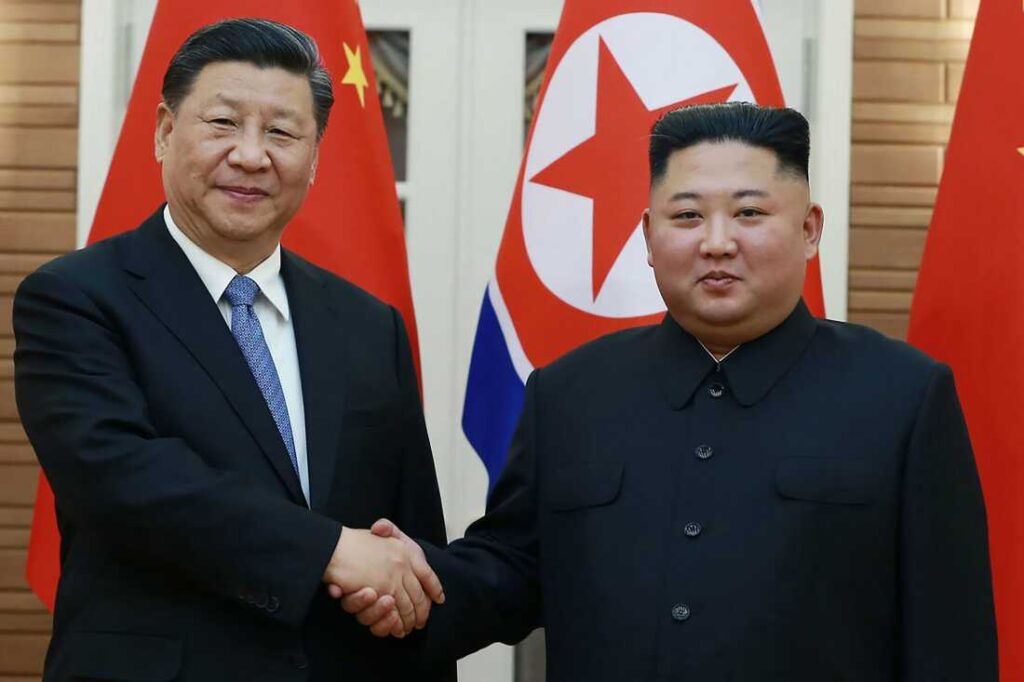
China and North Korea share a bond rooted in their wartime experiences. Their alliance, forged during the Korean War of the 1950s, has seen Beijing provide crucial political, diplomatic, and economic backing to Pyongyang despite the heavy sanctions imposed internationally.
Kim’s upcoming trip is being viewed as a symbolic gesture to highlight the enduring strength of the China–North Korea relationship. According to Chong Ja Ian, a political science professor at the National University of Singapore, the visit demonstrates that “the United States cannot bully them into submission.”
Analysts also suggest that this visit dispels speculation that Pyongyang has shifted closer to Moscow at Beijing’s expense. Dylan Loh, assistant professor at Singapore’s Nanyang Technological University, observed that while North Korea may still pursue stronger ties with Russia, Kim’s trip “underlines the fact that this relationship is still going strong” and underscores China’s continued influence on the global stage.
Hong reiterated Beijing’s commitment to maintaining what he described as “the traditional friendship” with North Korea, pledging to strengthen cooperation aimed at promoting peace, stability, and justice worldwide.
Kim last traveled to China in January 2019 for a meeting with Xi, but he did not attend Beijing’s parade in 2015. Last year, Zhao Leji, China’s third-highest-ranking official, visited Pyongyang to mark the 75th anniversary of their diplomatic ties.
Before the Covid-19 pandemic led to the closure of its borders, North Korea saw a steady stream of Chinese tourists and business visitors. Meanwhile, recent research has revealed that Pyongyang constructed a covert military base near its border with China, potentially designed to house its latest long-range ballistic missiles.
What you should know
Kim Jong Un’s participation in China’s upcoming parade emphasizes the continued strength of the China–North Korea alliance.
Despite speculation about Pyongyang moving closer to Moscow, this visit demonstrates that Beijing remains a central partner. For China, the event is both a commemoration of wartime sacrifices and a display of power and influence in today’s turbulent international landscape.