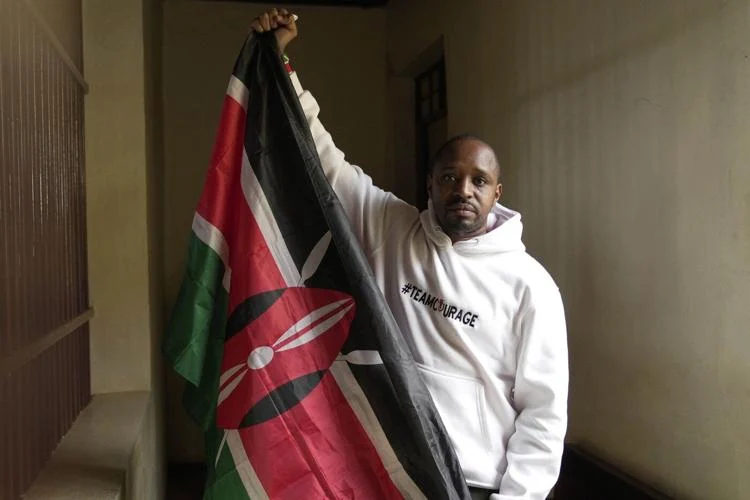
Kenyan activist Boniface Mwangi has expressed grave fears for his safety after forensic researchers concluded that surveillance software was secretly installed on his mobile phone during his arrest last year.
Mwangi’s residence and workplace were searched by police in July 2025, during which officers seized his mobile devices and computer hard drives. Authorities accused him of “facilitation of terrorist acts,” an allegation he has consistently rejected.

A new investigation published on Tuesday by Citizen Lab, a cybersecurity research unit at the University of Toronto, revealed that a digital extraction and surveillance tool produced by Israeli technology firm Cellebrite was deployed on Mwangi’s phone without his authorization.
Cellebrite’s technology is commonly utilized by law enforcement bodies globally to unlock encrypted smartphones and retrieve digital evidence. However, rights organizations such as Amnesty International have previously voiced concerns that the technology can be abused to monitor journalists, political dissidents, and civil society figures.
According to the Citizen Lab findings, Kenyan authorities were able to access virtually all information stored on Mwangi’s device, including “messages, private files, personal documents, financial information, passwords, and other sensitive data”.
Speaking to AFP on Wednesday, Mwangi said he has “life-threatening concerns” and described feeling “violated” by the alleged intrusion into his private communications and data.
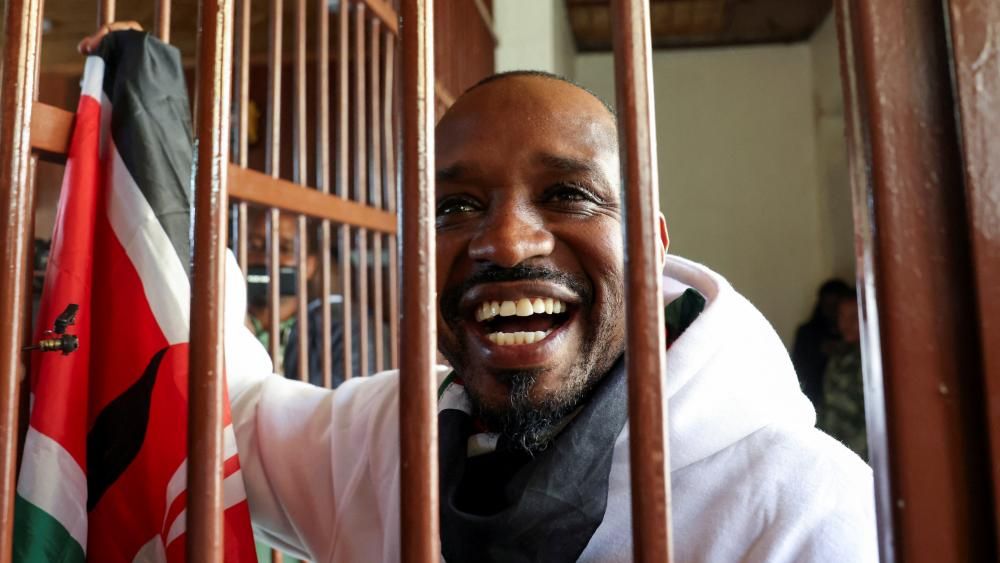
He referenced the broader political climate in Kenya, noting that numerous individuals have reportedly been killed or forcibly disappeared by police following the wave of anti-government protests that swept the country in 2024.
“I feel I could be a target for elimination,” Mwangi said.
“Now the government has an overview of who is in my inner circle, and I fear for their safety too.”
In the aftermath of the 2024 demonstrations, several incidents of abductions targeting government critics were reported. Although officials pledged to investigate the claims, no public conclusions have been released.
Mwangi has declared his intention to contest the 2027 presidential election and has remained one of the most prominent voices criticizing the administration of President William Ruto, particularly over alleged extrajudicial killings in the East African nation.

“The level of targeted harassment and violations has increased since I announced I’m running for president,” he told AFP.
He further expressed worry that members of his campaign team may also be under digital surveillance.
AFP reported that it had reached out to Kenyan police for comment regarding the allegations.
A former photojournalist, Mwangi has been detained multiple times over the years due to his activism. He stated that he plans to rely on Citizen Lab’s forensic findings in court as part of his defense against the criminal charges that remain pending from last year’s arrest.

“We will ask the court to order the government not to leak the contents of my phone online, especially my family pictures,” he said.
In a related development last year, Citizen Lab disclosed that spyware had been planted on the devices of four Kenyan filmmakers who were arrested in connection with a BBC documentary examining security service killings during the 2024 protests.
The latest revelations have intensified debate in Kenya over state surveillance, civil liberties, and the security of opposition figures ahead of the next general election.
What you should know
Citizen Lab, a research group based at the University of Toronto, reported that spyware created by Israeli firm Cellebrite was installed on Boniface Mwangi’s phone after his July 2025 arrest. The tool allegedly allowed authorities to extract sensitive personal and financial data without his consent.
Mwangi, who plans to run for president in 2027, claims he now fears for his life and the safety of those close to him. He argues that the alleged surveillance provides the government with detailed insight into his personal network and campaign operations.
The case adds to wider concerns about digital surveillance and human rights in Kenya, especially following the 2024 anti-government protests, during which activists reported abductions and enforced disappearances. Mwangi says he intends to challenge the charges against him in court using the forensic findings.