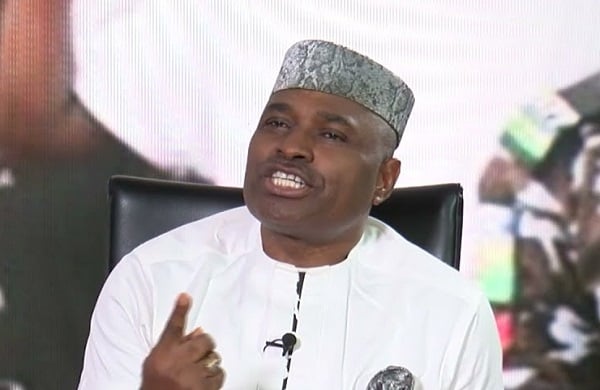
As criticism continues to mount over the Electoral Act Amendment Bill, a chieftain of the African Democratic Congress (ADC), Kenneth Okonkwo, has called on the Senate to eliminate the provision allowing manual transmission of election results.
Okonkwo made this appeal on Tuesday while appearing on Channels Television’s Politics Today, where he weighed in on the controversy surrounding the amendment.
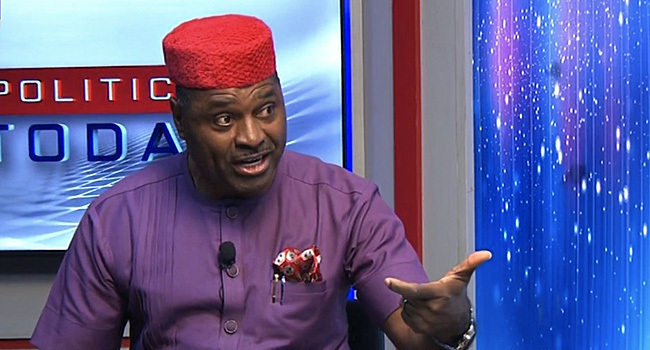
“Once they put that law that you must transmit from the polling unit, I am okay. So any polling officer would not leave the polling unit,” the actor-turned politician said.
He further suggested that lawmakers in the House of Representatives should strengthen the provision to ensure strict compliance.
“The House of Representatives should go further to say that where it is not possible to transmit from the polling unit, that election should be cancelled.”
When questioned about whether cancelling an entire election process due to a failure in electronic transmission would be equitable, Okonkwo argued that the ultimate purpose of accreditation and voting is to produce credible results.
According to him, Nigeria’s slow pace of development is closely linked to flawed electoral processes riddled with irregularities.
“The reason you are doing accreditation, voting is for the result. If you do all these things to get a fraudulent result, what have you gained? You have actually emboldened the criminals. The only problem we have in this country is fraudulent elections.
“On the day we have free and fair elections in Nigeria, 20 years after that, we would become a superpower nation. America is sustained today because power lies with the people.”
Emphasising that democracy transcends party lines, Okonkwo maintained that the system does not belong to the ADC or the All Progressives Congress (APC), urging citizens to collectively defend and preserve democratic values in the country.
The Electoral Act amendment bill successfully scaled third reading in the Senate last week. However, lawmakers declined proposals that sought to mandate real-time electronic transmission of election results as stipulated in Clause 60 (3).
Instead, they maintained the existing provision in the 2022 Electoral Act, which grants the Independent National Electoral Commission (INEC) the authority to determine the method for transmitting election outcomes.
The decision sparked sharp criticism from opposition figures, who argued that it could weaken democratic integrity. Protests were also staged at the National Assembly in response to the development.

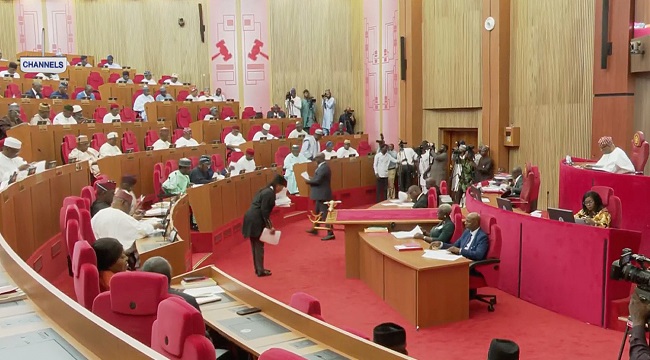
Subsequently, on Tuesday, the Senate revisited its earlier position and approved electronic transmission of results, though without reinstating the “real-time” requirement. Lawmakers specified that in situations where internet connectivity is unavailable, Form EC8A would serve as the principal document for collating results.
During the emergency plenary session, senators also set up a conference committee tasked with reconciling their version of the bill with that approved by the House of Representatives, following widespread backlash over certain amendments introduced into the legislation.
What you should know
Kenneth Okonkwo, a prominent ADC member and former actor, is advocating for a single-mode, compulsory electronic transmission system in Nigeria’s Electoral Act.
He argues that allowing both manual and electronic result transmission could create confusion and encourage electoral malpractice.
The controversy centres on Clause 60(3) of the amended bill, which initially removed the “real-time” requirement for electronic transmission but was later revised to recognise electronic transmission as primary, with manual collation permitted in cases of technical failure.
The debate reflects broader concerns about electoral credibility, transparency, and democratic consolidation in Nigeria.