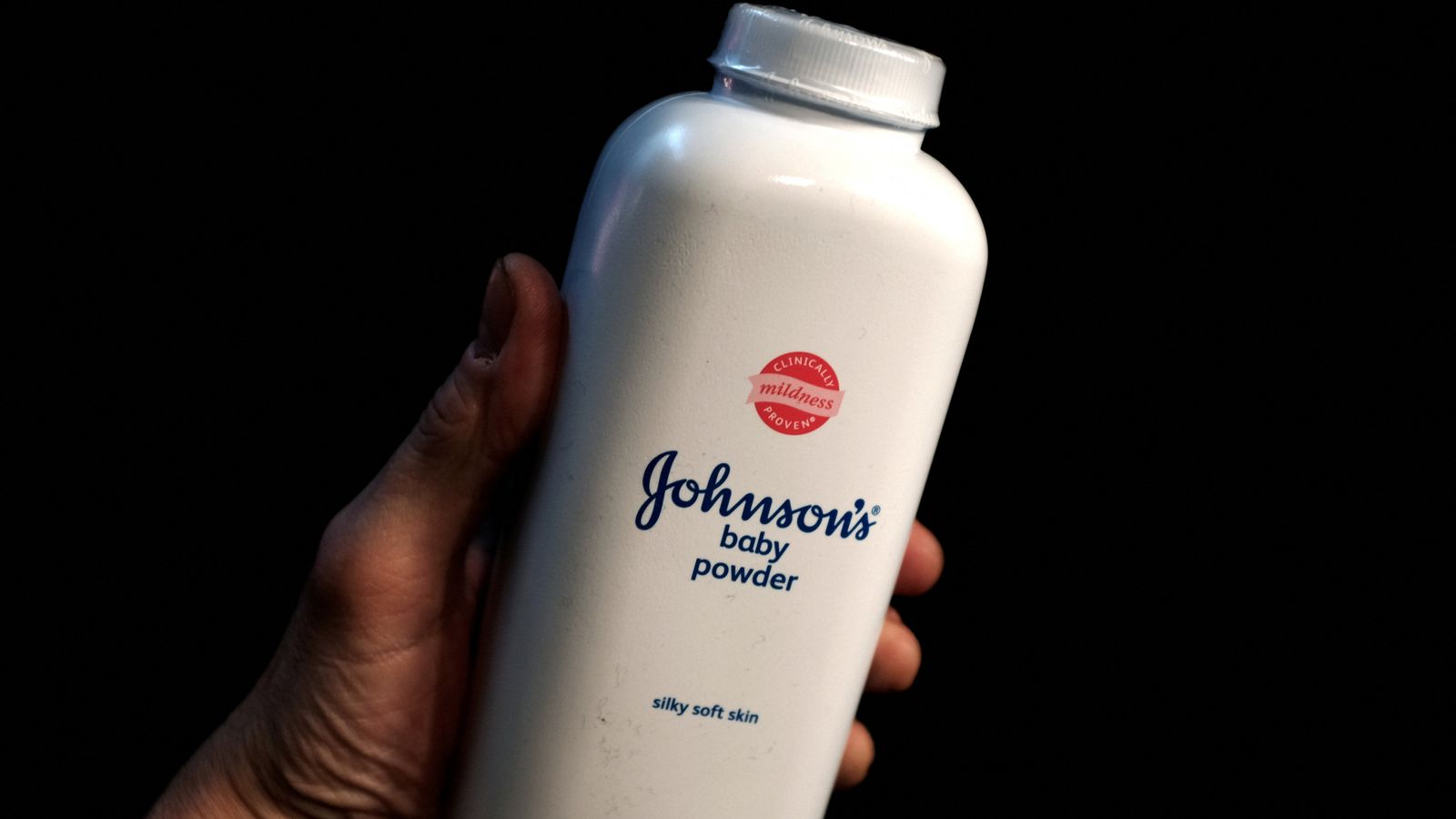
In what could become the largest product liability case in British legal history, Johnson & Johnson is confronting a massive legal claim involving 3,000 claimants who allege the company knowingly sold baby powder contaminated with asbestos-containing minerals.
The lawsuit, brought by KP Law, centers on a trove of internal documents and scientific reports that paint a troubling picture of corporate decision-making spanning more than five decades. At the heart of the case is the allegation that J&J was aware as early as the 1960s that its mineral-based talcum powder contained fibrous forms of talc, along with tremolite and actinolite—both minerals that, in their fibrous form, are classified as asbestos and linked to potentially fatal cancers.
The Science Behind the Concern
The controversy stems from the nature of talc itself. This naturally occurring mineral, widely used in cosmetic products, is frequently mined near asbestos deposits. The danger lies not in talc itself, but in the fibrous, needle-like form of asbestos minerals that can contaminate it during the mining process. These asbestos fibers are established carcinogens, capable of causing devastating diseases, including mesothelioma and ovarian cancer.
According to court documents, a 1973 internal memo allegedly stated, “Our baby powder contains talc fragments classifiable as fiber. Occasionally, sub-trace quantities of tremolite or actinolite are identifiable.” The same year, company executives reportedly discussed patenting a method to remove asbestos fibers from talc, with one document suggesting they “may wish to keep the whole thing confidential rather than allow it to be published in patent form and thus let the whole world know.”
J&J disputes the interpretation of these documents, maintaining that the 1973 letter discussed potential regulatory changes that would have incorrectly classified talc fibers as asbestos. The company says the patent discussions remained confidential because such intellectual property could have been valuable if the method had proven effective, which it ultimately did not.
Marketing Over Safety Concerns
The lawsuit alleges that rather than warning consumers, J&J launched aggressive marketing campaigns portraying its baby powder as a symbol of purity and safety. Marketing strategies evolved over the decades: the 1970s and 1980s focused on portraying the product as pure and gentle for newborns, while by the 1990s and 2000s, campaigns increasingly targeted African American women.
A particularly striking piece of evidence cited in the claim is a 2008 internal email that allegedly stated: “The reality that talc is unsafe for use on/around babies is disturbing… I don’t think we can continue to call it baby powder and keep it in the baby aisle.”
J&J counters that this communication referred to asphyxiation—a rare but known risk with all body powders that was clearly warned about on product labels—and had no connection to cancer or asbestos concerns.
Regulatory Pressure
The lawsuit further alleges that from the early 1970s, J&J executives pushed the US Food and Drug Administration to accept lower sensitivity testing standards that wouldn’t detect small amounts of asbestos fibers. Internal documents reportedly show the company advocated for standards that would tolerate up to 1% asbestos contamination, arguing that more sensitive detection methods were unnecessary.
This allegedly allowed J&J to maintain claims of product purity while misleading both regulators and consumers. The company disputes this characterization, stating the documents reference a hypothetical calculation requested by the FDA itself.
Human Cost
Behind the legal arguments are thousands of individuals suffering from devastating illnesses. Siobhan Ryan, a 63-year-old mother from Somerset, represents the human face of this litigation. After using J&J baby powder on herself and her children—a product she trusted based on its marketing and her mother’s use—she was diagnosed with stage 4 ovarian cancer.
“It was such a shock. We just hugged and cried,” Ryan recalled of receiving her diagnosis. After enduring three rounds of chemotherapy, a near-fatal bout of sepsis, and major abdominal surgery, she survived 18 months. But recently, cancer returned in her groin, and doctors have deemed it inoperable.
Many UK claimants suffer from ovarian cancer, mesothelioma—a cancer almost exclusively caused by asbestos exposure—or other cancers, all after extended use of J&J baby powder.
US Precedent
This UK action mirrors extensive American litigation where multiple lawsuits have resulted in billions of dollars in damages awarded to claimants, though J&J has successfully appealed some verdicts. Earlier this month, a Connecticut court ordered J&J and its successor entities to pay $25 million to a man with terminal peritoneal mesothelioma after lifelong use of the baby powder, with the jury finding the company negligent.
That trial included testimony from Dr. Steve Mann, J&J’s former director of toxicology for consumer products, who admitted to making safety claims without reviewing test data and receiving results showing asbestos in the powder but failing to inform management or regulators. The judge noted that safer alternatives like cornstarch were available and known to the company.
Company Response
J&J has firmly denied all allegations, maintaining that its baby powder “was compliant with any required regulatory standards, did not contain asbestos, and does not cause cancer.” The company’s consumer health arm has been moved to a new entity called Kenvue, which emphasizes that the product’s safety is supported by years of testing from independent laboratories, universities, and health authorities worldwide.
The company stopped selling talc-based baby powder in the US in 2020 and in the UK in 2023, though it maintains this decision was not an admission of wrongdoing.
With damages potentially reaching hundreds of millions of pounds, this case represents not just a legal watershed for product liability law in Britain, but a reckoning over corporate responsibility, regulatory oversight, and the trust consumers place in household brands marketed for the most vulnerable—newborn babies.
WHAT YOU SHOULD KNOW
Johnson & Johnson faces a massive UK lawsuit from 3,000 people alleging the company knew for decades that its baby powder contained asbestos-linked minerals but continued selling it without warnings, prioritizing profits over safety.