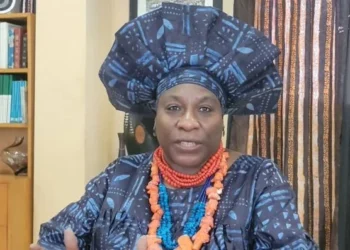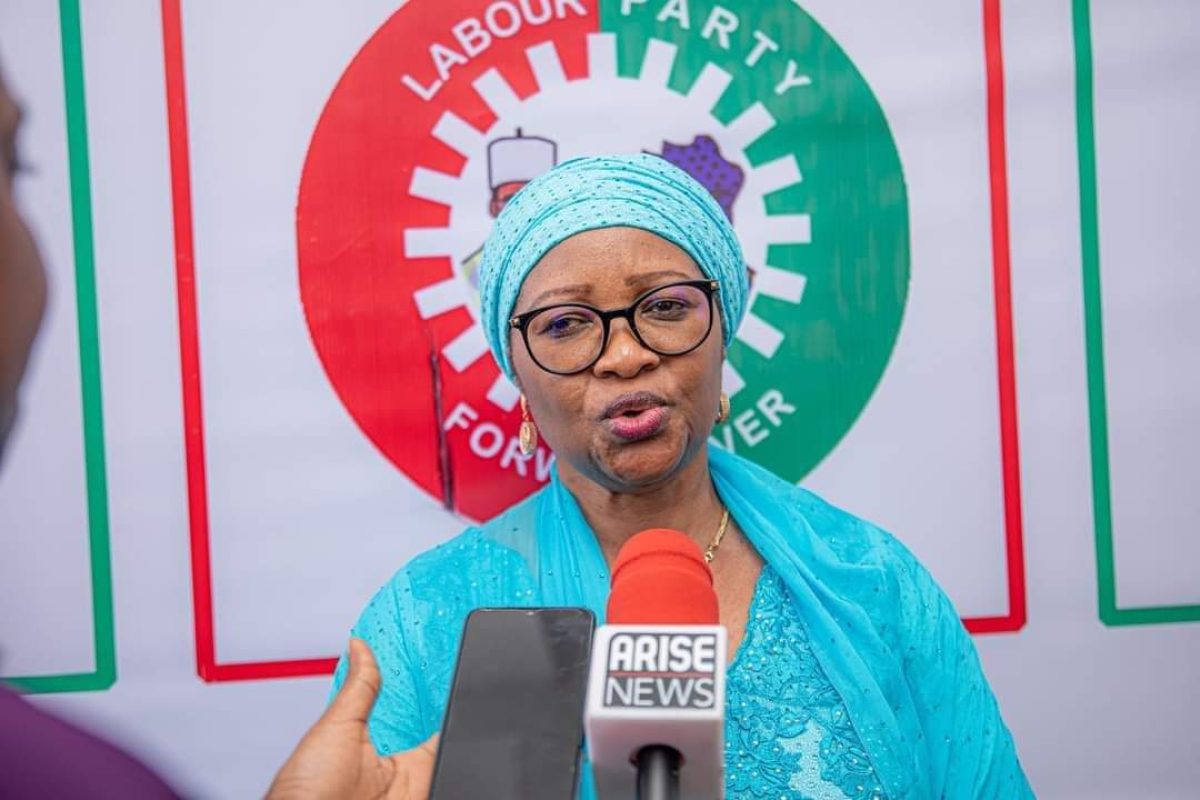
The Independent National Electoral Commission (INEC) has formally acknowledged the National Working Committee (NWC) of the Labour Party (LP) under the leadership of Nenadi Usman.
INEC explained that the recognition was in compliance with a court order directing the electoral body to accord official status to the Usman-led leadership.
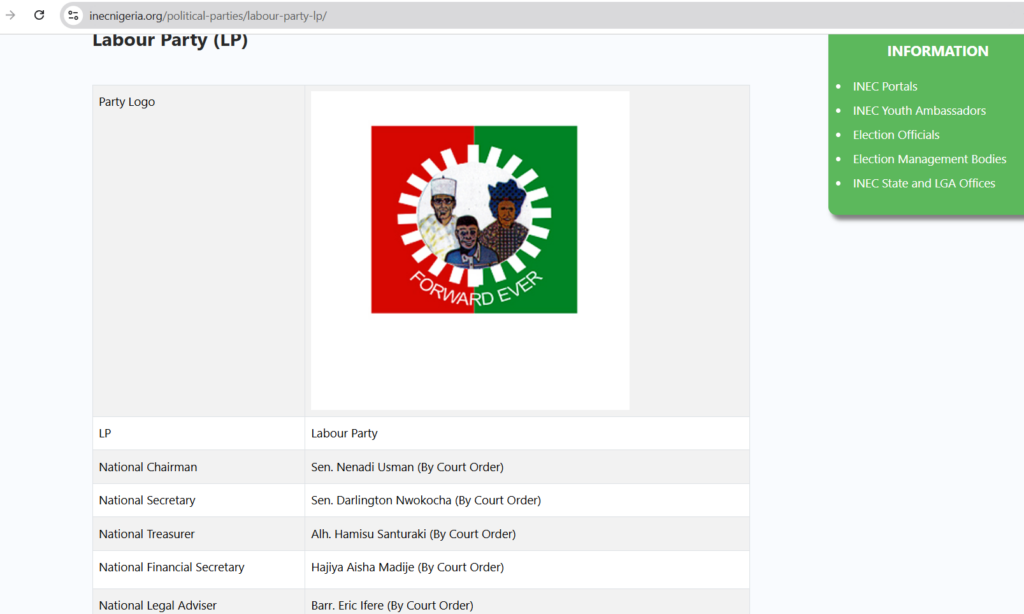
A review of details published on the INEC website as of Friday confirmed that Nenadi Usman is now listed as the caretaker committee chairperson of the Labour Party by the commission.
Also reflected on the commission’s platform are other members of the party’s recognised NWC, including Senator Darlington Nwokocha as National Secretary, Hamisu Santuraki as National Treasurer; Aisha Madije as National Financial Secretary, and Eric Ifere as National Legal Adviser.
This latest development further deepens the ongoing leadership tussle within the Labour Party, one of Nigeria’s prominent opposition parties, and adds fresh complexity to the internal struggle for control of the party’s structure.
On January 21, the Federal High Court in Abuja affirmed the Usman-led NWC as the legitimate leadership of the Labour Party, effectively removing Julius Abure as the party’s national chairman.
Justice Peter Lifu based his decision on an earlier judgment of the Supreme Court, which declared Nenadi Usman as the authentic leader of the Labour Party.
The judge subsequently ordered INEC to recognise the Usman-led NWC as the lawful authority of the party pending the conduct of its next national convention.
According to Justice Lifu, the materials presented before the court clearly showed that Abure’s tenure as national chairman of the Labour Party had elapsed.
While dismissing arguments that the matter amounted to a non-justiciable internal party dispute, the judge maintained that the formation of a Caretaker Committee was “a necessity” arising directly from the Supreme Court’s prior ruling.
In response to the judgment, the faction loyal to Abure announced plans to challenge the decision at the appellate court.
Speaking on behalf of the group, its spokesperson, Obiorah Ifoh, argued that “the judgment was a clear contradiction of the Supreme Court judgment, which clearly stated that no court has the power to appoint leadership for any political party and that leadership issues are internal affairs of political parties.”
Ifoh further insisted that the Court of Appeal had previously validated Abure’s NWC as the party’s authentic leadership.
“To us, this is a clear contradiction of what the Supreme Court said. The apex court held that all matters relating to the leadership of a political party are internal affairs of the party, and that has been its consistent position,” he said.
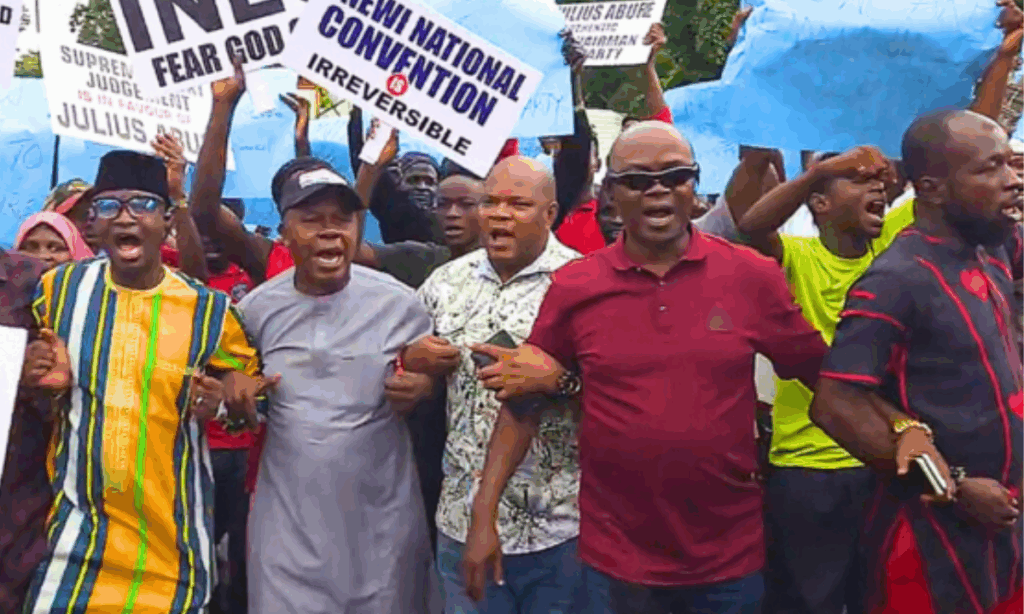
The leadership crisis within the Labour Party can be traced back to the period following the 2023 general elections, during which the party’s presidential candidate, Peter Obi, secured over six million votes nationwide.
As preparations for the 2027 elections intensified, Obi announced his defection to the African Democratic Congress (ADC), a move that prompted the Labour Party to appoint Abia State Governor, Alex Otti, as its national leader.
What you should know
INEC’s recognition of the Nenadi Usman–led NWC marks a significant turning point in the Labour Party’s prolonged leadership dispute.
The decision, rooted in court orders and Supreme Court interpretations, effectively sidelines the Abure faction for now while strengthening the caretaker committee’s authority.
With appeals already signalled, the crisis remains unresolved and could influence the party’s organisational stability and electoral strategy ahead of the 2027 general elections, especially following Peter Obi’s exit and shifting alliances within Nigeria’s opposition landscape.