President Bola Tinubu has sent the State Police Bill 2026 to the House of Representatives, seeking constitutional approval to let Nigeria’s 36 states run their own police forces alongside the federal police, a first since independence.
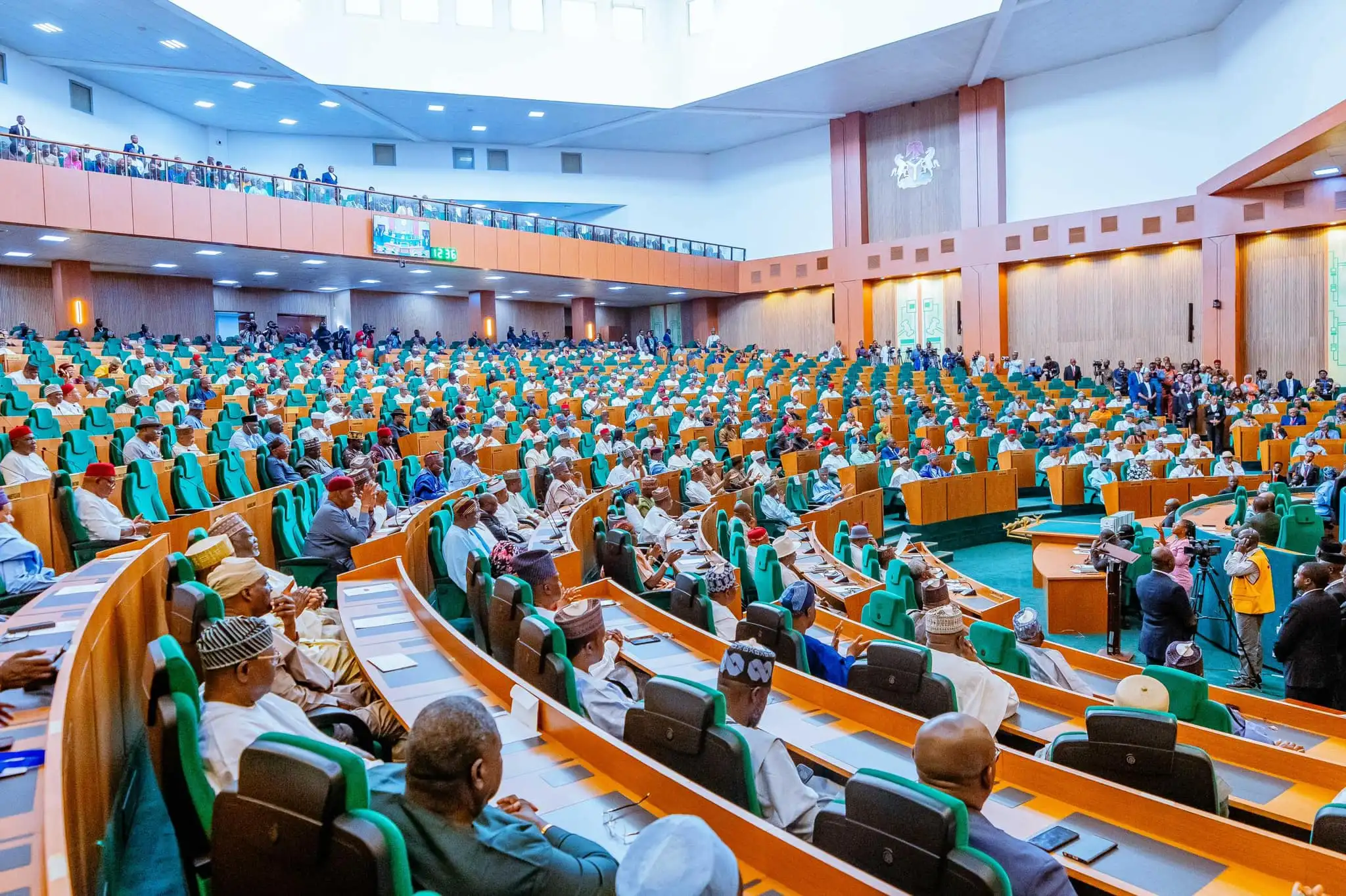
In a letter addressed to Speaker Tajudeen Abbas and read on the floor of the House, the president described the bill as the legal vehicle through which his administration hopes to reorganize the country’s security architecture, replacing a single, centrally controlled police command with a dual system in which federal and state agencies operate side by side.
“I am delighted to present to the House of Representatives for consideration the Constitution of the Federal Republic of Nigeria (Alteration) (State Police) Bill, 2026,” Tinubu wrote, framing the amendment as a pathway to state-level policing rather than an immediate rollout.
He told lawmakers the bill “builds on the significant work already done” by the House and adds further safeguards meant to let a dual policing structure take shape “quickly and effectively.”
Both chambers of the National Assembly have already worked through their own versions of the reform: the House passed a Constitution Alteration Bill on state police on June 11, and the Senate followed on June 24, clearing the measure with the two-thirds majority the constitution demands for amendments after Senate Leader Opeyemi Bamidele walked colleagues through its general principles and the chamber conducted a clause-by-clause review before third reading.
Tinubu’s own executive version was first read in the Senate on June 15 and referred to the Committee on the Review of the 1999 Constitution before ultimately clearing the upper chamber.
Senate President Godswill Akpabio has said the chamber intends to move the process along briskly, with senators publicly pledging swift passage of what one lawmaker on the floor called a legacy initiative that bears directly on the 2027 elections.
With the executive bill now before the House and the Senate having already signed off, the lower chamber represents the last National Assembly checkpoint before the reform can move to the country’s 36 state houses of assembly, the next, and arguably more difficult, stage of Nigeria’s rigorous constitutional amendment process.
The idea of decentralizing Nigeria’s police force is not new; it has been one of the country’s most contested constitutional debates since the return to civilian rule in 1999, repeatedly raised and repeatedly stalled.
Advocates, including several state governors, have long argued that a single command structure headquartered in Abuja cannot realistically police a country as vast and varied as Nigeria, where security threats range from banditry and kidnapping in the North-West to farmer-herder clashes in the Middle Belt and separatist agitation in the South-East.
That argument found a vivid expression in the Senate debate, where lawmakers framed the reform around response times: in communities far from federal police infrastructure, the argument goes, help routinely arrives too late to prevent an incident from spiraling out of control.
Governors, for their part, have pressed for a state police architecture that gives them meaningful control over recruitment and day-to-day operations in their territories, a demand that has run into equally persistent worries, voiced by Akpabio among others, that state-run police units could be turned into instruments of political intimidation by governors or other officeholders unless the legislation is built with firm accountability mechanisms.
Managing that tension genuine operational autonomy for states without opening the door to abuse has been the central design challenge for lawmakers drafting the amendment and is precisely what Tinubu’s letter points to when it speaks of “additional safeguards.”
Nigeria’s amendment process is deliberately steep. A constitutional alteration needs the backing of two-thirds of members in both the Senate and the House, and it must then be ratified by at least 24 of the country’s 36 state houses of assembly before it can return to the president for assent.
The Senate has already cleared its threshold; the House’s concurrence on the executive bill is the next formal step, after which the measure moves to the states.
Lagos State Governor Babajide Sanwo-Olu, congratulating the Senate on its passage of the bill, called the moment “epochal” and tied it to Tinubu’s own long-standing advocacy for the policy dating back to his years as Lagos governor before 1999.
Other governors, through the Nigeria Governors’ Forum, have been meeting with state attorneys-general and security officials in Abuja to work through the operational details: funding, personnel management, and how state commands would relate to the federal police well ahead of any final sign-off.
For now, all eyes turn to the House of Representatives, where lawmakers have signaled they intend to act quickly. If the House concurs, the bill’s fate will rest with 36 state legislatures, the stage at which many past attempts at policing reform in Nigeria have stalled and the one that will determine whether this latest push finally becomes law.
WHAT YOU SHOULD KNOW
The state police bill is now one step from clearing the National Assembly: the Senate has passed it, and the House, which already passed its own version, is expected to concur quickly.
The real test still lies ahead: ratification by at least 24 of Nigeria’s 36 state assemblies. That’s the stage where past attempts at this reform have died and where the tension between giving governors real control and preventing political abuse of state police will actually get decided.