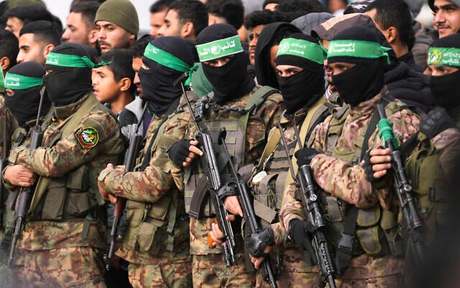
The Palestinian Islamist movement Hamas has called on Iran to avoid attacking neighbouring states while reaffirming Tehran’s right to defend itself in the ongoing war involving Israel and the United States.
In a statement released on Saturday, Hamas acknowledged Iran’s right to respond to military action but urged restraint in the choice of targets.
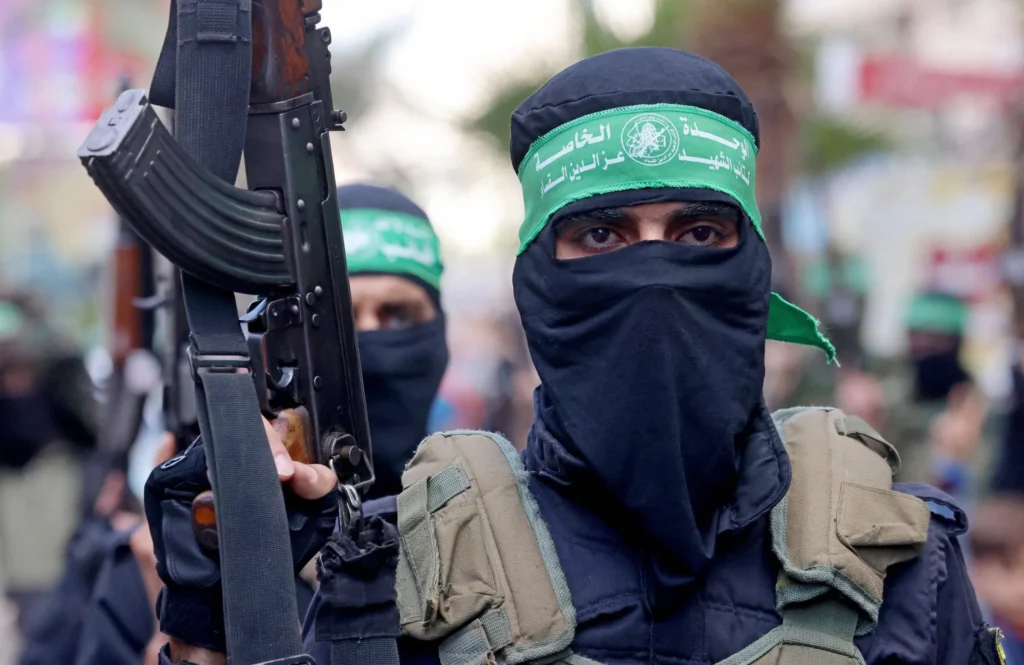
“While affirming the right of the Islamic Republic of Iran to respond to this aggression by all available means in accordance with international norms and laws, the movement calls on the brothers in Iran to avoid targeting neighbouring countries,” the group said.
The conflict has continued to escalate across the region, with fresh attacks and rising tensions reported in several countries.
In Baghdad, a drone struck the United States Embassy Baghdad on Saturday, according to an Iraqi security official. An AFP journalist reported seeing smoke rising from the diplomatic complex, while another security source confirmed that the embassy had been targeted.
The incident occurred shortly after explosions were reported in the Iraqi capital following two strikes against Kataeb Hezbollah, killing two members of the group, including a senior figure. Security sources did not identify who carried out the attacks.
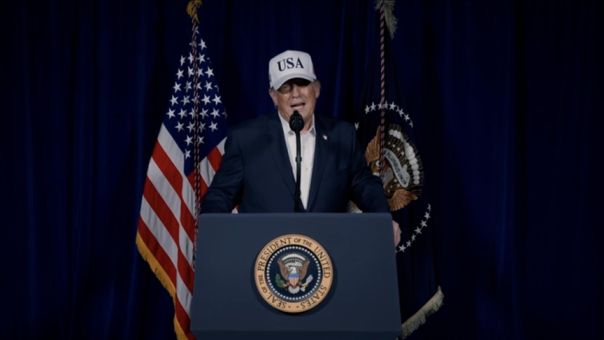
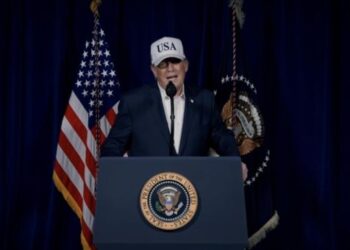
Meanwhile, Donald Trump said on Friday that Iran had been “totally defeated” in the ongoing US-Israeli military campaign, even as Iranian authorities vowed to continue fighting.
“The Fake News Media hates to report how well the United States Military has done against Iran, which is totally defeated and wants a deal – But not a deal that I would accept!” Trump wrote on his Truth Social platform.
Trump also revealed that US forces had conducted heavy strikes on targets located on Kharg Island, which handles the majority of Iran’s crude exports. He warned that the island’s oil infrastructure could be destroyed if Iran interferes with shipping through the Strait of Hormuz.
“I have chosen NOT to wipe out the Oil Infrastructure on the Island. However, should Iran, or anyone else, do anything to interfere with the Free and Safe Passage of Ships through the Strait of Hormuz, I will immediately reconsider,” he said.
Iran’s military responded by warning that any attack on its oil infrastructure would lead to retaliatory strikes against US-linked energy facilities in the region.
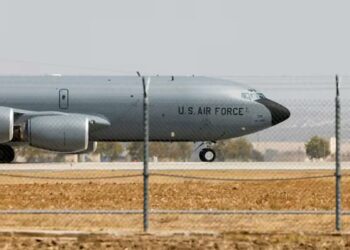
Trump also said the United States Navy would soon begin escorting oil tankers through the Strait of Hormuz in an effort to stabilise global energy supply and counter soaring oil prices.
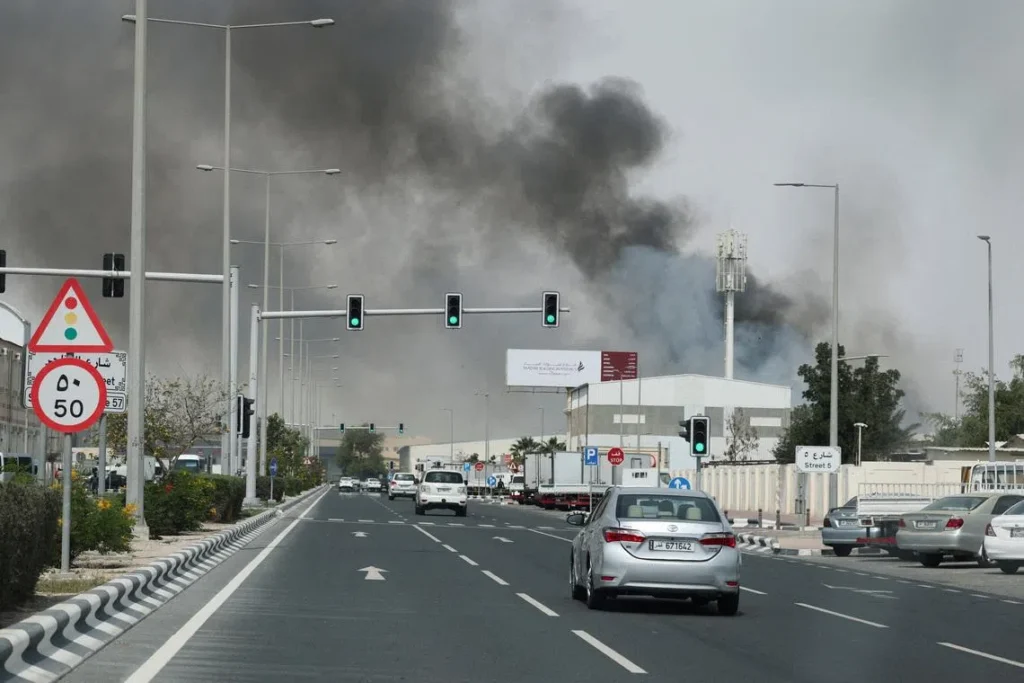
Elsewhere in the Gulf, Qatar announced the evacuation of several “key areas” as Iran’s retaliatory operations continue across the region. Authorities in the capital, Doha, issued alerts instructing residents in parts of the city to move to safer locations as a precaution.
Iran also launched another wave of missiles toward Israel shortly after midnight on Saturday, according to Iranian state media. Israel’s military confirmed detecting the missiles and said it was working to intercept them after sirens sounded across several areas, sending residents into shelters.
The conflict has also spread to Lebanon, where the health ministry said an Israeli strike on a healthcare facility in southern Lebanon killed 12 medical personnel. Officials described it as the second attack on the health sector within hours. Another earlier strike in Sawaneh reportedly killed two paramedics linked to Hezbollah and its ally Amal.
Lebanese authorities say Israeli strikes have killed at least 773 people in the country since early March.
Hezbollah leader Naim Qassem said the group was prepared for a prolonged confrontation with Israel, after Israeli officials warned that Lebanon could face increasing damage to its infrastructure.
Lebanon entered the conflict after Hezbollah launched attacks on Israel following the killing of Iran’s supreme leader Ali Khamenei in US-Israeli strikes earlier in the war.
Meanwhile, reports by The Wall Street Journal and CNN indicated that the United States is strengthening its military presence in the Middle East by deploying an amphibious assault ship and an expeditionary unit consisting of roughly 2,500 Marines and sailors.
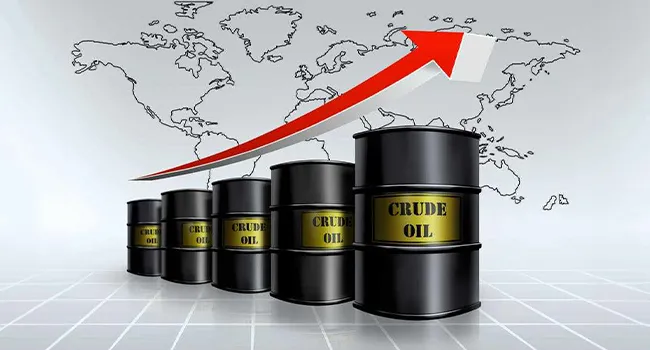
Global markets have reacted nervously to the expanding conflict. Oil prices have remained above $100 per barrel, with Brent Crude closing at $103.14 a barrel on Friday after rising more than 42 percent since the start of the war.
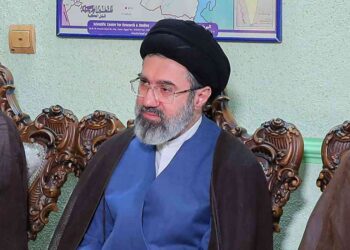
In another development, the United States Department of State announced a $10 million reward for information on Iran’s new supreme leader Mojtaba Khamenei and other senior officials.
The conflict is also affecting global sporting events. According to sources familiar with the matter, Formula One races scheduled in Bahrain and Saudi Arabia may be cancelled or rescheduled as the war spreads across the region.
Israel’s military said it has carried out about 7,600 strikes across Iran and 1,100 in Lebanon since launching its joint operation with the United States.
What you should know
The Strait of Hormuz is one of the world’s most important maritime chokepoints, with roughly one-fifth of global oil shipments passing through the narrow waterway each day.
Any military escalation around the strait can significantly affect global energy supply, causing sharp increases in oil prices and volatility in international financial markets.