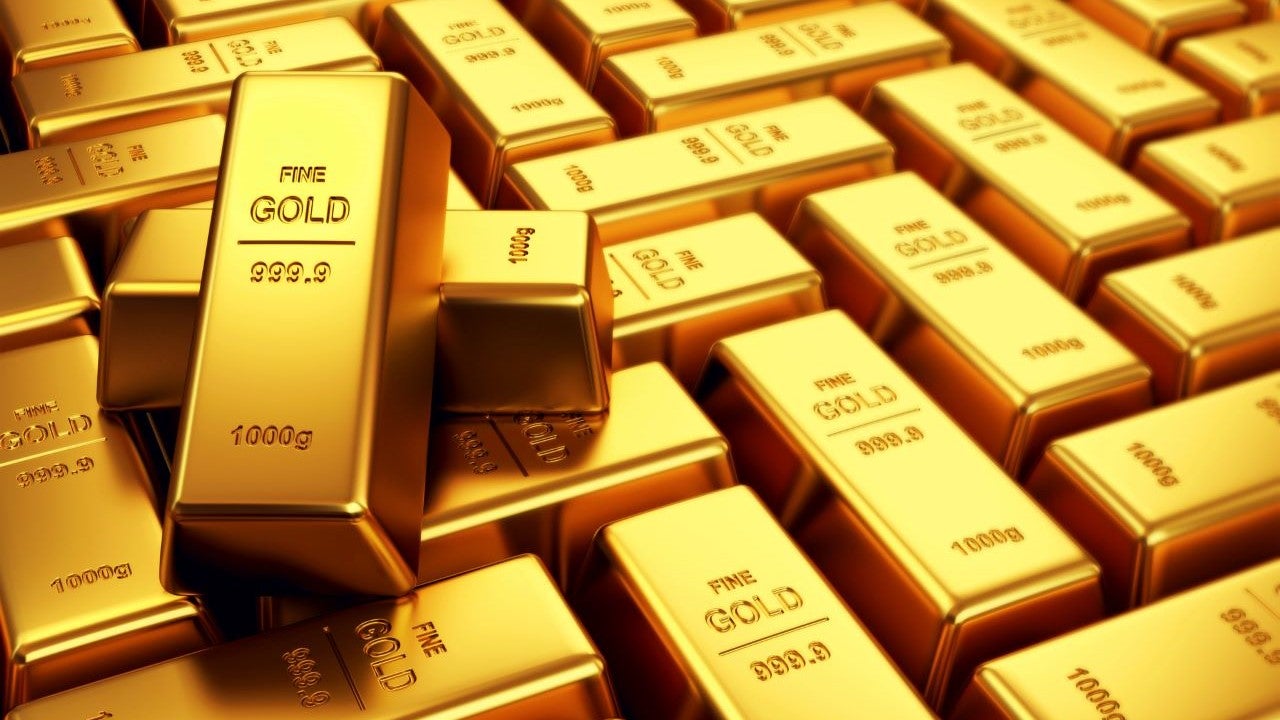
Gold blazed past yet another milestone on Tuesday morning, briefly touching $3,977.19 per ounce in Asian trading before settling at $3,956.02 by mid-morning European hours, capping a remarkable 51% surge for the year that shows no signs of abating.
The latest record comes as investors increasingly abandon traditional safe havens in favor of the yellow metal, with exchange-traded fund inflows accelerating amid what Ole Hansen, head of commodity strategy at Saxo Bank, describes as “FOMO”—fear of missing out—and “eroding trust in traditional safe havens.”
The rally reflects a perfect storm of supportive factors: relentless central bank accumulation, expectations of further Federal Reserve interest rate reductions, a weakening U.S. dollar, and mounting geopolitical tensions that have sent both institutional and retail investors scrambling for portfolio insurance.
SHUTDOWN CLOUDS ECONOMIC PICTURE
Adding fuel to gold’s ascent, the U.S. government shutdown entered its seventh day Tuesday with no resolution in sight. The impasse has forced the postponement of critical economic data releases, leaving market participants flying blind as they attempt to gauge the Federal Reserve’s next moves.
The White House on Monday walked back President Donald Trump‘s assertions that federal employee layoffs had already begun. However, officials cautioned that job losses remain a distinct possibility if the standoff continues. The uncertainty has only strengthened gold’s appeal as investors seek shelter from potential economic disruption.
“The shutdown has essentially created an information vacuum,” said one London-based commodities trader who requested anonymity. “When you can’t get reliable government data, investors naturally gravitate toward tangible assets like gold.”
Despite the data blackout, markets continue to price in a quarter-point rate cut at this month’s Federal Reserve meeting, with another 25 basis points expected in December. Such reductions would further diminish the opportunity cost of holding non-yielding assets like gold, which pays no interest or dividends but tends to flourish when borrowing costs decline.
CENTRAL BANKS LEAD THE CHARGE
Underpinning gold’s extraordinary performance this year has been sustained buying from central banks worldwide, particularly in Asia. Fresh data released on Tuesday showed that China’s central bank extended its gold-buying streak to 11 consecutive months in September, adding to its reserves as Beijing continues its long-term strategy of diversifying away from dollar-denominated assets.
This institutional demand has provided a sturdy foundation beneath prices even as short-term speculators enter and exit positions. Combined with lower funding costs and a depreciating dollar, the fundamentals have aligned to create what some analysts believe could be a multi-year bull market.
BULLISH FORECASTS MULTIPLY
The Street’s most prominent voices are now competing to raise their price targets. Goldman Sachs on Monday boosted its December 2026 forecast to a staggering $4,900 per ounce, up from a previous projection of $4,300—itself a figure that would have seemed fantastical just months ago.
Michael Langford, chief investment officer at Scorpion Minerals, offered an even more aggressive near-term outlook, predicting gold will hit $4,300 within the next six months. “As the USD is expected to continue to depreciate and the overall macro geopolitical environment remains positive for gold price appreciation,” Langford said, the precious metal appears poised to extend its historic run.
GEOPOLITICAL TREMORS REVERBERATE
Beyond America’s borders, political instability in two of the world’s largest economies has added another layer of anxiety to global markets. Political upheaval in both Japan and France roiled currency and sovereign bond markets for a second consecutive day on Tuesday, sending investors seeking refuge in assets perceived as immune to government dysfunction.
The simultaneous crises in Tokyo and Paris have underscored a growing theme: traditional political and economic anchors appear increasingly unstable, making gold’s immutable properties more attractive than ever.
OTHER PRECIOUS METALS LAG
While gold commands the spotlight, its sister metals posted mixed to negative returns Tuesday. Silver, often viewed as gold’s more volatile cousin, declined 0.9% to $48.11 per ounce. Platinum fell 1% to $1,609.04, and palladium—heavily dependent on automotive demand—held steady at $1,317.50.
The divergence suggests investors are specifically seeking gold’s unique combination of liquidity, universal recognition, and crisis-era performance rather than making broad bets across the precious metals complex.
OUTLOOK REMAINS BULLISH
As trading continues, the consensus among precious metals strategists tilts decidedly bullish. With central banks showing no inclination to slow their purchases, the Federal Reserve appearing committed to an easing cycle, and geopolitical risks multiplying across continents, the path of least resistance for gold appears to be higher.
Whether the metal can sustain its momentum through year-end and beyond remains to be seen, but for now, the ancient store of value is once again proving its worth in an age of modern uncertainty.
WHAT YOU SHOULD KNOW
Gold reached an all-time high of $3,977.19 per ounce on Tuesday, driven by a convergence of powerful forces: the ongoing U.S. government shutdown blocking critical economic data, relentless central bank buying (China’s 11th straight month), expected Federal Reserve rate cuts, and escalating geopolitical turmoil in Japan and France.