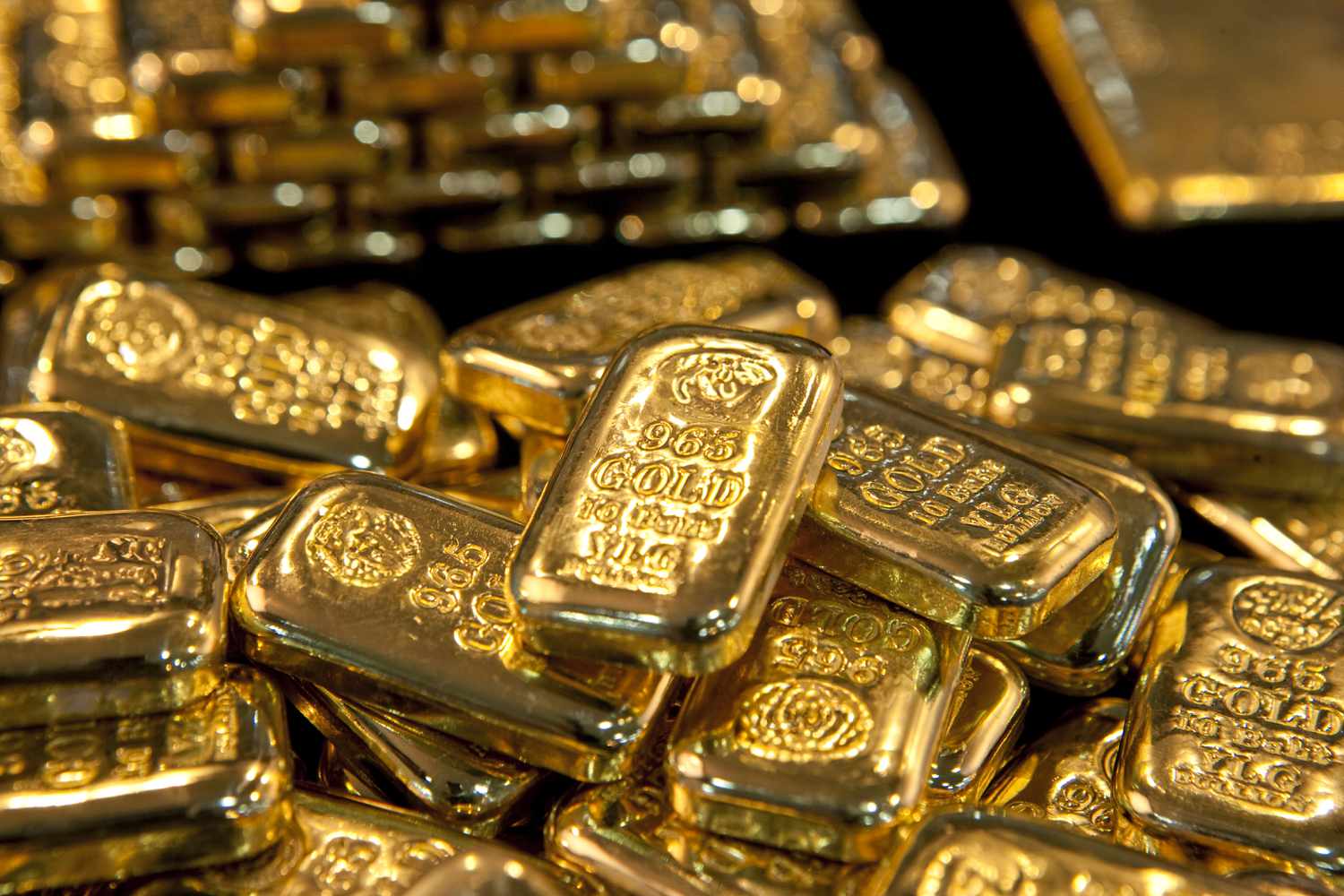
Gold prices climbed to their highest level in approximately a week on Tuesday, continuing a robust rally driven by investor flight to safety following the extraordinary capture of Venezuelan President Nicolas Maduro and mounting anticipation that the Federal Reserve will cut interest rates in response to deteriorating economic conditions.
Spot gold advanced 0.1% to $4,452.60 per ounce as of 0946 GMT, building on Monday’s impressive 3% surge. The yellow metal remains within striking distance of its record peak of $4,549.71 reached on December 26, capping a remarkable year in which bullion soared 64%—its strongest annual performance in more than four decades, since 1979.
U.S. gold futures for February delivery rose 0.3% to $4,462.60, reflecting sustained demand for the traditional safe-haven asset.
“Gold prices are supported by increased safe-haven demand amid heightened geopolitical uncertainty following weekend events in Venezuela, as well as by rising bets on Federal Reserve rate cuts after the release of disappointing U.S. manufacturing PMI data,” explained Ricardo Evangelista, analyst at ActivTrades.
The arrest of Maduro has sent shockwaves through international markets, raising fresh concerns about regional stability and potential ramifications for global energy supplies. The Venezuelan leader pleaded not guilty on Monday during his arraignment in a New York federal court, where he faces serious charges, including narco-terrorism and possession of machine guns and destructive devices. The unprecedented detention of a sitting head of state has intensified geopolitical anxieties, prompting investors to seek refuge in gold and other safe-haven assets.
Adding to the bullish sentiment for precious metals, recent U.S. economic data has painted a troubling picture. Manufacturing activity contracted more sharply than economists anticipated in December, falling to its weakest level in 14 months. The disappointing figures have reinforced expectations that the Federal Reserve may need to reverse course on its monetary policy stance sooner rather than later.
Minneapolis Federal Reserve President Neel Kashkari underscored these concerns on Monday, warning that the unemployment rate could “pop” higher, thereby increasing the likelihood of interest rate reductions. Market participants are currently pricing in two rate cuts this year, though all eyes are now firmly fixed on Friday’s nonfarm payrolls report for December, which could prove decisive in shaping the trajectory of future monetary policy.
Gold and other non-yielding assets typically flourish in low-interest-rate environments, as the opportunity cost of holding them diminishes. They also tend to attract capital during periods of geopolitical upheaval or economic uncertainty, as investors seek to preserve wealth.
The broader precious metals complex mirrored gold’s strength on Tuesday. Spot silver surged 1.9% to $77.97 per ounce, reaching its highest level in a week. Silver came within reach of its all-time high of $83.62 struck on December 29, concluding 2025 with a staggering 147% gain—its strongest annual performance on record, fueled by robust industrial demand and heightened investor appetite.
Platinum advanced 1.4% to $2,303.90 per ounce, having touched an all-time high of $2,478.50 last Monday, while palladium edged 0.2% higher to $1,710.25 per ounce.
As market volatility shows few signs of abating and economic indicators continue to deteriorate, analysts expect precious metals to remain well-supported in the near term. The confluence of geopolitical instability, weakening economic data, and the prospect of looser monetary policy appears to have created an ideal environment for gold and its precious metal counterparts to extend their historic rallies.
Traders and investors will be closely monitoring developments in Venezuela, parsing Federal Reserve commentary, and scrutinizing Friday’s employment data for further clues about the path ahead for both the economy and precious metal prices.
WHAT YOU SHOULD KNOW
Gold prices hit a one-week high near $4,452 per ounce, driven by two primary forces: the geopolitical shock of Venezuelan President Maduro’s capture by U.S. authorities and growing expectations that the Federal Reserve will cut interest rates after disappointing manufacturing data showed the economy weakening. With markets pricing in two rate cuts this year and geopolitical tensions escalating, investors are piling into gold and precious metals as safe-haven assets.
Friday’s U.S. jobs report will be critical in determining whether this rally continues. Gold’s 64% gain in the previous year marked its best performance since 1979, while silver surged an unprecedented 147%.