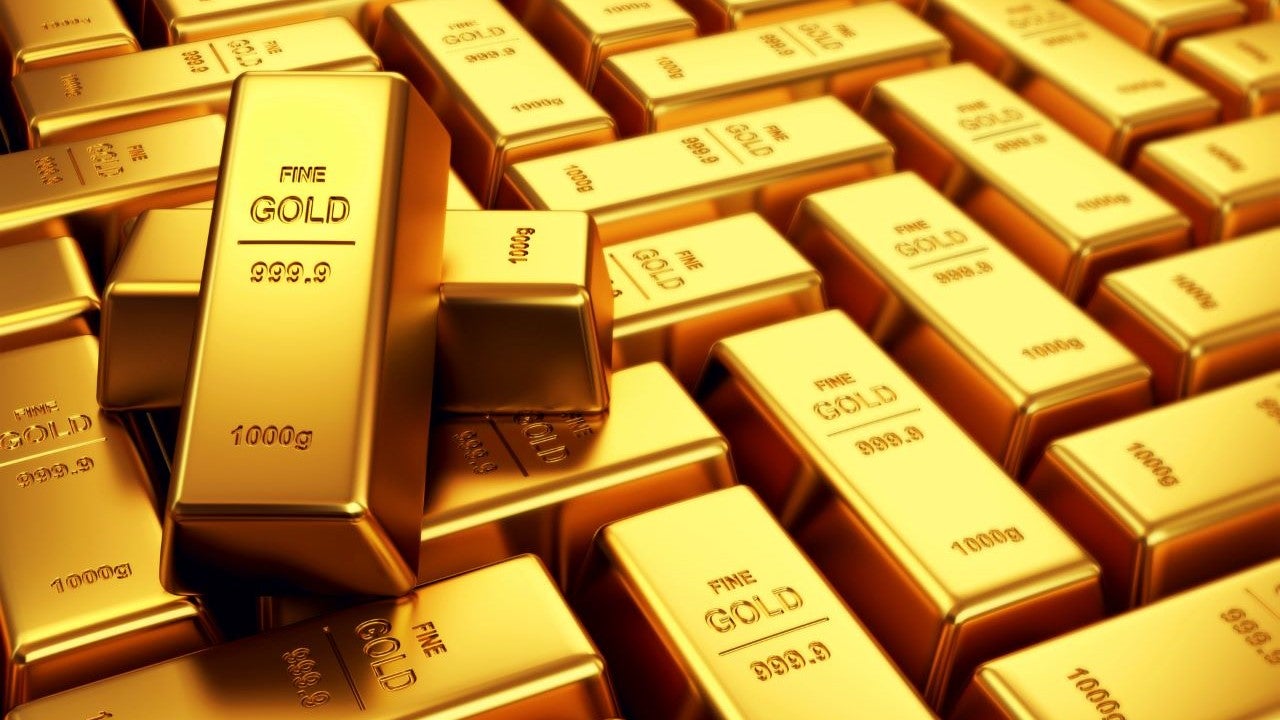
Gold prices soared to unprecedented heights on Monday, with the precious metal breaking through the $3,700 barrier as investors positioned themselves ahead of a critical week for monetary policy signals from the Federal Reserve.
Spot gold climbed 1.2% to $3,726.42 per ounce by late morning GMT, after touching an intraday record of $3,728.22. December gold futures posted even stronger gains, advancing 1.5% to $3,760.90, underscoring the broad-based momentum in precious metals markets.
The rally comes as market participants increasingly bet on an accommodative path from the Federal Reserve, following last week’s 25 basis point rate cut—the central bank’s first reduction since December 2023.
Fed Chair Jerome Powell is scheduled to speak on Tuesday, kicking off a series of appearances by central bank officials that could provide crucial insights into the pace and scope of future policy easing.
“I would expect gold to reach new record highs this week with Fed officials likely to indicate further rate cuts but also being data-dependent on the pace and magnitude of cuts,” said Giovanni Staunovo, a commodity analyst at UBS.
The market’s focus will sharpen toward Friday’s release of core personal consumption expenditure data, the Fed’s preferred inflation gauge, which could influence the central bank’s next moves. Current market pricing, reflected in CME FedWatch probabilities, shows a 92% chance of a quarter-point cut in October and an 81% probability for December, suggesting investors are confident in continued monetary easing.
What makes this rally particularly noteworthy is the shifting composition of gold demand. Staunovo noted a “shift in the factors supporting gold,” explaining that while central bank purchases and Asian demand have historically driven prices, “now we are also starting to see Western investors looking to add gold, visible in gold ETF holdings, driven by expectations of falling U.S. rates.”
This broadening investor base has helped propel bullion to remarkable gains of more than 42% year-to-date, a performance driven by a confluence of factors, including geopolitical tensions, economic uncertainty, aggressive central bank buying, and the prospect of lower interest rates that reduce the opportunity cost of holding non-yielding assets.
Technical analysts see further upside potential, with spot gold potentially testing resistance at $3,705 per ounce. A break above that level could propel prices into a range between $3,719 and $3,739, according to chart watchers.
Looking ahead, UBS maintains an optimistic long-term outlook, with Staunovo projecting gold could reach $3,900 by mid-2026 as supportive fundamentals remain intact.
The precious metals complex saw broad-based strength on Monday, with silver posting particularly impressive gains. Spot silver surged 1.6% to $43.76 per ounce, reaching levels not seen in more than 14 years. Platinum advanced 1.1% to $1,419.42, while palladium climbed 1.9% to $1,170.75.
As investors navigate an environment of shifting monetary policy, persistent geopolitical risks, and economic uncertainty, gold’s traditional role as a store of value continues to attract capital flows. With key Fed speakers and inflation data on the horizon, this week could prove pivotal in determining whether the current rally has more room to run or if profit-taking pressures will emerge at these elevated levels.
The coming days will test whether gold can sustain its momentum above the psychologically important $3,700 level, as markets parse every word from Fed officials for clues about the future path of interest rates.
WHAT YOU SHOULD KNOW
Gold hit a record high above $3,700 per ounce on Monday as investors bet heavily on further Federal Reserve rate cuts. The 42% year-to-date surge is now being driven not just by traditional central bank and Asian buyers but increasingly by Western investors positioning for lower U.S. interest rates.
With Fed Chair Powell speaking Tuesday and key inflation data due Friday, this week could determine if gold continues its historic rally toward the projected $3,900 target by 2026.