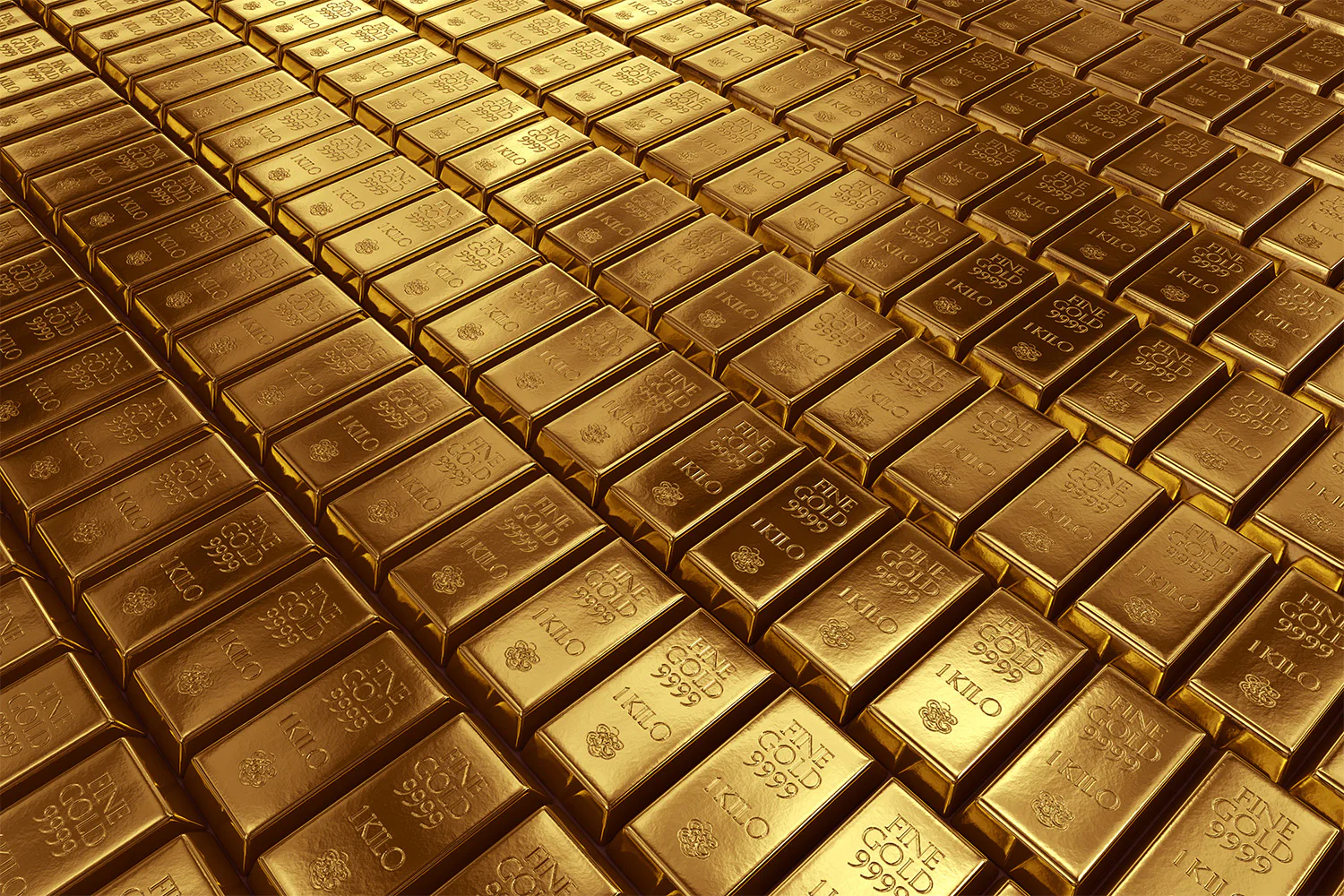
Gold prices maintained their foothold above the psychologically significant $5,000-per-ounce threshold on Monday, extending a remarkable rally fueled by U.S. dollar weakness and mounting speculation that the Federal Reserve may resume interest rate cuts as economic uncertainties deepen.
Spot gold climbed 1.1% to reach $5,012.53 per ounce by mid-morning European trading, building on Friday’s substantial 4% advance. U.S. gold futures for April delivery mirrored the gains, rising 1.1% to $5,033.70 per ounce, as traders positioned themselves ahead of a critical week of U.S. economic data releases.
The latest surge underscores a fundamental shift in global finance, according to market analysts, with gold reasserting itself as the world’s premier safe-haven asset amid eroding confidence in dollar-based reserves.
“Gold reclaims its historical role as a neutral sovereign asset, which in my view explains the strong surge in demand for it, especially amid a clear decline in appetite for holding the U.S. dollar as a haven,” said Rania Gule, senior market analyst at XS.com.
The U.S. dollar index fell 0.3% on Monday, making gold more attractive to international buyers who purchase the metal in dollar terms. The greenback’s weakness has become a consistent tailwind for precious metals, reflecting broader concerns about America’s fiscal trajectory and geopolitical positioning.
Market participants are now laser-focused on a trio of crucial economic reports scheduled for release this week: January’s nonfarm payrolls data, the Consumer Price Index reading, and initial jobless claims figures. These indicators will provide critical insight into the Federal Reserve’s likely policy path, with futures markets currently pricing in at least two quarter-point rate cuts during 2026.
Lower interest rates traditionally benefit gold because they reduce the opportunity cost of holding the non-interest-bearing asset, making it more competitive relative to bonds and other yield-generating investments.
Adding momentum to the rate-cut narrative, San Francisco Federal Reserve Bank President Mary Daly struck a notably cautious tone in remarks delivered Friday, describing the U.S. labor market as being in a “precarious” position and suggesting that additional interest-rate reductions may prove necessary to support economic stability.
Such comments from a regional Fed president carry particular weight, as they often provide windows into the central bank’s internal deliberations before official policy announcements.
In a development that underscores the geopolitical dimensions of the gold rally, data released Saturday by the People’s Bank of China revealed that the world’s second-largest economy extended its gold purchasing campaign for a 15th consecutive month in January.
“This reflects a clear strategy aimed at diversifying reserves away from the U.S. dollar and reducing exposure to geopolitical and financial risks associated with it,” Gule noted, highlighting how central banks are actively reshaping their reserve compositions in response to heightened international tensions and concerns about the weaponization of the dollar-based financial system.
While gold captured headlines with its march past $5,000, silver delivered even more dramatic gains, surging 4.3% to $81.32 per ounce on Monday. This followed a nearly 10% jump in the previous session, though prices remain well below the all-time high of $121.64 reached on January 29.
“Silver is more of a risk asset than gold… when risk appetite is strong, you tend to see silver outperform gold,” explained Fawad Razaqzada, market analyst at City Index and FOREX.com. The metal’s dual nature as both a precious metal and an industrial commodity makes it particularly sensitive to economic growth expectations.
Not all precious metals participated in Monday’s rally. Spot platinum declined 1.5% to $2,065.10 per ounce, while palladium slipped 1.1% to $1,687.50, reflecting the more muted outlook for automotive sector demand that drives consumption of these industrial metals.
As investors await this week’s economic data releases, the gold market appears poised for continued volatility, with the $5,000 level now serving as a critical technical and psychological benchmark for the precious metal’s remarkable ascent.
WHAT YOU SHOULD KNOW
Gold has surged past $5,000 per ounce—a historic milestone—driven by three critical factors: a weakening U.S. dollar, expectations of Federal Reserve rate cuts in 2026, and a global shift away from dollar-denominated reserves.
China’s 15th consecutive month of gold purchases signals that central banks worldwide are actively diversifying away from the greenback amid geopolitical tensions. This isn’t just a price rally—it represents a fundamental reshaping of the global financial order, with gold reclaiming its role as the world’s premier neutral safe-haven asset.
Investors should watch this week’s U.S. jobs and inflation data closely, as they will determine whether this rally has room to run or faces a near-term correction.