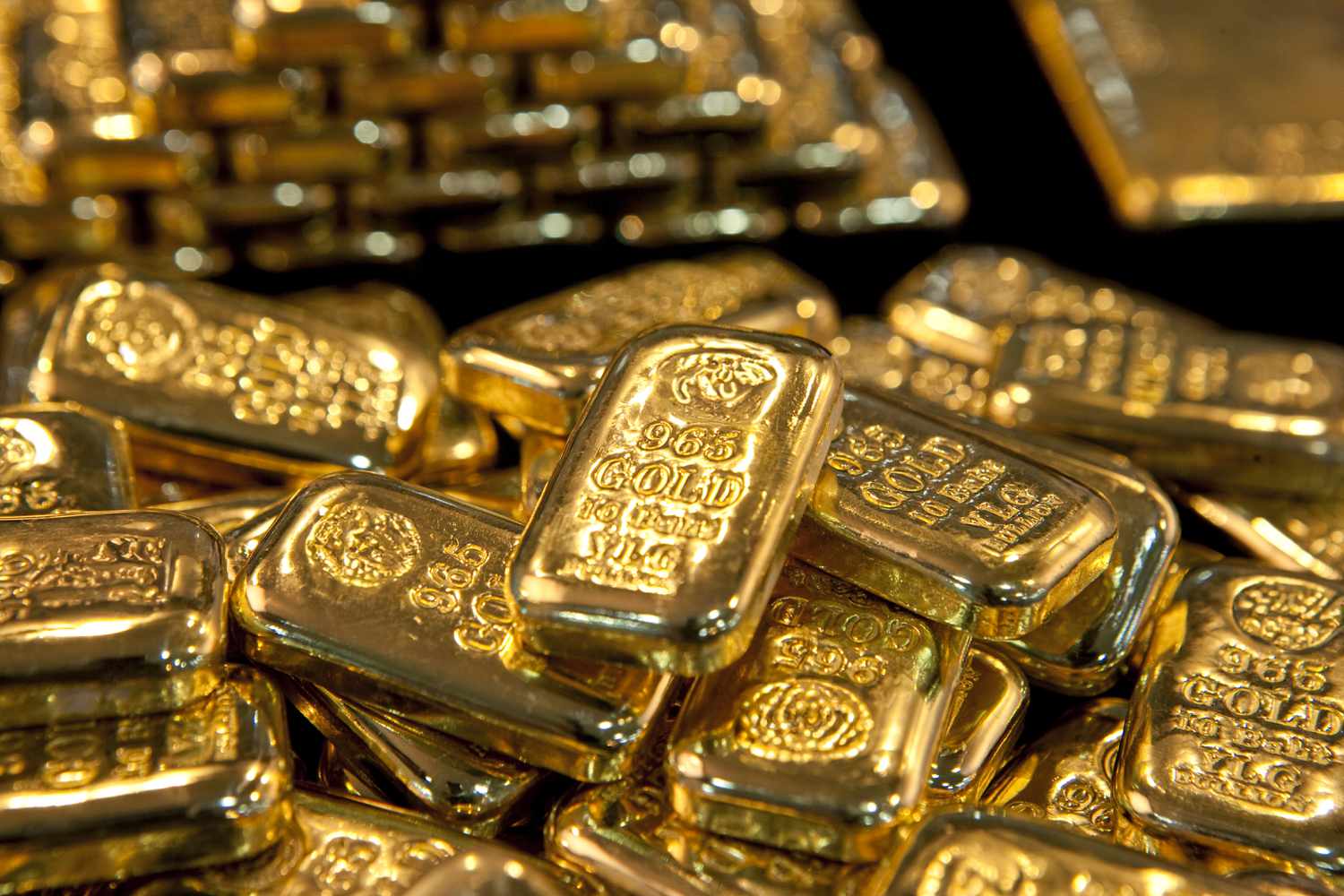
Gold prices shattered records on Wednesday, breaching $4,800 per ounce and reaching as high as $4,887.82 in intraday trading, as investors abandoned U.S. assets in favor of the traditional haven amid mounting anxiety over President Trump’s territorial ambitions in Greenland and the resulting rift with European allies.
Spot gold climbed 2.1% to settle at $4,862.19 per ounce by 0837 GMT, while U.S. gold futures for February delivery advanced 2.2% to $4,869.40. The rally reflects what market analysts are describing as a fundamental breakdown in confidence in American leadership and the stability of dollar-denominated assets.
“It’s the loss of trust in the U.S. caused by Trump’s moves over the weekend to tariff European countries and increase coercion in trying to take Greenland,” explained Kyle Rodda, senior market analyst at Capital.com. “The move in gold reflects fears about global geopolitical tensions.”
The surge comes on the heels of President Trump’s Tuesday remarks in which he doubled down on his determination to acquire Greenland, declaring there was “no going back” on the objective. In comments that sent shockwaves through diplomatic circles, Trump refused to rule out military force to seize control of the strategically positioned Arctic territory, which has been a self-governing part of the Kingdom of Denmark since 1979.
While Trump subsequently attempted to soften his stance, stating, “We will work something out where NATO is going to be very happy and where we’re going to be very happy,” the damage to transatlantic relations appears significant. European leaders responded with unusual bluntness to what they characterized as bullying tactics.
At the World Economic Forum in Davos, French President Emmanuel Macron delivered a scathing rebuke of Trump’s approach, declaring that Europe would not “give in to bullies or be intimidated” in response to threats of steep tariffs. The remarks signal a hardening of European resolve and suggest a deepening fracture in the Western alliance at a time of already elevated global tensions.
The precious metals market is responding to what traders see as a perfect storm of factors traditionally favorable to gold. “I think crossing $4,800 just reinforces that people don’t want to sell gold before $5,000,” said Nicholas Frappell, global head of institutional markets at ABC Refinery. “It’s a combination of the traditional supporters for gold, which is rising debt, a weakening dollar, and geopolitical uncertainty.”
The Greenland crisis has accelerated a broader sell-off across U.S. asset classes. The dollar index languished near a one-month low, while Wall Street stocks and Treasury bonds also came under pressure. The weakening dollar provides additional support for gold prices, as it makes greenback-priced metals more affordable for overseas buyers and reduces the opportunity cost of holding non-yielding assets.
The precious metals complex showed broad strength, with silver rising 0.4% to $94.96 per ounce after hitting a record high of $95.87 on Tuesday. Platinum and palladium both reached intraday records before pulling back slightly, with platinum touching $2,511.80 before settling down 0.5% at $2,451.15, and palladium reaching a one-week high before declining 0.5% to $1,856.98.
Market participants are now watching closely to see whether gold can sustain momentum toward the psychologically significant $5,000 threshold, a level that seemed unthinkable just months ago but now appears increasingly plausible as geopolitical fault lines deepen and confidence in traditional power structures erodes.
The crisis also raises fundamental questions about the durability of the post-World War II international order and the willingness of the United States to maintain its role as guarantor of that system—uncertainties that historically have driven investors toward the perceived safety of precious metals.
WHAT YOU SHOULD KNOW
Gold has surged to record highs above $4,800 per ounce—and shows momentum toward $5,000—driven by a fundamental crisis of confidence in U.S. leadership.
President Trump’s threats to seize Greenland by force, combined with tariff warnings against European allies, have triggered a broad sell-off across U.S. assets, including the dollar, stocks, and Treasury bonds.
Investors are fleeing to gold as a haven amid fears that American unpredictability is fracturing the Western alliance and destabilizing the international order.
Geopolitical chaos is eroding trust in traditional power structures, and investors are protecting themselves by turning to the oldest haven of all.