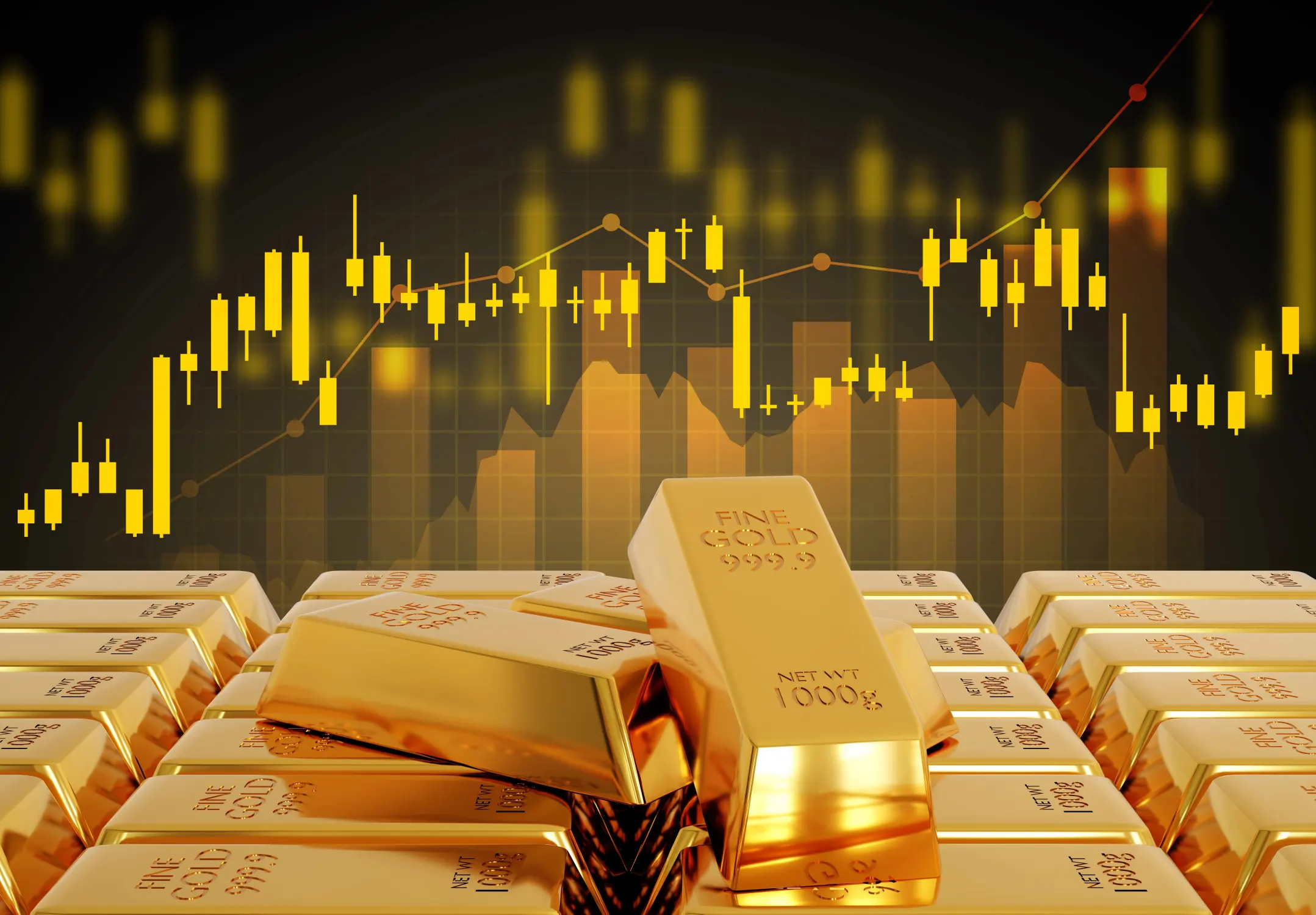
Gold prices clung to a narrow range on Monday amid a whipsaw session that underscored the metal’s delicate balancing act between safe-haven demand and the punishing weight of higher-for-longer U.S. interest rates.
Spot gold slipped a modest 0.1 percent to $4,488.46 an ounce by 04:31 GMT, having careened earlier from a drop of more than 1 percent to a marginal gain. U.S. gold futures for April delivery mirrored the softness, easing 0.1 percent to $4,518.30.
The day’s relative calm masked deeper cross-currents. A softer U.S. dollar gave bullion a modest tailwind by making the metal cheaper for buyers holding other currencies. Yet that support was largely offset by a ferocious rally in crude oil, which traders fear will ripple through the broader economy and keep the Federal Reserve’s hand firmly on the brake.
Brent crude blasted above $115 a barrel after Yemeni Houthi forces launched fresh attacks on Israel over the weekend, further inflaming a conflict that has already redrawn the Middle East map. The contract has now surged a staggering 60 percent in March alone — its strongest monthly gain on record.
The escalation comes against a backdrop of direct and indirect talks between Washington and Tehran. President Donald Trump told reporters that Iran’s new leadership has been “very reasonable,” even as additional U.S. troops poured into the region and Iranian officials warned they would not accept any form of “humiliation.” The fighting, which began with the U.S.-Israeli campaign against Iran on Feb. 28, has already triggered a more than 2 percent rally in the dollar since late February.
That currency strength, combined with shifting rate expectations, has hammered precious metals. Gold is down more than 15 percent so far this month — its steepest monthly decline since the depths of the 2008 financial crisis. Traders who once priced in two Federal Reserve rate cuts before the conflict erupted now see virtually no chance of any easing this year.
“Higher energy prices threaten to feed into broader inflation and limit scope for monetary easing,” one market participant noted, echoing the dominant view on trading floors.
Nicholas Frappell, global head of institutional markets at ABC Refinery, said last week’s rebound — which snapped a three-week losing streak — hinted at oversold conditions and a possible technical reversal. “However, this needs to be confirmed by price action this week,” he cautioned. “Given the rapid flow of headline news, it’s easiest to expect volatility.”
Frappell pointed to the bigger picture: “The bigger macro picture behind that underperformance is the huge shift in interest rate expectations… The USD has picked up on that.”
The classic inflation-hedge narrative that usually buoys gold is being undermined by the very force driving prices higher. While inflation lifts the metal’s appeal, persistently elevated real yields and a muscular dollar weigh heavily on non-yielding bullion.
Not all precious metals suffered alike. Spot silver rose 0.5 percent to $69.91 an ounce, while platinum jumped 2.7 percent to $1,911.05 and palladium climbed 2.9 percent to $1,416.60, reflecting their greater sensitivity to industrial demand and supply disruptions in a turbulent geopolitical climate.
With oil at multi-year highs and the Fed’s policy path increasingly tethered to the energy complex, investors are bracing for more turbulence. Gold’s ability to stabilize above the psychologically important $4,400 level may depend as much on developments in the Strait of Hormuz as on any pronouncement from the FOMC. For now, the metal is treading water — a quiet pause in what has become one of the most geopolitically charged markets in years.
WHAT YOU SHOULD KNOW
Gold prices remained largely steady amid high volatility, but the key factor driving the market is surging energy prices from escalating Middle East conflict, which has fueled inflation fears and virtually eliminated expectations for U.S. The Federal Reserve rate cuts this year.
This dynamic, coupled with a stronger dollar, continues to pressure the non-yielding metal despite its traditional safe-haven role.