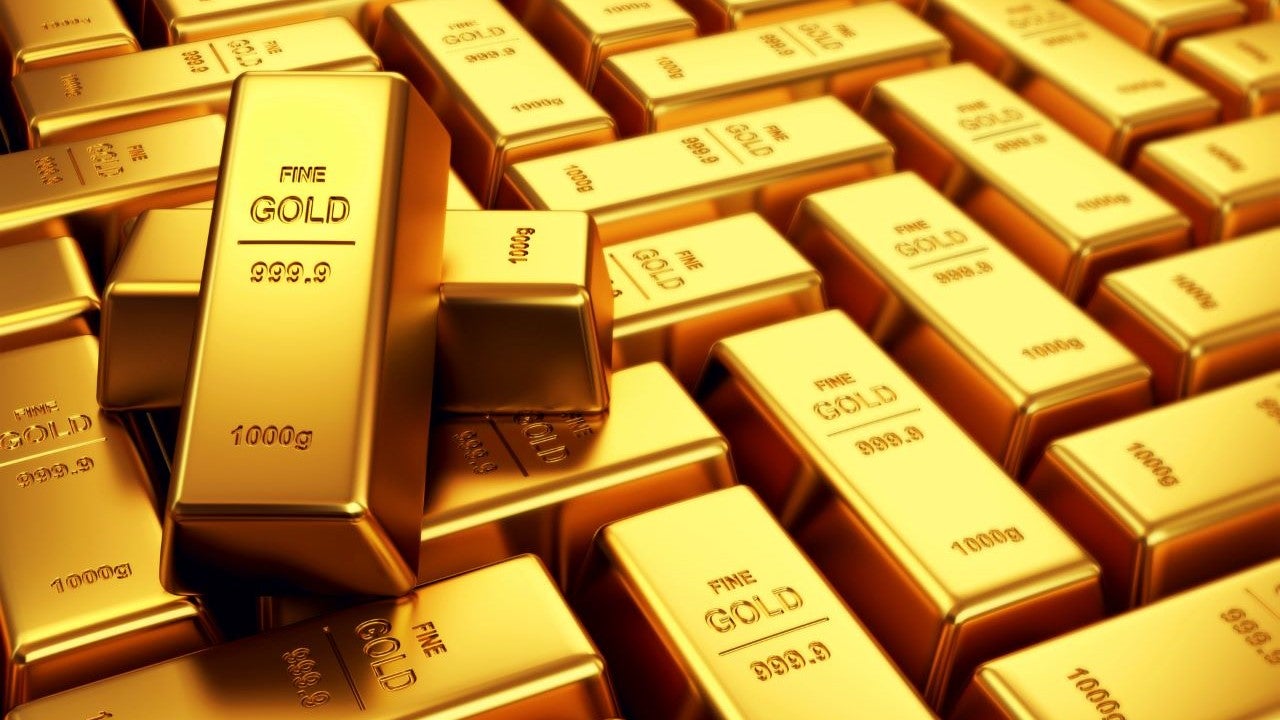
Gold prices shattered another record on Tuesday, breaching the significant $3,500-per-ounce barrier as investors positioned themselves ahead of an anticipated Federal Reserve interest rate cut that could further fuel the precious metal’s extraordinary 2025 surge.
Spot gold touched an all-time high of $3,508.50 during Tuesday’s session before settling at $3,476.48 per ounce by mid-morning GMT trading. The milestone caps a remarkable year for the yellow metal, which has posted gains of 32% since January and shows little sign of cooling despite its lofty valuations.
The latest surge reflects growing market confidence that the Federal Reserve will pivot toward easier monetary policy at its September 17 meeting, with traders now pricing in a 90% probability of a quarter-point rate reduction according to CME Group’s FedWatch tool. Such a move would mark a significant shift for the central bank and create a more favorable environment for non-yielding assets like gold.
“Gold’s rally is set to be heavily influenced by how much the Fed’s rate-cutting path adheres to market projections,” said Han Tan, chief market analyst at Nemo. money, highlighting the critical importance of monetary policy signals for the precious metals complex.
The Federal Reserve’s potential policy reversal comes amid sustained criticism from President Donald Trump, who has repeatedly called for lower interest rates since taking office in January. Trump’s trade policies and their potential economic implications have themselves become a key driver of safe-haven demand, analysts note.
Gold’s ascent has been underpinned by multiple converging factors that extend well beyond monetary policy expectations. Central banks worldwide have maintained robust purchasing programs as part of broader efforts to diversify reserves away from dollar-denominated assets, providing consistent institutional demand for the metal.
Geopolitical tensions and trade uncertainties have simultaneously strengthened gold’s appeal as a portfolio hedge, while broad-based dollar weakness has made dollar-denominated commodities more attractive to international buyers.
“It still enjoys enough fundamental tailwinds, from central bank purchases to safe-haven demand—especially if trade tariffs take a meaningful toll on global economic growth—going into next year,” Tan added, suggesting the rally may have staying power beyond immediate Fed actions.
The current price levels represent a dramatic acceleration from gold’s already impressive 2024 performance, when the metal gained 27% and first crossed the $3,000 threshold in March. That breakthrough came as markets grappled with uncertainty surrounding the Trump administration’s evolving trade policies.
Institutional appetite remains robust, with SPDR Gold Trust, the world’s largest gold-backed exchange-traded fund, reporting Friday that its holdings had climbed 1.01% to 977.68 tons—the highest level since August 2022. The increase signals continued inflows from investment managers seeking exposure to the precious metals sector.
Market technicians and fundamental analysts appear aligned in their bullish outlook. “All the indicators—fundamental and technical—point toward a sustained rally,” said Hugo Pascal, a precious metals trader at InProved. “As always, we might not go up in a straight line, but we are in ‘buy the dip’ mode… Plus, gold remains an uncorrelated asset to stocks, real estate, and credit.”
That uncorrelated nature has become increasingly valuable to portfolio managers navigating volatile equity markets and uncertain credit conditions, potentially supporting continued investment demand even at elevated price levels.
Looking ahead, market participants are focusing on Friday’s nonfarm payrolls report as a key data point that could influence the Federal Reserve’s rate decision magnitude. A weaker-than-expected employment reading could strengthen arguments for more aggressive monetary easing, while robust job growth might limit the central bank’s policy flexibility.
Analyst forecasts have been steadily revised upward throughout the year. In a quarterly Reuters poll conducted in July, market professionals projected gold would average $3,220 in 2025, representing a significant increase from January estimates of $2,756 per ounce—projections that current prices have already exceeded.
Other precious metals presented a more mixed picture on Tuesday, with silver retreating 0.7% to $40.39 per ounce after reaching its highest level since September 2011 in the previous session. Platinum declined 0.9% to $1,386.40, while palladium fell 1.5% to $1,120.54, suggesting gold’s outperformance may be increasingly divorced from broader precious metals trends.
As markets await Friday’s employment data and the Fed’s September meeting, gold’s historic run continues to challenge traditional valuation metrics while reinforcing its enduring appeal as both an inflation hedge and crisis currency in an era of unprecedented monetary and fiscal experimentation.
WHAT YOU SHOULD KNOW
Gold hit a record high of $3,508 per ounce, driven primarily by expectations of a Federal Reserve rate cut on September 17 (90% probability). The metal has surged 32% this year due to three critical factors: anticipated lower interest rates making non-yielding gold more attractive, ongoing central bank purchases as countries diversify away from the dollar, and safe-haven demand amid trade policy uncertainties under the Trump administration.