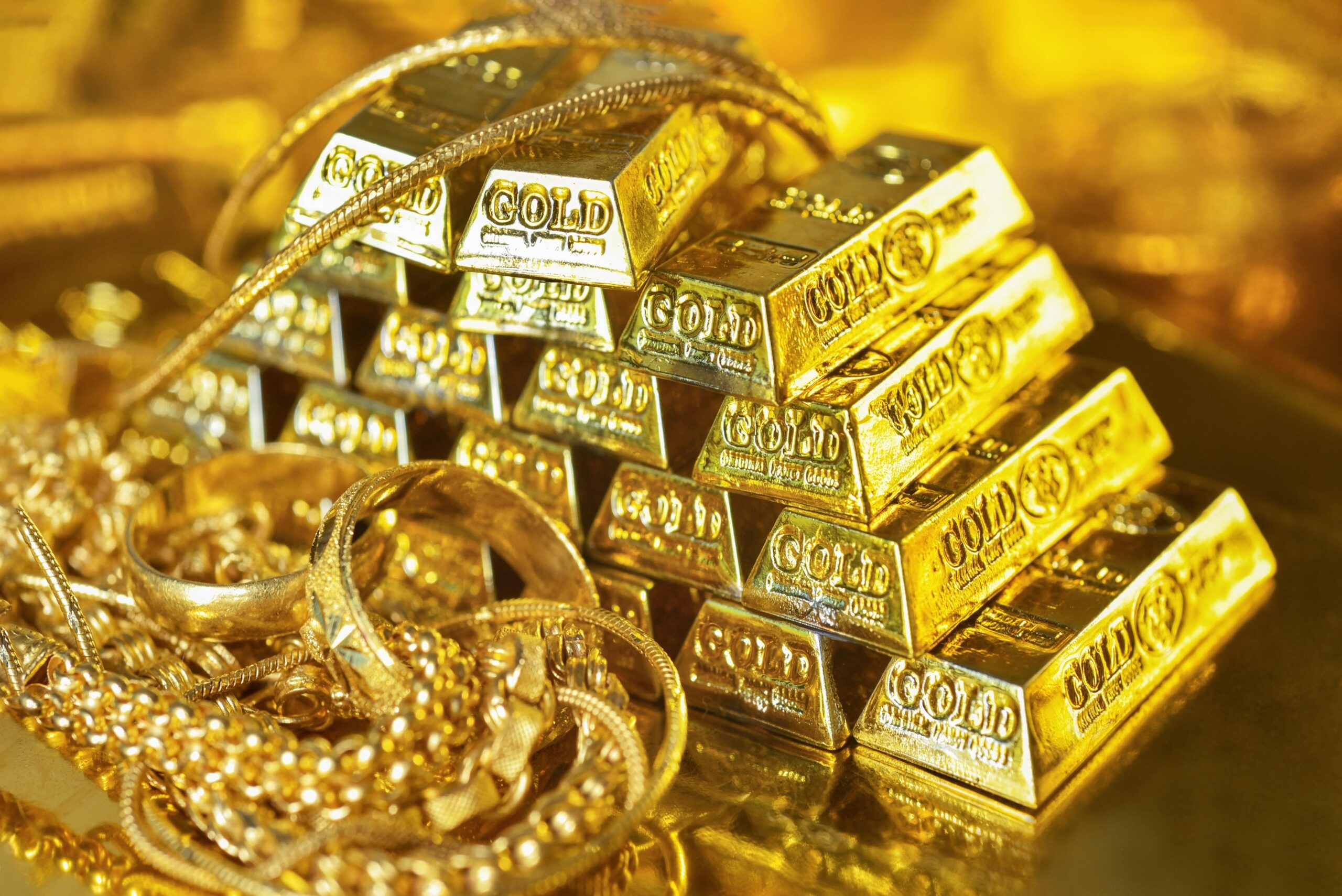
Gold carved out new territory in the record books on Monday, surging past the psychologically significant $4,400-per-ounce threshold for the first time in history, as investors sought refuge in the precious metal amid growing expectations of further monetary easing by the U.S. Federal Reserve.
The yellow metal climbed as high as $4,420.01 earlier in the session before settling back slightly to trade at $4,411.01 per ounce as of 8:22 GMT, representing a gain of 1.7% on the day. U.S. gold futures for February delivery rose 1.3% to $4,444.00 per ounce, signaling continued bullish sentiment in the derivatives market.
The rally marks the culmination of an extraordinary year for precious metals, with gold having shattered multiple psychological barriers and gained an eye-watering 67% year-to-date. If sustained, the annual performance would represent bullion’s strongest showing since 1979, when soaring inflation and geopolitical turmoil drove investors into hard assets.
“This is truly historic territory,” said Matt Simpson, senior analyst at StoneX. “Gold has breached both the $3,000 and $4,000 levels for the first time this year, and the momentum appears far from exhausted.”
While gold’s performance has captured headlines, silver has delivered even more spectacular returns, surging 2.5% Monday to hit an all-time high of $69.44 per ounce. The white metal’s 138% gain year-to-date has vastly outpaced gold’s already impressive run, driven by a combination of robust investment inflows and persistent supply constraints that have squeezed the physical market.
The gold-silver ratio, a closely watched metric among precious metals traders, has narrowed considerably as silver’s industrial applications—particularly in solar panel manufacturing and electronics—have supported demand even as investment flows accelerate.
From a technical perspective, gold’s breach of key resistance at $4,375 per ounce opens the door to further gains, according to Reuters technical analyst Wang Tao, who projects the metal may extend to $4,427 per ounce in the near term.
However, analysts cautioned that the rally may face headwinds as the year draws to a close. “With December usually producing positive returns for gold and silver, seasonality is on their side,” Simpson noted. “Given that gold has already risen 4% this month and we’re nearing the end of the year, bulls may want to tread with caution as volumes are to deplete and odds of profit-taking are also likely on the rise.”
The precious metals surge has been underpinned by a confluence of factors that have aligned to create ideal conditions for non-yielding assets. Heightened geopolitical tensions, persistent trade disputes, and steady central bank accumulation have all contributed to gold’s safe-haven appeal.
Perhaps most significantly, market expectations for U.S. monetary policy have shifted decisively toward accommodation. Despite the Federal Reserve’s cautious rhetoric, futures markets are currently pricing in two rate cuts for next year, a development that typically benefits gold and other non-yielding assets by reducing the opportunity cost of holding them.
A softer U.S. dollar has provided additional support, making dollar-denominated gold cheaper for overseas buyers and spurring demand in key markets across Asia and Europe.
Simpson suggested that further upside may materialize if economic conditions deteriorate. “Two Fed rate cuts are penciled in for 2026, with a faster U.S. jobs slowdown and a shift to a more dovish Fed likely to add further upside to gold,” he said.
Monday’s precious metals rally extended well beyond gold and silver. Platinum jumped 4.3% to $2,058.35, reaching its highest level in more than 17 years, while palladium climbed 4.1% to $1,784.00, a near three-year high.
The gains in platinum group metals reflect both investment demand and supply concerns, particularly as automotive manufacturers continue to require the metals for catalytic converters despite the gradual shift toward electric vehicles. Industrial demand for platinum in hydrogen fuel cells has also provided a new source of support.
As trading volumes thin ahead of the year-end holidays, market participants will be watching closely to see whether the extraordinary momentum in precious metals can be sustained or whether profit-taking will trigger a pullback from these lofty levels. For now, though, the bulls remain firmly in control of a market that has defied skeptics throughout an unprecedented year of gains.
WHAT YOU SHOULD KNOW
Gold shattered the $4,400-per-ounce barrier for the first time, capping an extraordinary 67% annual surge—its best performance since 1979. The rally is driven by three key forces: expectations of U.S. interest rate cuts that make non-yielding assets more attractive, heightened geopolitical uncertainty fueling safe-haven demand, and a weaker dollar.
Silver has outpaced gold with a staggering 138% yearly gain. However, with gold already up 4% in December, analysts warn that profit-taking could emerge as the year ends and trading volumes thin out.