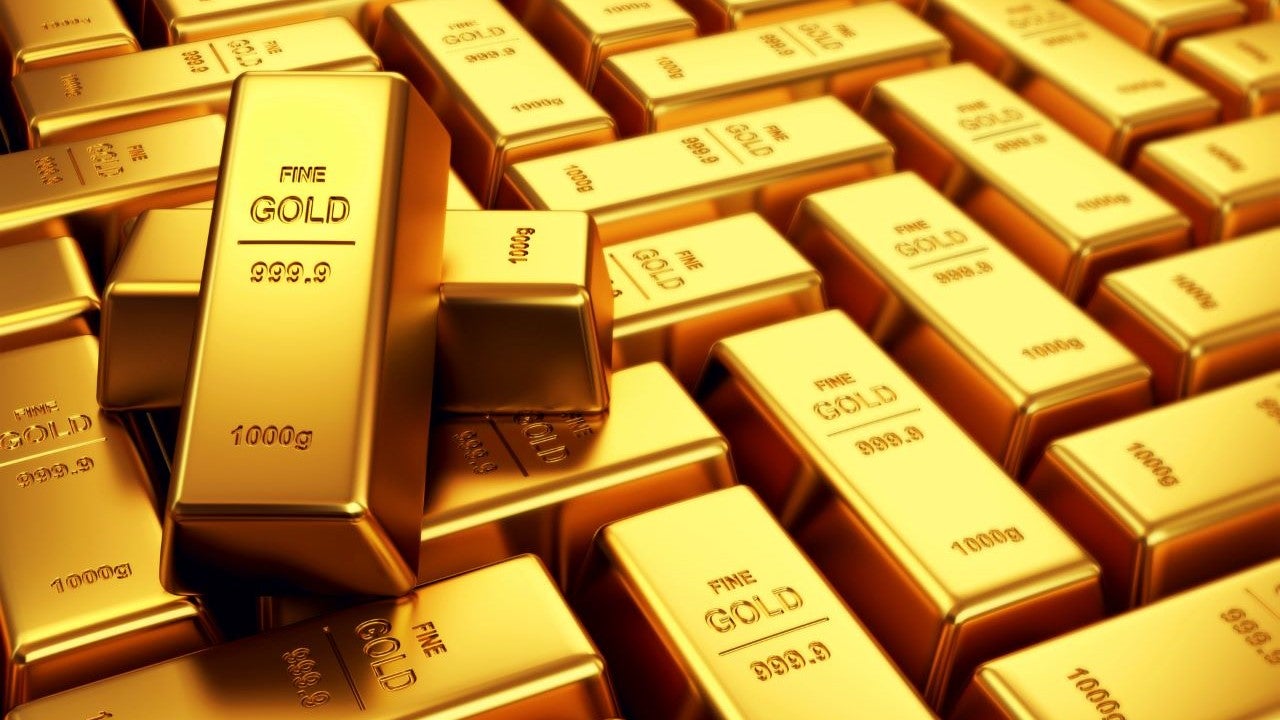
Gold prices remained largely unchanged on Friday, trading in a narrow range as investors digested the Federal Reserve’s latest monetary policy decision and reassessed the outlook for future rate cuts.
The central bank met analysts’ expectations by lowering the federal funds rate by 25 basis points to the 4 to 4.25 percent range on Wednesday, but the accompanying guidance failed to satisfy market hopes for a more aggressive dovish stance.
Spot gold was trading at $3,646.29 per ounce as of 0640 GMT Friday, showing little movement after a volatile week that saw the precious metal reach an all-time high of $3,707.40 on Wednesday. The sideways action reflects a market caught between conflicting signals from policymakers and economic data.
Market Sentiment Cools Despite Rate Cut
The muted price action represents a notable shift from the bullish momentum that has driven gold higher throughout 2025. Gold futures have gained more than 40% in 2025 alone, propelled by expectations of Federal Reserve rate cuts and ongoing geopolitical uncertainties.
“Sentiment is still bullish but has definitely cooled off a bit,” explained Kyle Rodda, an analyst at Capital.com. “Basically, the Fed didn’t really deliver with the dovish guidance needed for gold to push higher.”
The Federal Reserve’s decision to resume its easing cycle after the previous tightening phase was widely anticipated, but Chair Jerome Powell‘s characterization of the move as a “risk-management cut” in response to weakening labor market conditions suggested a more cautious approach than many investors had hoped for.
Forward Guidance Creates Market Turbulence
While the Fed signaled the possibility of two additional 25 basis point cuts before year-end, the central bank’s projection of only one rate reduction in 2026 caught markets off guard. This more hawkish, longer-term outlook pushed bond yields higher and strengthened the dollar, both of which typically weigh on gold prices.
“The projection of two more cuts this year was a positive,” Rodda noted. “However, the forecast of only the one cut in 2026 was above market pricing and has had the effect of pushing up yields and the dollar.”
The Fed’s tempered message included warnings about persistent inflationary pressures, with Powell emphasizing that the central bank would take a “meeting-by-meeting” approach to future policy decisions. This cautious stance has sown doubt among investors about the pace and extent of the easing cycle.
Market Pricing Remains Optimistic
Despite the Fed’s measured guidance, derivatives markets continue to price in aggressive easing. According to the CME Group’s FedWatch tool, traders are assigning a 92% probability to another 25 basis point cut at the Fed’s October meeting, suggesting investors believe economic conditions will force the central bank’s hand.
The relationship between interest rates and gold remains a key driver for the precious metal. Lower rates reduce the opportunity cost of holding non-yielding assets like gold, making it more attractive relative to interest-bearing investments. However, the Fed’s emphasis on data-dependent decision-making has introduced uncertainty about the trajectory of future cuts.
Global Central Bank Divergence
While the Federal Reserve moved to ease policy, other major central banks took different approaches this week. Both the Bank of England and the Bank of Japan held their respective interest rates steady, highlighting divergent monetary policy paths among major economies.
This policy divergence could continue to influence gold prices, as differing interest rate environments affect currency values and capital flows between markets.
Technical Analysis Points to Potential Weakness
From a technical perspective, gold’s consolidation near recent highs may be setting up for further volatility. Reuters technical analyst Wang Tao suggests that spot gold could face challenges, noting that a break below support at $3,630 per ounce might lead to a decline toward a range of $3,596 to $3,617.
Broader Precious Metals Complex Shows Mixed Performance
The broader precious metals complex displayed varied performance on Friday. Silver bucked the trend with a 0.8% gain to $42.12 per ounce, while platinum edged lower by 0.3% to $1,379.50. Palladium remained steady at $1,151.19 but was positioned for a weekly decline of 3.5%, highlighting the metal’s ongoing industrial demand challenges.
Looking Ahead
Deutsche Bank raised its gold price forecast for next year to an average of $4,000 per ounce, up from $3,700, reflecting continued institutional optimism about the precious metal’s long-term prospects despite near-term uncertainty.
As markets head into the final trading sessions of the week, investors will be closely monitoring economic data releases and Fed officials’ speeches for additional clues about the central bank’s policy intentions. The interplay between economic fundamentals, monetary policy expectations, and geopolitical factors will likely continue to drive gold price action in the sessions ahead.
The precious metal’s ability to maintain its position near record levels despite the Fed’s less dovish stance underscores the complex dynamics currently shaping the gold market, where traditional relationships between interest rates and prices are being tested by extraordinary economic conditions.
WHAT YOU SHOULD KNOW
Gold prices stalled near record highs Friday after the Federal Reserve’s 25 basis point rate cut failed to deliver the dovish guidance investors wanted. While the Fed cut rates as expected and hinted at two more cuts this year, their projection of only one cut in 2026 was more hawkish than markets anticipated, strengthening the dollar and dampening gold’s momentum.