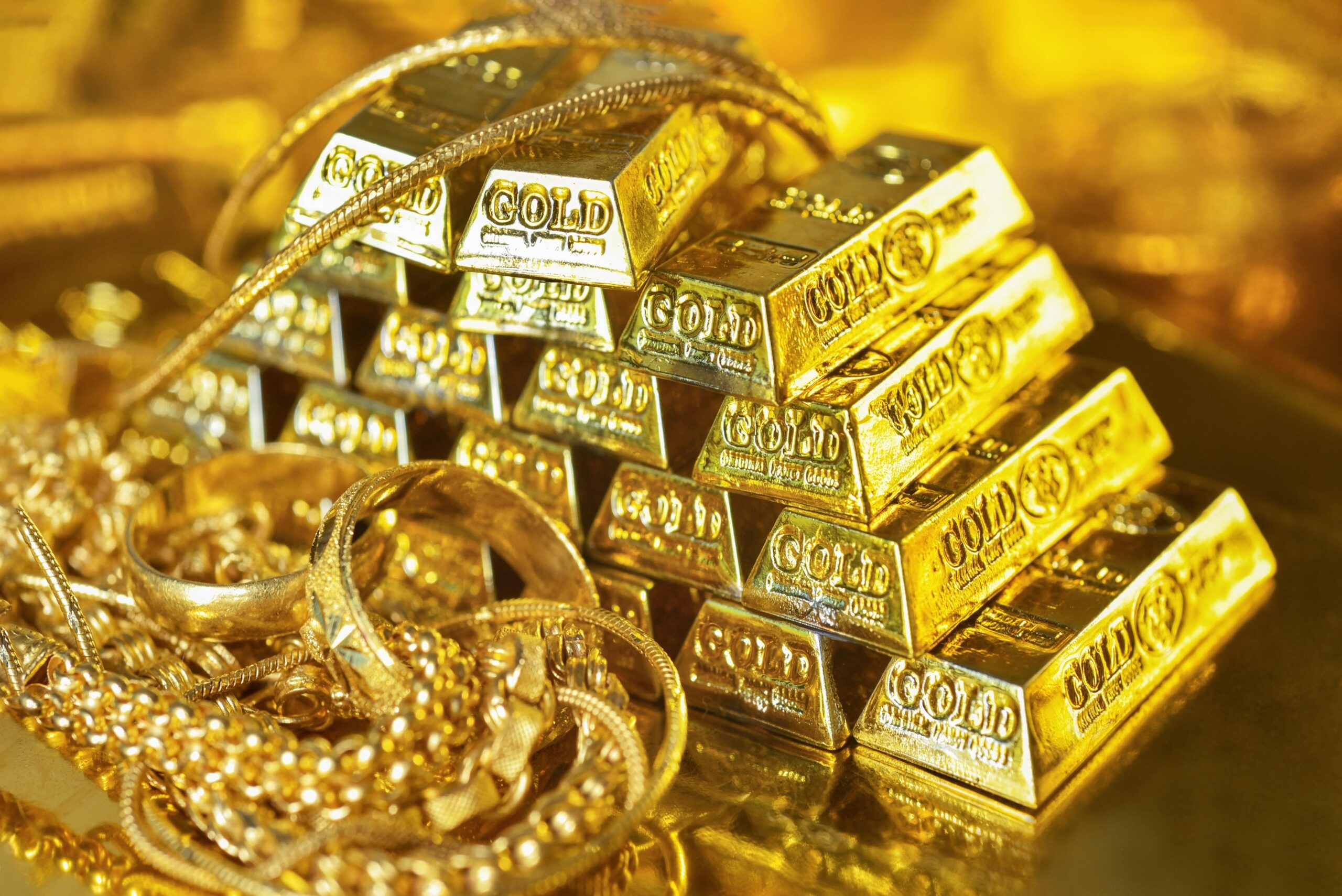
Gold prices edged upward on Wednesday morning, reflecting a familiar pattern in uncertain times: when investors grow nervous about the economic outlook, they reach for the ultimate safe haven.
Spot gold advanced 0.5% to $4,088.03 per ounce by mid-morning European trading, while U.S. gold futures for December delivery mirrored that gain, settling at $4,087.90. The modest rally comes after the precious metal bounced back from the closely-watched $4,000 threshold in Tuesday’s session—a psychological level that often serves as a bellwether for market sentiment.
“After rebounding from the psychological $4,000 level in the previous session, gold is slightly glittering this morning amid the cautious mood,” noted Lukman Otunuga, senior research analyst at FXTM, capturing the tentative optimism pervading trading floors.
The market’s attention is now firmly fixed on two critical data releases that could chart gold’s near-term course. First up: minutes from the Federal Reserve’s October policy meeting, scheduled for release later Wednesday. These documents will offer a rare glimpse into the internal debates among Fed officials as they grapple with persistent inflation pressures against a backdrop of shifting labor market dynamics.
Thursday brings the second piece of the puzzle—September’s employment report, delayed due to scheduling complications. Economists surveyed by Reuters are projecting a modest addition of 50,000 jobs during the month, a figure that underscores the labor market’s gradual cooling.
Otunuga outlined the stakes clearly: “Should incoming U.S. data support the case for lower rates, gold prices may push toward $4,130 and $4,200. However, more hawkish remarks by Fed speakers, coupled with stronger-than-expected data could drag prices back toward $4,000 as traders slash expectations around lower U.S. rates.”
The equation is straightforward yet consequential. Gold, which offers no yield or dividend, becomes more attractive when interest rates fall, reducing the opportunity cost of holding the non-income-generating asset. Conversely, higher rates typically strengthen the dollar and make interest-bearing investments more appealing, pressuring gold prices downward.
Recent labor market data has painted a mixed picture. Tuesday’s figures revealed that Americans receiving unemployment benefits reached a two-month high in mid-October, suggesting some fraying at the edges of what has been a remarkably resilient job market. Yet the headline numbers remain strong enough to give Fed policymakers pause about cutting rates too aggressively.
Market pricing reflects this uncertainty. According to the CME FedWatch tool, traders have dramatically scaled back expectations for a rate cut at the Fed’s next meeting, with odds now standing at just over 46%—down sharply from 63% a week ago. This shift underscores how rapidly sentiment can change as economic data trickles in.
Zain Vawda, an analyst at MarketPulse by OANDA, framed the coming days as pivotal: “Weak labour data could spur a gold rally, while stronger data and signs of labour market resilience may pressure prices and lead to a potential break below the key psychological support of $4,000 an ounce.”
The Fed minutes are expected to reveal divisions within the central bank’s ranks—a not uncommon occurrence when economic signals point in different directions. Some officials may argue that inflation remains too stubborn to justify rate cuts, while others could express concern about overtightening policy and risking unnecessary economic pain.
Beyond gold, other precious metals also found favor Wednesday. Silver surged 1.5% to $51.44 per ounce, while platinum added 0.7% to reach $1,544.72. Palladium, often used in automotive catalytic converters, climbed 1% to $1,414.68, suggesting broad-based demand for metals that serve as both industrial inputs and inflation hedges.
As markets await the Fed’s revelations and employment figures, one thing remains certain: in times of economic uncertainty, gold continues to play its ancient role as a financial sanctuary—a store of value when paper promises seem less certain.
WHAT YOU SHOULD KNOW
Gold prices rose above $4,000 per ounce as investors await two critical releases: the Federal Reserve’s October meeting minutes (due Wednesday) and September’s delayed jobs report (due on Thursday).
These data points will determine whether the Fed cuts interest rates—weak jobs data could push gold toward $4,200, while strong numbers may drag it back to $4,000.
Market odds for a December rate cut have already dropped from 63% to 46% in just one week, making the next 48 hours pivotal for gold’s direction.
Gold’s near-term fate hinges entirely on whether U.S. economic data supports or undermines the case for lower interest rates.