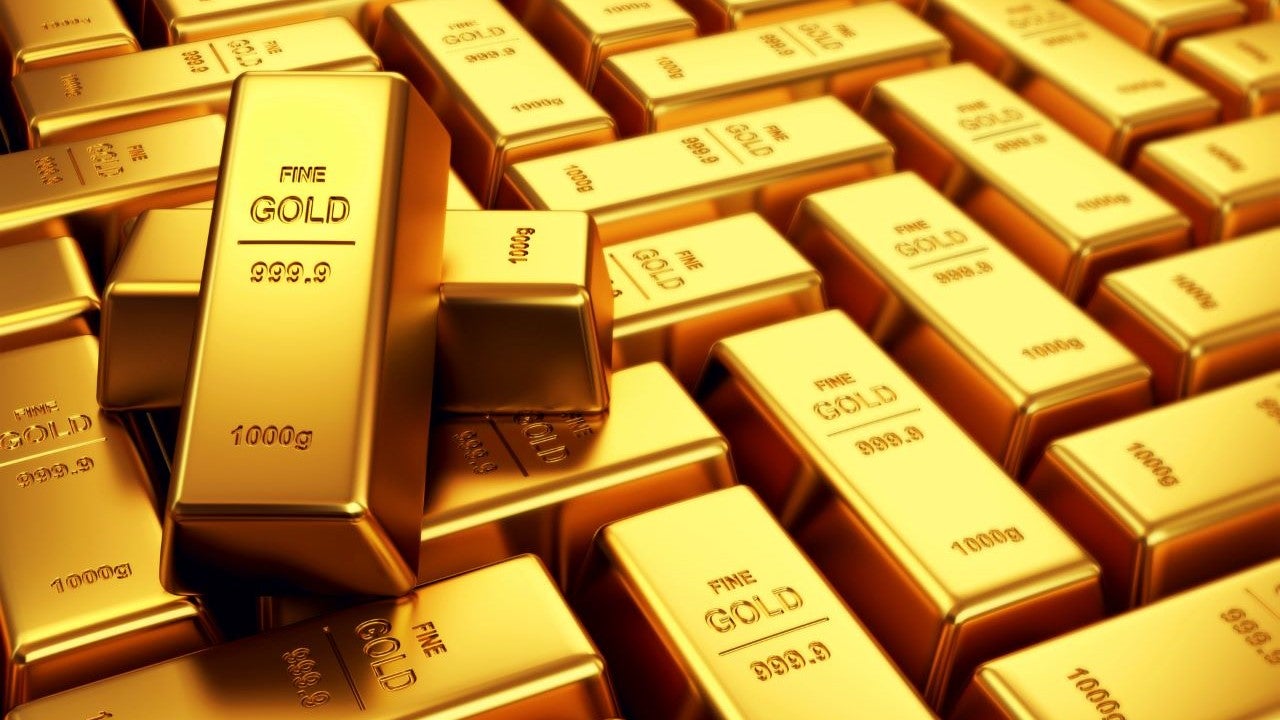
Gold prices shattered records on Wednesday morning, piercing the $3,875-per-ounce ceiling as investors scrambled for safety amid a deepening U.S. government shutdown and mounting evidence that the Federal Reserve may accelerate its pivot toward monetary easing.
Spot gold climbed 0.1% to trade at $3,860.13 per ounce by 6:13 a.m. GMT, after touching an unprecedented all-time peak of $3,875.32 earlier in the session. December-delivery U.S. gold futures extended gains further, advancing 0.4% to $3,887.40, signaling robust conviction among traders that the yellow metal’s historic rally has room to run.
Political Paralysis Drives Flight to Quality
The surge comes as Washington descends into fiscal chaos, with the federal government shuttering much of its operations after Congress and the White House failed to bridge deep partisan divisions over a funding agreement. The impasse threatens to trigger a protracted standoff that could result in thousands of federal job losses and disrupt the release of critical economic indicators, including Friday’s closely watched non-farm payrolls report.
“Gold is benefiting from concerns over a weaker dollar and the political situation with the standoff about a government shutdown in the U.S. and also general geopolitical uncertainty,” explained Nicholas Frappell, global head of institutional markets at ABC Refinery. The veteran analyst remains decidedly bullish, projecting upside targets in the $3,900-plus range, with the psychologically significant $4,000 level now within striking distance.
Weakening Dollar Amplifies Rally
Supporting the precious metal’s ascent, the dollar index tumbled to its lowest level in more than a week, making greenback-denominated gold significantly more attractive to international buyers. U.S. equity futures retreated in parallel, underscoring the risk-off sentiment permeating global markets.
Labor Market Softness Reinforces Fed Cut Bets
Tuesday’s Job Openings and Labor Turnover Survey (JOLTS) painted a picture of cooling labor demand, showing only marginal growth in U.S. job openings for August while hiring activity declined. The softer-than-expected data has reinforced market expectations for continued Federal Reserve rate cuts, with traders now pricing in a 25-basis-point reduction later this month and another quarter-point cut in December.
Market participants are now turning their attention to Wednesday’s ADP National Employment Report, which is expected to provide additional clarity on the state of the labor market amid the government’s data blackout.
Gold, which yields no interest, becomes particularly appealing in low-rate environments as the opportunity cost of holding the non-income-generating asset diminishes. The metal has surged more than 47% year-to-date, cementing its status as one of 2025’s most spectacular investment success stories.
Risks Remain Despite Bullish Momentum
Michael Hsueh, precious metals analyst at Deutsche Bank, cautioned that the rally faces potential headwinds. “Potential risks to gold’s rally include an uptrend in the dollar, unexpected hawkish Fed policy shifts, and fiscal reforms in the United States,” he noted, highlighting the delicate balance of factors supporting current price levels.
Broader Precious Metals Market
The spillover effect buoyed other precious metals, with spot silver jumping nearly 0.5% to $46.90 per ounce—its highest level in more than 14 years. However, the platinum group metals diverged, with platinum sliding 0.7% to $1,563.50 and palladium falling 0.9% to $1,245.43.
Notably absent from Wednesday’s trading activity were Chinese buyers—the world’s largest consumers of gold—as markets in the country remained closed for the Mid-Autumn Festival. Trading will resume on October 9, potentially injecting fresh demand into an already supercharged market.
As Wall Street braces for further volatility and Washington’s political dysfunction shows no signs of immediate resolution, gold’s traditional role as the ultimate safe-haven asset appears more relevant than ever. Whether the metal can sustain its momentum and breach the $4,000 threshold will likely depend on how quickly—or slowly—the dual crises of government dysfunction and economic uncertainty resolve themselves.
WHAT YOU SHOULD KNOW
Gold has hit an all-time high above $3,875 per ounce, driven by a perfect storm of uncertainty: the U.S. government shutdown, a weakening dollar, and growing expectations that the Federal Reserve will cut interest rates further. With weak labor market data reinforcing bets on monetary easing and political dysfunction paralyzing Washington, investors are flooding into gold as a haven.
The metal has already surged 47% this year, and analysts now see $4,000 as a realistic near-term target. Simply put, when fear rises, gold shines, and right now, fear is at record levels.