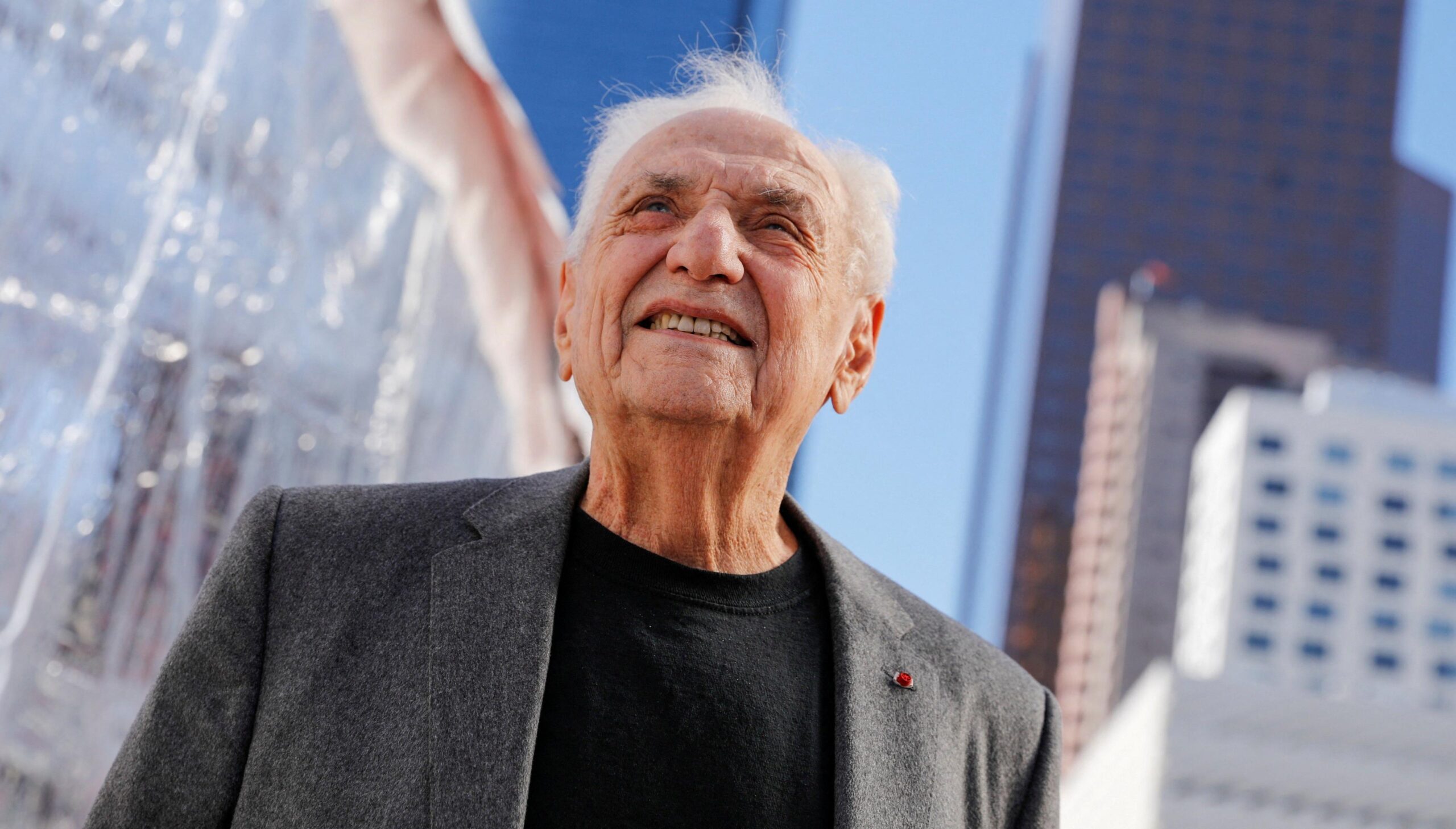
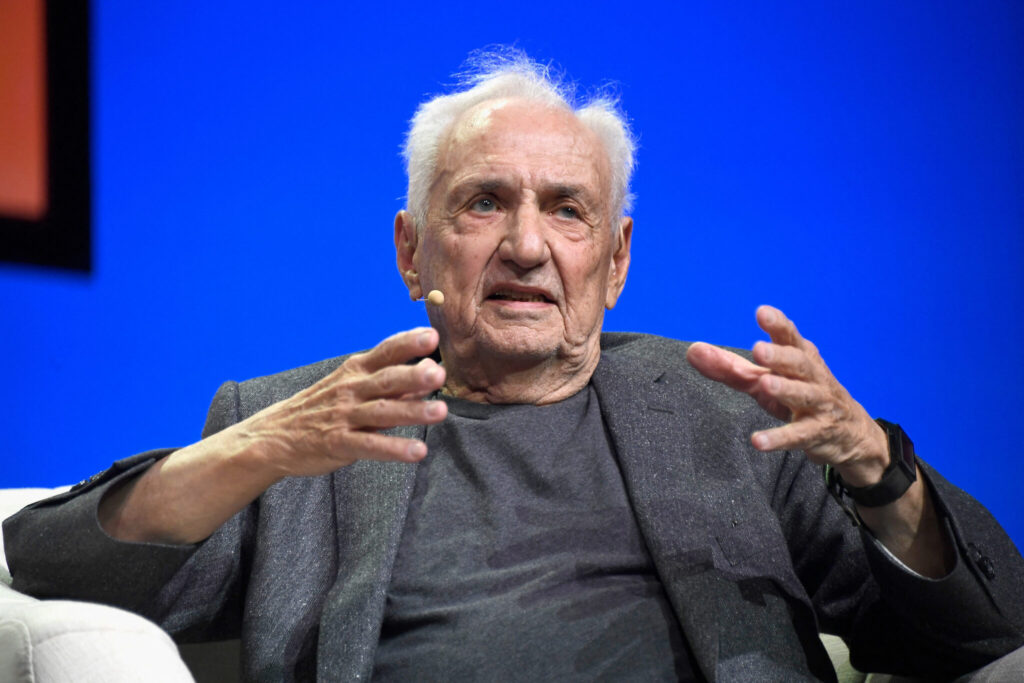
Canada-born US architect Frank Gehry, celebrated worldwide for his bold, whimsical, and rule-breaking designs, from the Guggenheim Bilbao to the Walt Disney Concert Hall in Los Angeles, passed away on Friday at the age of 96.
Gehry stood among the most influential figures in global architecture, often mentioned alongside Renzo Piano, Rem Koolhaas, Norman Foster, Zaha Hadid and others. Though widely regarded as the ultimate “starchitect,” he openly rejected the label. “There are people who design buildings that are not technically and financially good, and there are those who do. Two categories, simple,” he once told The Independent in 2009.
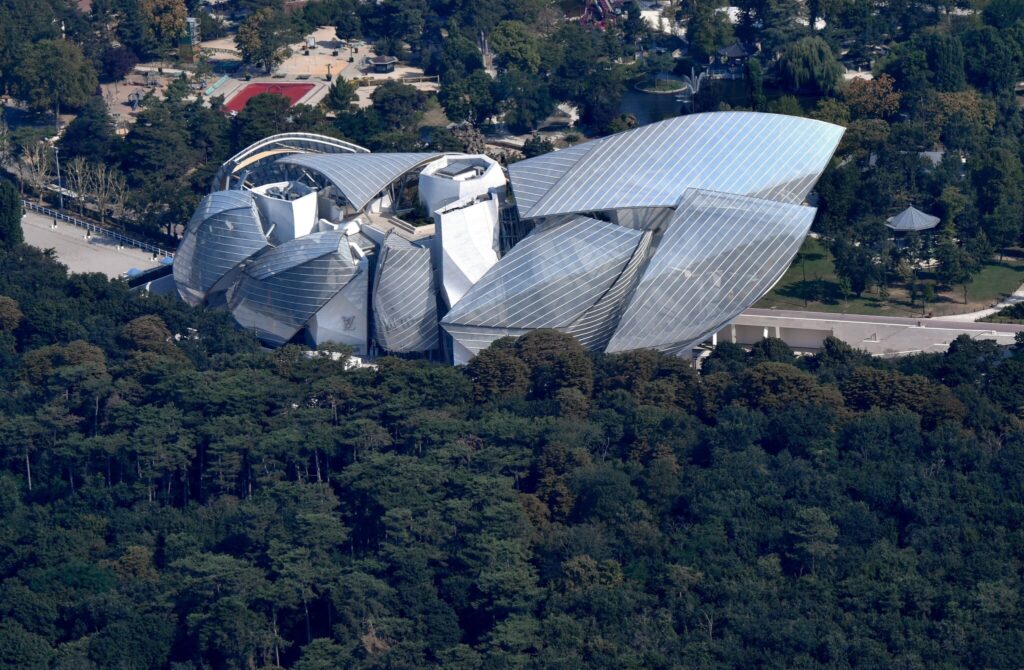
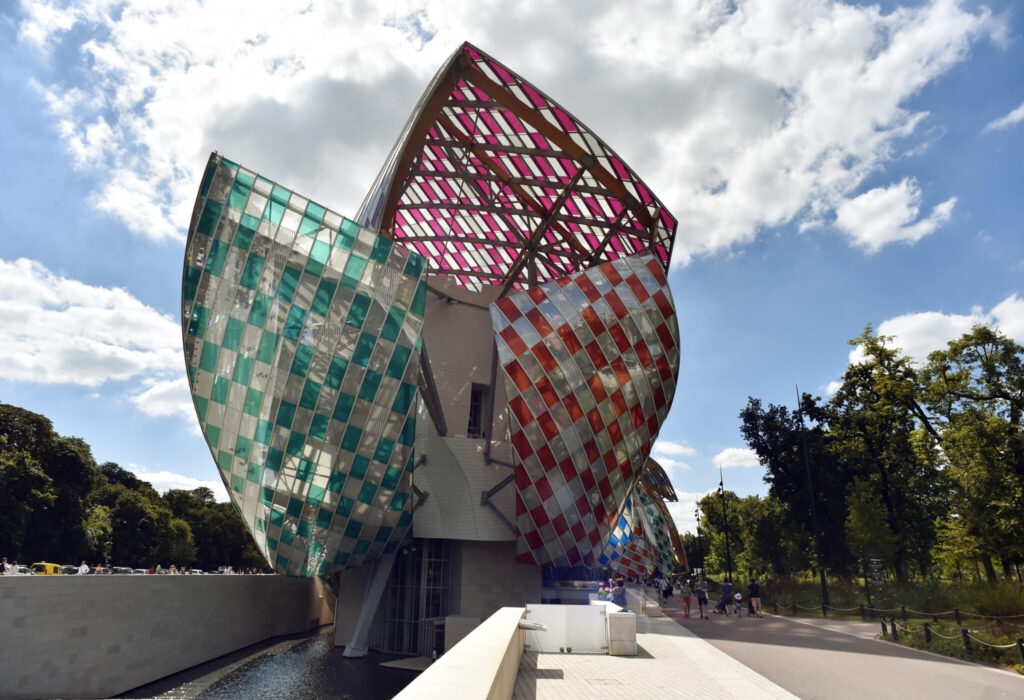
His creative brilliance was embedded in designs known for their daring forms and vibrant personality—like the glass “sails” of the Fondation Louis Vuitton in Paris. Gehry’s work pushed contemporary architecture into mainstream cultural consciousness, making him both a sensation and a household name. His fame even earned him a cameo on The Simpsons, though he consistently described himself simply as someone who builds structures. “I work with clients who respect the art of architecture,” he said in 2014, recalled by his biographer Paul Goldberger.
According to his representative, Meaghan Lloyd, Gehry died early Friday at his Santa Monica home after a short respiratory illness. Canadian Prime Minister Mark Carney praised his “unmistakable vision.”
Born Frank Owen Goldberg in Toronto on February 28, 1929, into a Jewish family that later moved to the United States, he eventually changed his name to Gehry to avoid antisemitic discrimination. He studied architecture at the University of Southern California, completing his degree in 1954 before joining the US Army. He later pursued city planning at Harvard University but did not conclude the program.
His early career saw him working under Victor Gruen, a pioneer of shopping mall design, followed by time in Paris with Andrew Remondet in 1961. In 1962, he returned to Los Angeles and opened his own architectural practice, beginning a transformative chapter in modern architecture.
The 1970s and 1980s produced many of Gehry’s most groundbreaking works, particularly across Southern California. Deeply connected to California’s avant-garde “funk” art scene, his experimental and deconstructionist approach was often considered difficult to classify. Some critics dismissed his designs as crude, but they were universally recognized as innovative.
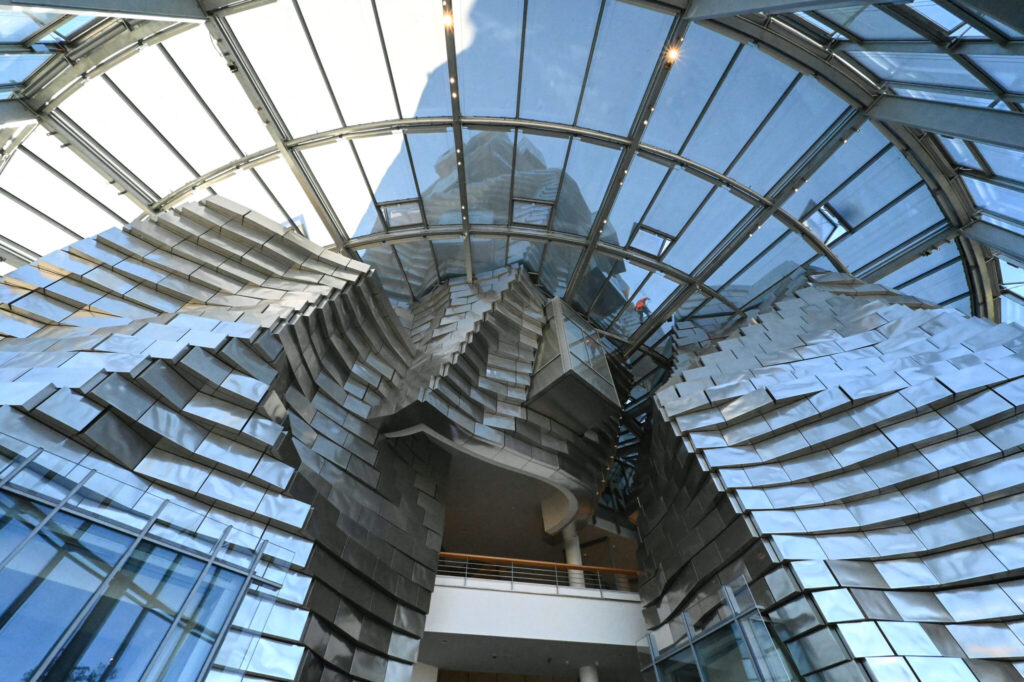
His signature irregular metal surfaces—sometimes appearing like crumpled sheets—relied heavily on advanced computer-aided design tools, which he embraced early. His creative approach was famously displayed in his remarkable 1978 reconstruction of his Santa Monica home, where corrugated metal dramatically wrapped around the original 1920s house.
In 1989, Gehry received the Pritzker Prize, architecture’s highest honor.
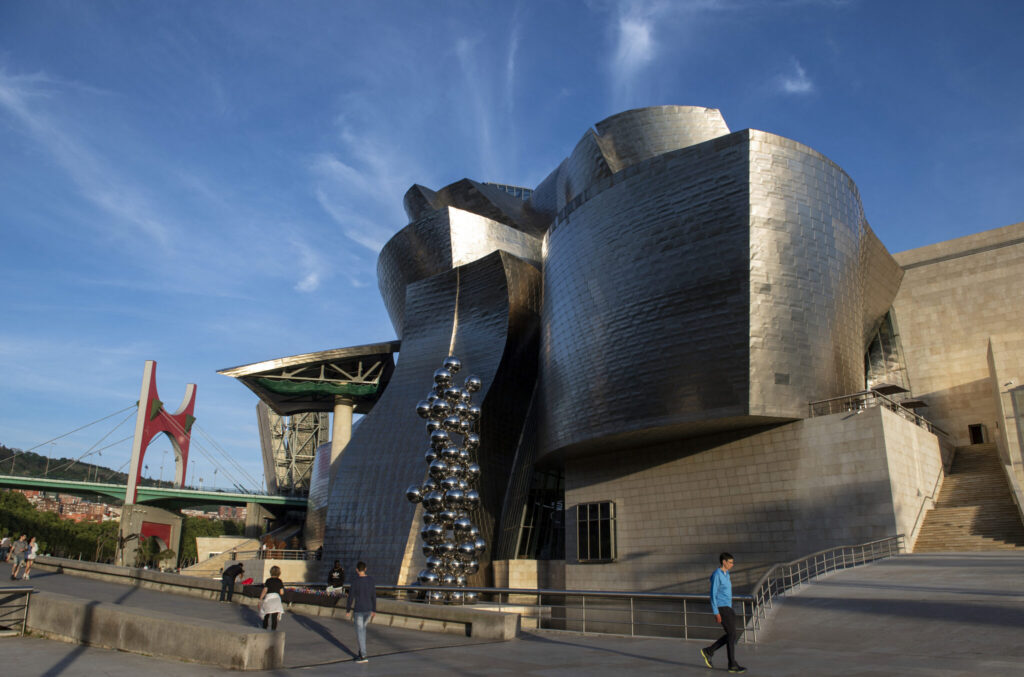
Nearly a decade later, he would unveil the building that transformed his career—and Bilbao itself. The Guggenheim Museum Bilbao, defined by its flowing titanium curves and sweeping glass walls, immediately became a global icon. Architect Philip Johnson once called it “the greatest building of our time.”
The museum not only elevated Gehry to international architectural superstardom but also sparked what became known as the “Bilbao effect”—the idea that great architecture can economically revive a region. The museum acknowledged his passing by saying his legacy will remain deeply tied to Bilbao.
Gehry continued taking extraordinary creative leaps with projects like the Walt Disney Concert Hall (2003), the Beekman Tower in New York (2011), and the Fondation Louis Vuitton (2014). LVMH chairman Bernard Arnault mourned him as a “genius of lightness, transparency and grace.”
He later designed a major expansion of Facebook’s Menlo Park campus, which opened in 2018, further affirming his relevance across eras of architectural evolution.
Gehry became known for stretching the boundaries of computation in architecture. Rounded and curved shapes were often avoided by architects due to engineering challenges and cost issues—but Gehry overcame those barriers through 3D modelling software similar to aerospace design systems. This allowed him to envision structures that were economically feasible yet visually extraordinary.
A striking example is the Lou Ruvo Centre for Brain Health in Las Vegas, whose walls and windows appear to melt under the desert sun, embodying his fearless approach to form and imagination.
Even later in life, Gehry remained driven by the joy of creation. “I love working. I love working things out,” he told The Guardian in 2019—a reflection of a career defined not by fame, but by relentless curiosity.
What You Should Know
Frank Gehry, one of the most transformative architects of the modern era, reshaped the global architectural landscape with designs that fused art, imagination and cutting-edge technology.
His works—including the Guggenheim Bilbao and Disney Concert Hall—became cultural landmarks and revitalized entire cities through their influence. Known for defying conventions and embracing complex digital modelling, Gehry created forms previously considered impossible.
His long career spanned continents and generations of architects, yet he remained committed to the craft of building rather than fame. His passing marks the end of an era in contemporary architecture.