Summary
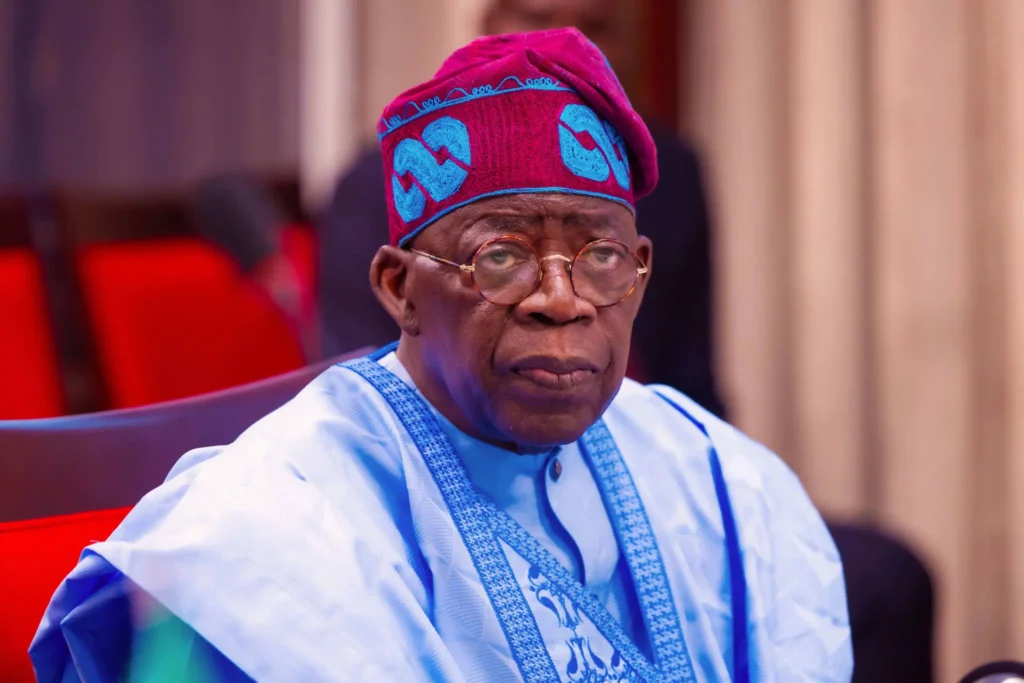
Former Nigerian President Goodluck Ebele Jonathan has been safely evacuated from Guinea-Bissau following a sudden military takeover that toppled the country’s government, the Federal Government confirmed on Thursday.
Kimiebi Ebienfa, spokesperson for the Ministry of Foreign Affairs, told journalists in Abuja that Jonathan left Guinea-Bissau aboard a special flight alongside members of his delegation, including Mohamed Chambas. “Former President Goodluck Ebele Jonathan is very safe and out of Guinea-Bissau. He left with a special flight with members of his delegation, including Mohamed Chambas,” Ebienfa said.
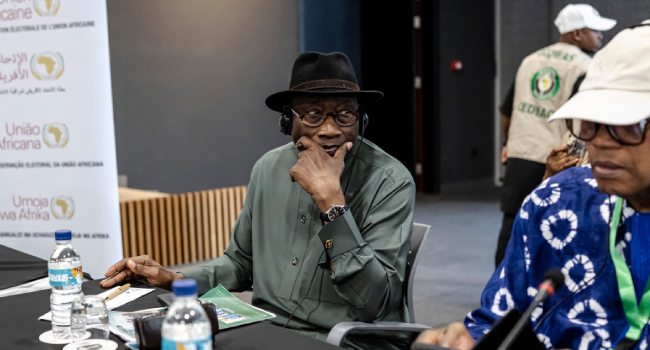
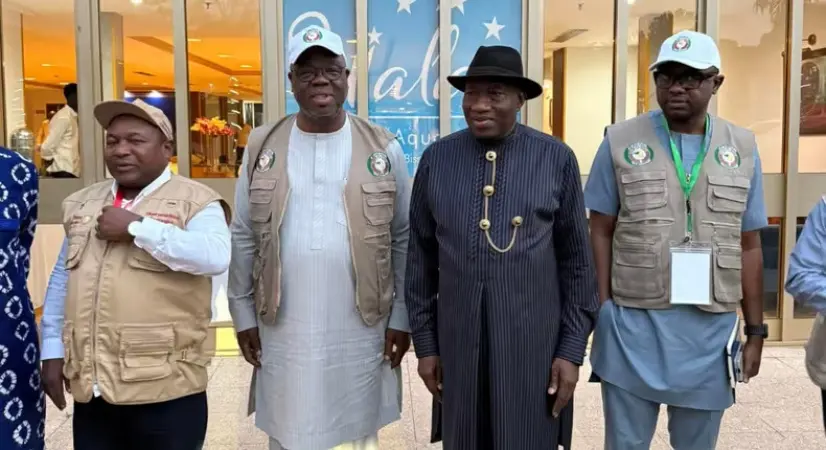
Jonathan had been in Guinea-Bissau leading the West African Elders Forum Election Observation Mission, monitoring the presidential and legislative elections held last Sunday. The military’s sudden seizure of power forced the early evacuation of Jonathan and his team.
On Wednesday, the coup prompted condemnation from regional and international leaders. Filipe Nyusi, former president of Mozambique and head of the African Union Election Observation Mission, along with Issifu Kamara, head of the ECOWAS Election Observation Mission, and Jonathan jointly denounced the military takeover, describing it as a deliberate attempt to disrupt Guinea-Bissau’s democratic process. The trio called for calm among residents and reaffirmed their commitment to supporting the country during the crisis, emphasizing “the importance of preserving peace, stability, and the well-being of the Bissau-Guinean people.”
The Nigerian government also reacted strongly to the coup, warning that it posed a serious threat to democracy and regional stability. In a statement, the Ministry of Foreign Affairs expressed “profound dismay and deep concern” over the unconstitutional change of government, noting that the military action violated the ECOWAS Protocol on Democracy and Good Governance.
Guinea-Bissau descended into chaos on Wednesday as military officers declared “total control” of the country, suspended electoral activities, and closed the nation’s borders. Heavy gunfire was reported near the presidential palace, while soldiers blocked key access routes. General Denis N’Canha, head of the presidential military office, announced that a command “composed of all branches of the armed forces was taking over the leadership of the country until further notice.”
Incumbent President Umaro Sissoco Embalo, who had been widely expected to win the election, told France24, “I have been deposed.” He was reportedly inside a building near the military headquarters with the chief of staff and the interior minister when the takeover occurred. Both Embalo and opposition candidate Fernando Dias had claimed victory in Sunday’s polls, with provisional results expected on Thursday.
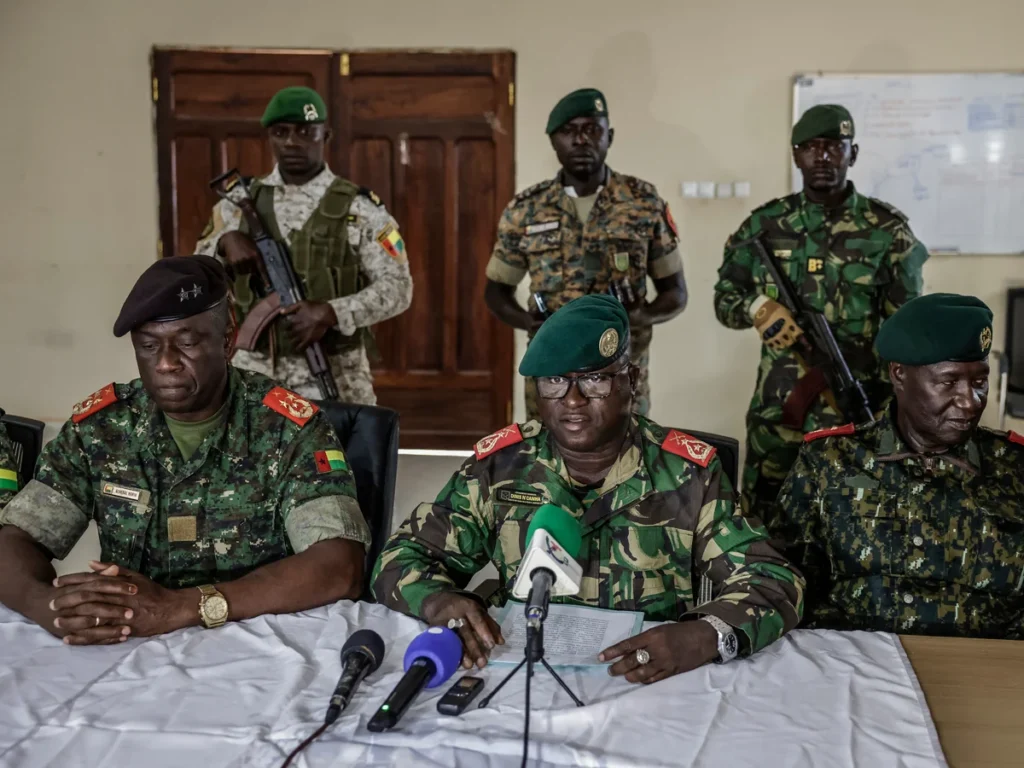
The military justified its actions by claiming it uncovered a plot involving “national drug lords” and the importation of weapons “to alter the constitutional order.” By Thursday, the authorities announced that the country’s borders had been reopened. General Lansana Mansali, Inspector General of the Armed Forces, confirmed to AFP, “All borders are now open.”
More than 6,700 security personnel, including members of the ECOWAS Stabilisation Force, had been deployed to oversee the elections amid political tension. Guinea-Bissau, one of the world’s poorest nations, has a long history of political instability, having experienced four successful coups and several failed attempts since gaining independence.
What you should know
Former President Goodluck Jonathan has safely left Guinea-Bissau after a military coup disrupted the country’s political process.
Regional election observers condemned the takeover, and the Nigerian government warned that the act threatened democracy and stability in the region. Guinea-Bissau has a long history of coups, with multiple changes in government since independence.