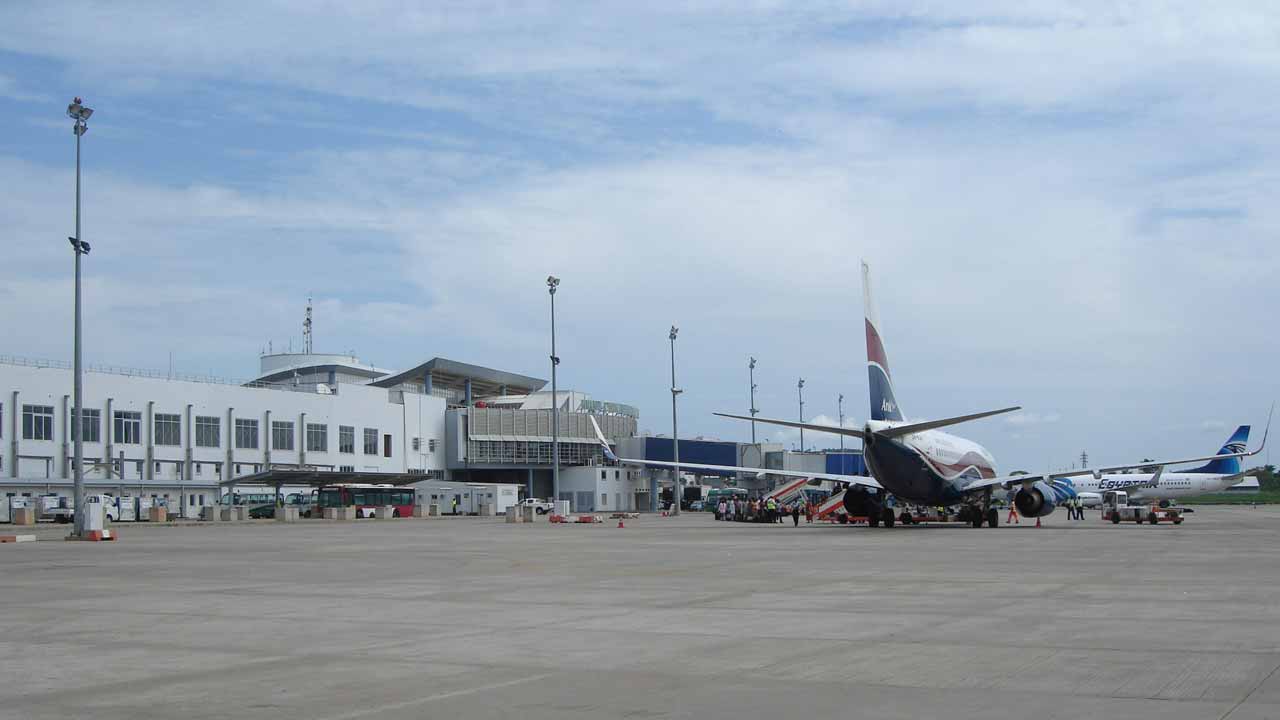
The Federal Government has earmarked a substantial N33.9 billion for the comprehensive rehabilitation and modernization of airport infrastructure nationwide in the 2026 fiscal year, signaling an aggressive push to address long-standing deficiencies in the country’s aviation sector.
According to budget documents obtained by our correspondent, the proposed expenditure represents one of the most ambitious airport infrastructure programs in recent years, targeting critical safety systems, terminal facilities, and security infrastructure across both international and domestic airports.
At the heart of the proposed spending is an urgent intervention on deteriorating runway infrastructure at three of the nation’s busiest airports. The government has allocated N800 million specifically for sealing cracks on runways, aprons, and taxiways at the Murtala Muhammed International Airport in Lagos, Mallam Aminu Kano International Airport in Kano, and Port Harcourt International Airport.
Aviation experts have long warned that cracked runways pose significant safety risks to aircraft operations, particularly during the rainy season when water infiltration can accelerate structural degradation. The proposed repairs signal official acknowledgment of these concerns.
Among the standout projects in the budget is the N1 billion earmarked for the expansion of the General Aviation Terminal apron at Mallam Aminu Kano International Airport, reflecting the facility’s growing importance as a northern aviation hub. Similarly, Maiduguri Airport is set to receive N800 million for apron expansion, a critical upgrade for a facility serving one of the most strategic regions in the country’s security landscape.
Ilorin Airport features prominently in the allocation, with N800 million designated for the procurement and installation of modern airfield lighting systems—an essential safety component for round-the-clock operations—and an additional N325 million for perimeter fencing to enhance security.
The budget reflects a deliberate effort to improve passenger experience across multiple airports. Katsina Airport is slated for a N175 million terminal remodeling project, while Calabar Airport will undergo terminal rehabilitation and car park upgrades at N200 million.
These projects come as passenger traffic continues to grow across domestic routes, placing increasing pressure on aging terminal infrastructure built decades ago to handle significantly lower volumes.
Recognizing persistent security challenges facing Nigerian airports, the government has dedicated substantial resources to perimeter security. The construction of perimeter fencing and access roads at Ajaka/Okuta Airstrip in Kogi State will consume N350 million, while Sam Mbakwe Airport in Owerri will receive N50 million for perimeter fencing and an additional N350 million for a perimeter road at its cargo facility.
Maiduguri Airport’s allocation includes N200 million for both perimeter fencing and the construction of a helicopter park—infrastructure likely linked to ongoing security operations in the Northeast.
Beyond major airports, the budget reveals an extensive airstrip rehabilitation program spanning multiple states. The largest single allocation in this category is N2 billion for the rehabilitation of Osubi Airstrip in Delta State, a facility crucial to oil and gas industry operations in the Niger Delta region.
Other notable airstrip projects include N560 million for Hadejia Airstrip in Jigawa State and N70 million each for the rehabilitation of Ibru-Edo and Uli-Okija airstrips in Edo and Anambra states, respectively. Development work on the Abeokuta and Umuahia airstrips has been allocated N35 million and N800 million, respectively.
In what appears to be a direct response to international aviation standards requirements, the government has set aside a substantial N5 billion for safety and security-critical projects and airport certification nationwide. An additional N400 million has been allocated specifically for the certification of Lagos and Abuja airports—a process essential for maintaining international aviation compliance.
The upgrade of instrument landing systems from Category I to Category II/III at major airports, budgeted at N350 million, represents a technical advancement that will enable aircraft to land safely in lower visibility conditions, reducing weather-related delays and diversions.
The budget also addresses passenger comfort and operational efficiency. Lagos Airport is set to receive N500 million for passenger boarding bridges and N700 million for a new baggage handling system—upgrades that should significantly reduce aircraft turnaround times and improve the passenger experience at Africa’s second-busiest airport.
Power supply improvements feature prominently, with N1 billion allocated for solar and gas turbine-powered systems across airports and N500 million for water-cooling chillers at Lagos and Abuja airports. These investments acknowledge the chronic power challenges that have plagued airport operations for years.
Smaller but essential allocations include N140 million for a rescue and fire service building at Calabar Airport, N57 million for clinic construction at major airports, and N21 million for a sewage treatment plant at Owerri Airport—projects that underscore the comprehensive nature of the infrastructure push.
To ensure effective implementation, the government has earmarked N400 million for monitoring and evaluation of aviation capital projects, suggesting lessons have been learned from previous budget cycles where poor oversight led to abandoned or poorly executed projects.
Budget documents indicate that most projects are marked as “ongoing,” confirming that the 2026 allocation forms part of a multi-year infrastructure overhaul rather than standalone initiatives. This continuity approach, if properly executed, could deliver more sustainable improvements than the start-stop pattern that has characterized previous aviation sector interventions.
As Nigeria seeks to position itself as a regional aviation hub and meet international safety standards, the success of this N33.9 billion investment will depend heavily on transparency in procurement, quality of execution, and effective project monitoring—factors that have historically presented challenges in public infrastructure delivery.
WHAT YOU SHOULD KNOW
The Federal Government’s N33.9 billion airport infrastructure budget for 2026 represents a critical investment in Nigeria’s aviation safety and competitiveness. This is a comprehensive, multi-year overhaul targeting the most urgent needs—cracked runways at major airports (Lagos, Kano, and Port Harcourt), a massive N5 billion for safety certification to meet international standards, and long-overdue security upgrades, including perimeter fencing nationwide.