Doctors under the Association of Resident Doctors in the Federal Capital Territory Administration (ARD-FCTA) have commenced an indefinite strike after the expiration of their seven-day warning strike.
The decision was made following an emergency general meeting held on Sunday, as disclosed in a communique signed by ARD-FCTA President, Dr. George Ebong, and General Secretary, Dr. Agbor Affiong.
The ARD-FCTA, which comprises doctors working in 14 district and general hospitals as well as the Department of Public Health under the FCTA, expressed deep frustration that none of its earlier demands had been addressed despite months of negotiations.
“This once again confirms our fears of the chronic neglect of our healthcare system affecting the effectiveness of the medical doctors in order to carry out care in the highest standard,” the communique stated.
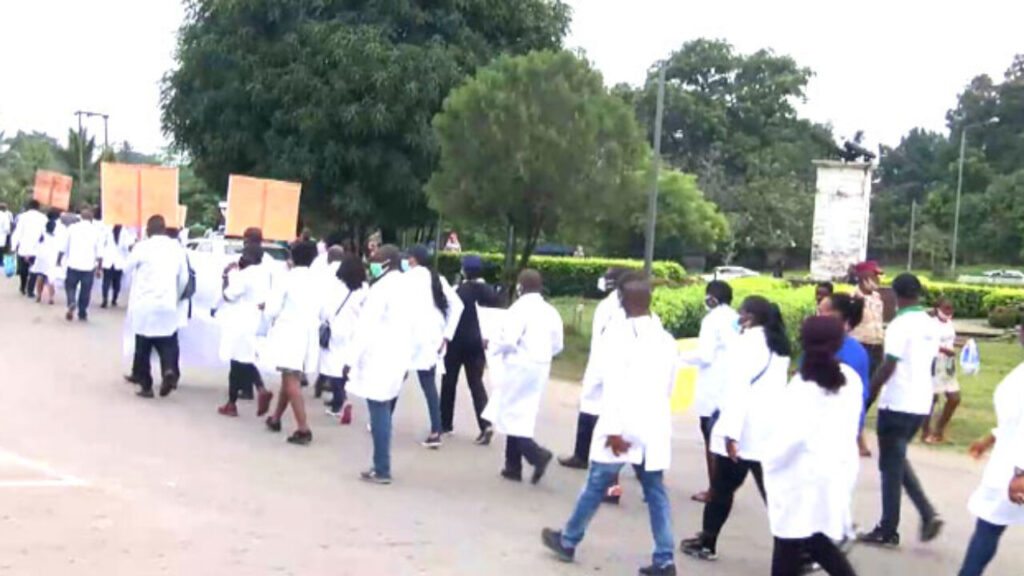
The doctors are demanding the payment of salary arrears ranging from one to six months for members employed since 2023, recruitment of new staff, settlement of the 2025 Medical Residency Training Fund, and arrears arising from the upward review of the Consolidated Medical Salary Structure.
Other demands include clear timelines for promotions and conversions, settlement of all arrears, correction of salary deductions, payment of outstanding hazard allowance arrears, renovation of FCTA hospitals, and the conversion of post-Part II Fellows to Consultant cadre within six months of passing.
Following extensive deliberations, the doctors resolved that the strike would continue indefinitely until government and management show genuine commitment to addressing their grievances.
“We do hope that the management will do the urgent needful to meet all of our demands for the sake of our patients and ourselves,” the communique concluded.
What You Should Know
Resident doctors in the FCT have embarked on an indefinite strike after their warning strike failed to yield results.
Their demands cover unpaid salaries, recruitment, improved hospital infrastructure, and fair promotions. The strike, which affects 14 hospitals and the public health department, highlights ongoing challenges in Nigeria’s healthcare system, including underfunding and neglect.
Patients are expected to face disruptions as doctors insist they will not return until the government takes concrete action.