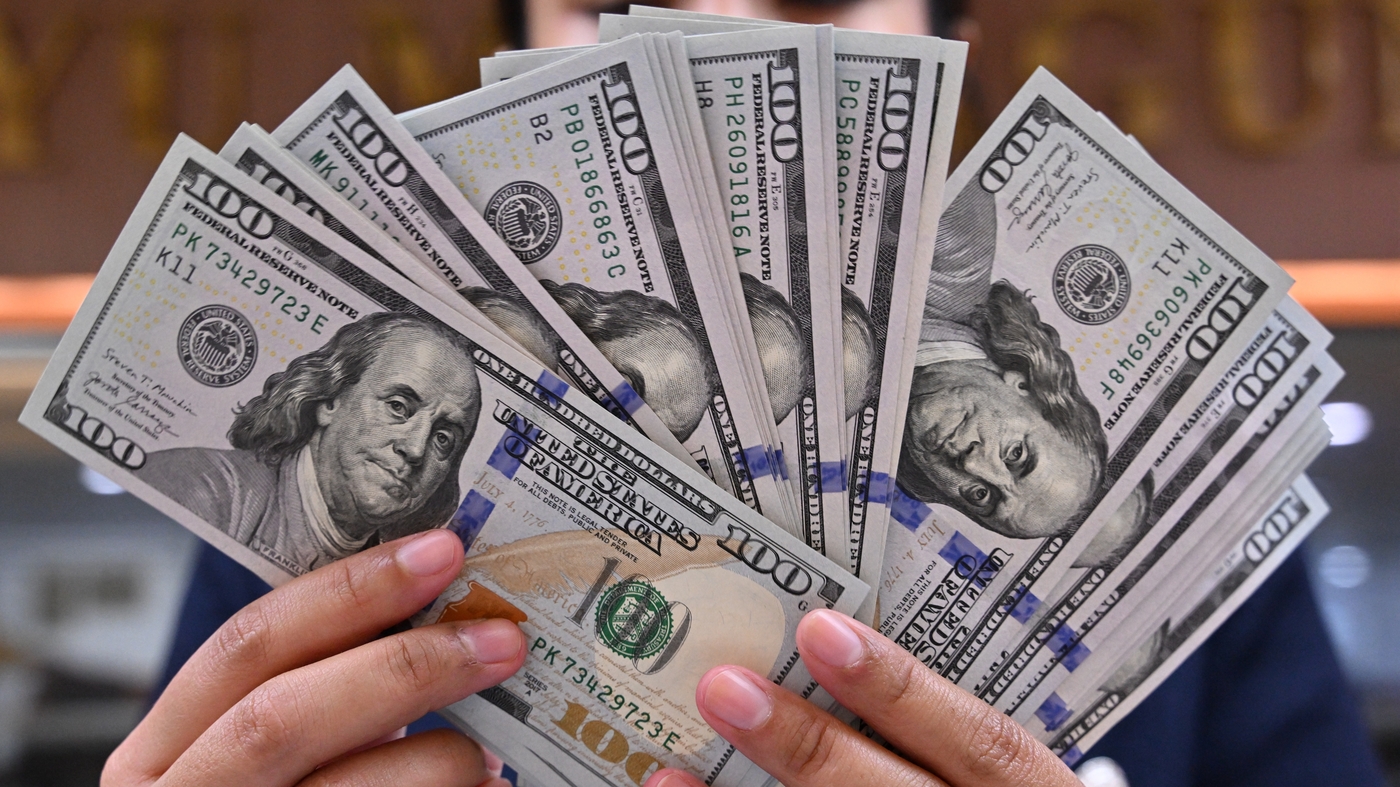
The U.S. dollar retreated across major currency pairs on Thursday, buffeted by intensifying trade friction between Washington and Beijing and mounting expectations that the Federal Reserve will ease monetary policy before year’s end, a dual pressure that has left the greenback struggling for direction.
The dollar index, which tracks the currency against a basket of six major rivals, declined 0.16% to 98.512, positioning the greenback for a weekly loss of 0.33%. Market analysts attribute the weakness to deteriorating investor sentiment as the world’s two largest economies engage in an increasingly bitter trade dispute that threatens to disrupt global supply chains.
Rare Earth Controls Spark Fresh Tensions
The latest flashpoint centers on China’s expansion of export controls on rare earth minerals—materials critical to everything from smartphones to military hardware. U.S. officials have condemned Beijing’s move as a weaponization of trade policy that endangers international commerce, drawing a sharp rebuke from China’s Commerce Ministry, which dismissed American criticism as hypocritical given Washington’s own extensive restrictions on Chinese goods and companies.
“What we’re witnessing is a classic tit-for-tat escalation that’s making currency traders extremely nervous,” said Vasu Menon, managing director of investment strategy at OCBC. “The uncertainty is pushing investors away from dollar-denominated assets.”
Yet amid the acrimony, a potential diplomatic off-ramp remains in view. Treasury Secretary Scott Bessent indicated that President Donald Trump still intends to meet with Chinese President Xi Jinping in South Korea later this month—a summit that could determine whether the current trade truce holds or collapses into full-blown economic warfare.
High-Stakes Diplomacy Ahead
Menon noted that the latest punitive measures from both sides aren’t scheduled to take effect until November, conveniently after the planned Trump-Xi meeting. “If the meeting goes ahead, some of last week’s measures could be toned down or even unwound and presented as successful deliverables,” he observed, suggesting both leaders may be positioning themselves for negotiations rather than confrontation.
The two nations have operated under a six-month trade truce repeatedly extended in 90-day increments, maintaining reduced tariff rates and continued rare earth flows. Bessent has floated the possibility of a longer extension—an outcome Joseph Capurso, head of foreign exchange at Commonwealth Bank of Australia, views as the most realistic scenario.
“An extension, rather than a grand bargain that settles all trade issues, is probably the most realistic second-best outcome compared to the alternative of escalation of retaliation,” Capurso said.
European and Asian Currencies Advance
The euro capitalized on dollar weakness, climbing to a one-week high and trading up 0.12% at $1.1661. The single currency found support as traders monitored France’s ongoing political turbulence, where Prime Minister Sebastien Lecornu appears likely to survive two no-confidence votes in parliament—a development that has paradoxically steadied European markets by reducing uncertainty.
In Asia, the Japanese yen briefly strengthened to a one-week peak of 150.51 per dollar before settling flat at 151.04. Japan’s political landscape remains in flux following the Liberal Democratic Party’s weakened position in recent elections. The party is set to begin policy discussions Thursday with the right-leaning Japan Innovation Party—talks that could prove decisive in helping Sanae Takaichi secure enough support for a prime ministerial vote expected next week.
China’s yuan, meanwhile, firmed to a two-week high against the dollar after the People’s Bank of China set its strongest daily reference rate in a year, a move interpreted as Beijing’s signal of confidence despite the trade tensions.
Risk Appetite Wavers
The Australian dollar, often viewed as a barometer of global risk sentiment, slipped 0.36% to $0.64875 after September unemployment data showed joblessness hitting a nearly four-year high. The disappointing figures have strengthened the case for interest rate cuts from the Reserve Bank of Australia and added to the Aussie’s volatility this week as trade tensions have driven investors toward traditional safe-haven assets.
The Swiss franc, benefiting from its status as a refuge during turbulent times, firmed to 0.7955 per U.S. dollar as risk-averse positioning continued.
Fed Rate Cut Speculation Builds
Compounding the dollar’s difficulties, traders are increasingly confident the Federal Reserve will lower interest rates before 2025 concludes—a shift that typically weakens the dollar by reducing the yield advantage of U.S. assets. This speculation has gained momentum even as a third week of government shutdown has starved investors of key economic data, forcing market participants to parse policymaker comments for clues about the central bank’s intentions.
With Washington paralyzed by the budget impasse and Beijing seemingly prepared to match American trade measures step-for-step, currency markets face an uncertain path ahead. Whether the upcoming Trump-Xi summit produces détente or disappointment may well determine the dollar’s trajectory for months to come.
WHAT YOU SHOULD KNOW
The U.S. dollar is weakening on two fronts: escalating trade tensions with China over rare earth export controls are eroding investor confidence, while growing expectations of Federal Reserve interest rate cuts are removing the dollar’s yield advantage.
President Trump’s planned meeting with President Xi Jinping in South Korea this month could determine whether the current trade truce holds or collapses.
An extension of the existing agreement appears more likely than full-scale escalation, but uncertainty is driving investors toward safe-haven currencies like the Swiss franc and away from dollar assets.