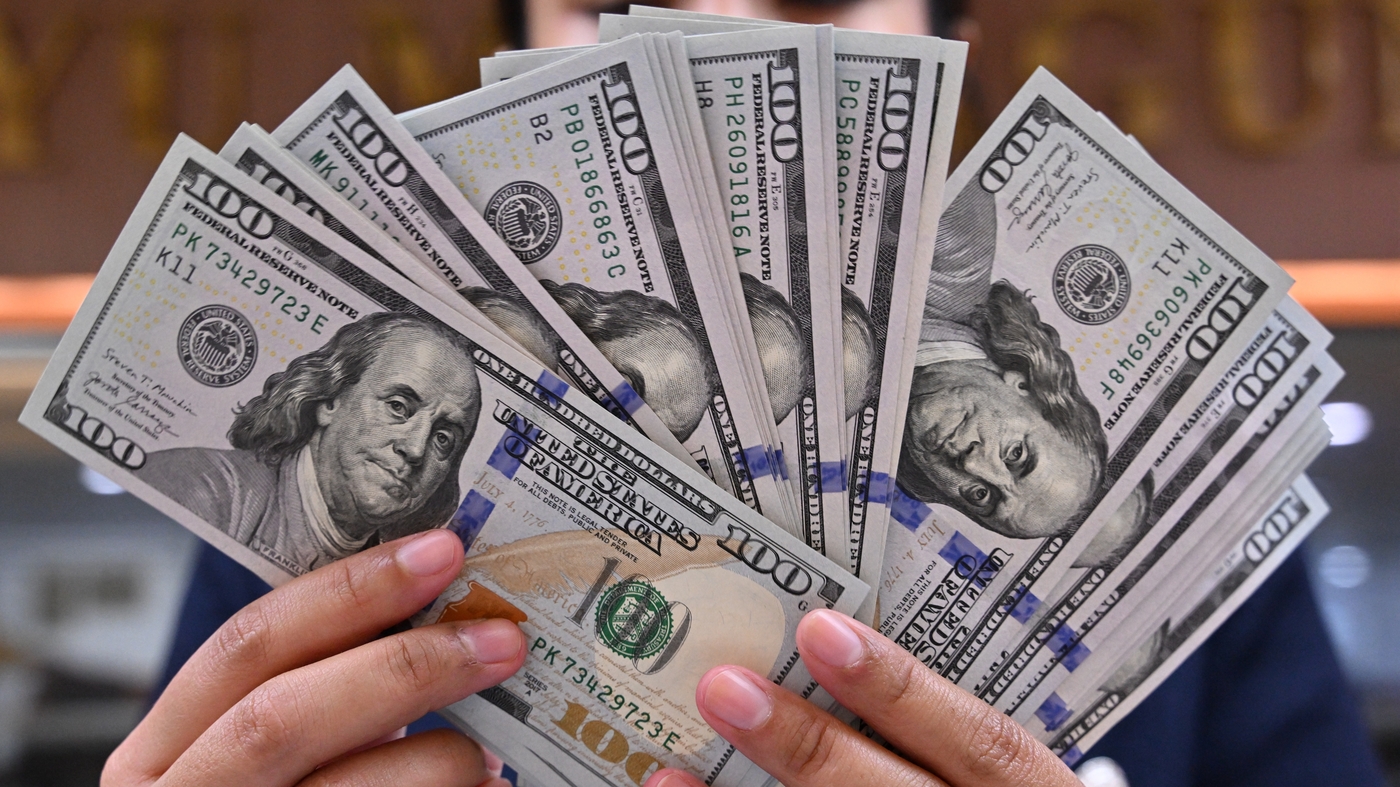
The U.S. dollar retreated on Tuesday as currency markets entered a holding pattern ahead of a critical week that could reshape the global economic landscape, with traders juggling expectations of a Federal Reserve rate cut alongside heightened hopes—and fears—surrounding President Donald Trump’s high-stakes diplomatic mission to Asia.
The greenback’s decline reflected mounting uncertainty on two fronts: domestic monetary policy and the fragile state of U.S.-China trade relations, as investors positioned themselves for what could prove to be pivotal developments in both arenas.
Yen Surges on BOJ Rate Hike Speculation
The Japanese yen emerged as Tuesday’s standout performer, surging more than 0.6% to 151.855 against the dollar. The currency’s strength came as markets looked ahead to this week’s Bank of Japan policy meeting, where officials are widely expected to maintain current interest rates. However, traders are parsing every statement for hints about when the central bank might next raise rates—a move that would further narrow the yield differential that has long weighed on the yen.
Adding fuel to the yen’s rally, U.S. Treasury Secretary Scott Bessent weighed in on Japanese monetary policy during talks with his counterpart, Finance Minister Satsuki Katayama. Bessent’s call for “sound monetary policy” marked his latest public criticism of the BOJ’s cautious approach to rate normalization—an unusually direct commentary on another nation’s central bank policy that underscores Washington’s concern about currency stability in the Pacific region.
Trump’s Asia Tour: Trade Diplomacy Under the Spotlight
President Trump’s whirlwind tour through Asia has become the focal point for markets desperate for clarity on the trade front. On Tuesday, Trump met with Japan’s newly appointed Prime Minister Sanae Takaichi in Tokyo, where the two leaders signed agreements covering trade and critical rare earth minerals. Trump praised Takaichi’s commitment to accelerating Japan’s military expansion—a strategic priority for Washington as it seeks to counter Chinese influence in the region.
Yet the real drama lies ahead. All eyes are now fixed on Thursday’s scheduled meeting between Trump and Chinese President Xi Jinping in South Korea—a sit-down that could determine whether months of escalating trade tensions between the world’s two largest economies begin to thaw, or whether the confrontation deepens further.
“I’ve got a lot of respect for President Xi and I think we’re going to come away with a deal,” Trump told reporters aboard Air Force One before touching down in Tokyo, projecting the confidence that has become his trademark in international negotiations.
Markets Temper Enthusiasm Despite Early Rally
Monday saw a modest risk rally as preliminary signals suggested a possible de-escalation in U.S.-China trade hostilities, pushing the dollar lower against major currencies. However, seasoned market observers are urging caution, warning that even if a deal materializes, it may fall short of the comprehensive agreement that would truly satisfy investors.
Beijing has remained notably tight-lipped about the negotiations, with Chinese officials offering little insight into their expectations or red lines. This silence has left analysts to read tea leaves and parse diplomatic statements for clues.
“When you have two economic superpowers with strong-headed leaders trying to work out a deal, one can imagine that it will not be a seamless affair,” said Vasu Menon, managing director of investment strategy at OCBC Bank. Menon suggested that rather than a breakthrough, the outcome might be an agreement to continue talking—effectively “kicking the can down the road.”
Still, Menon noted that markets are hungry for any positive development that could justify the ongoing bull run in equities. “If the two leaders can make some concrete progress, it may be enough to satisfy markets for now,” he said, pointing to investors’ apparent willingness to grasp at incremental progress.
Fed Rate Cut All But Certain, But Questions Remain
The dollar’s weakness also reflects market consensus around an imminent Federal Reserve rate cut. Traders have fully priced in a 25-basis-point reduction at this week’s policy meeting, which would mark the central bank’s latest step in easing monetary policy amid signs of economic cooling.
On Tuesday, the euro climbed to a one-week high of $1.1668, while the British pound advanced 0.25% to $1.3368. The dollar index, which tracks the greenback against a basket of six major currencies, fell 0.19% to 98.58, extending the previous session’s 0.15% decline.
However, the rate cut itself is almost a foregone conclusion—what markets really want to know is what comes next. With the ongoing U.S. government shutdown depriving policymakers of crucial economic data, uncertainty surrounds the Fed’s path forward. Traders are already betting on another rate cut in December, but Fed Chair Jerome Powell‘s guidance—or lack thereof—will be scrutinized for any hints about the central bank’s timeline.
“We do not expect formal guidance about the December meeting, but if Chair Powell is asked, he will likely be comfortable referencing the September dots, which imply a third cut in December,” said David Mericle, chief U.S. economist at Goldman Sachs. The Fed reduced rates by 25 basis points at its last meeting.
Adding another layer of intrigue, investors will be watching for any indication that the Fed may begin winding down its quantitative tightening program—a shift that could provide additional support to financial markets.
ECB to Hold Steady as Policy Divergence Widens
Across the Atlantic, the European Central Bank is expected to keep interest rates unchanged when it meets on Thursday, maintaining its wait-and-see stance as officials assess the region’s economic trajectory. Market participants are divided on whether the ECB will resume its easing cycle next year, creating another source of policy uncertainty for currency traders.
Risk Appetite Returns, Lifting Commodity Currencies
The Australian dollar, frequently used as a barometer for global risk sentiment, edged up 0.11% to $0.6563—its highest level in two weeks—while New Zealand’s dollar inched higher to $0.5782. The gains in these commodity-linked currencies suggest that, despite the prevailing uncertainty, investors are maintaining a cautiously optimistic outlook.
As this pivotal week unfolds, the interplay between central bank policy decisions and geopolitical developments will likely determine whether the dollar’s current weakness proves fleeting or marks the beginning of a more sustained shift in currency market dynamics. For now, traders are strapped in for what promises to be a volatile ride.
WHAT YOU SHOULD KNOW
The dollar is under pressure this week as markets face a perfect storm of uncertainty: a widely expected Fed rate cut, crucial trade talks between Presidents Trump and Xi Jinping in South Korea on Thursday, and diverging global monetary policies.