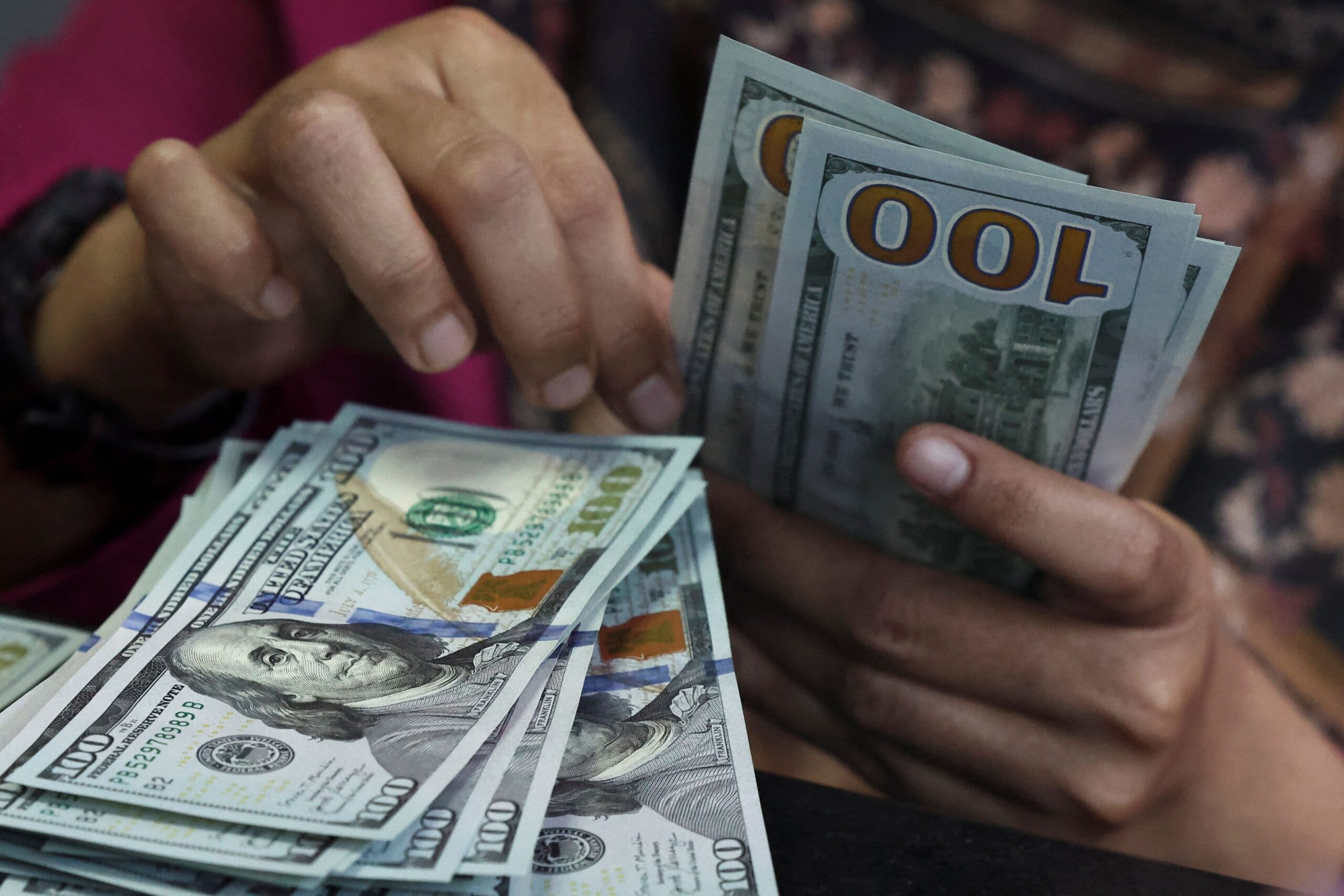
The U.S. dollar suffered its steepest single-day decline in more than a month on Tuesday, as escalating geopolitical tensions over Greenland sent shockwaves through global financial markets and prompted investors to flee American assets in a dramatic reversal of sentiment.
The dollar index, a closely watched gauge measuring the greenback against six major currencies, tumbled as much as 0.7 percent—its most significant daily retreat since mid-December—as traders reassessed their exposure to U.S. markets amid growing uncertainty about the Trump administration’s foreign policy approach.
The latest turbulence follows renewed threats from President Donald Trump targeting European allies with tariffs, a move that has revived what market participants are calling the “Sell America” trade. This phenomenon, which first emerged following the administration’s “Liberation Day” tariff announcement last April, has seen investors simultaneously dumping U.S. stocks, Treasury bonds, and the dollar in a coordinated retreat from American assets.
According to Tony Sycamore, market analyst at IG in Sydney, the selloff reflects deeper concerns beyond immediate policy disputes. “Investors are dumping dollar assets on fears of prolonged uncertainty, strained alliances, a loss of confidence in U.S. leadership, potential retaliation, and an acceleration of de-dollarization trends,” Sycamore explained.
He added that while markets hope the administration might walk back its threats—as it has done with previous tariff announcements—the current situation appears different. “It is clear that securing Greenland remains a core national security objective for the current administration,” he noted, suggesting this may not be mere negotiating bluster.
The euro emerged as one of the primary beneficiaries of the dollar’s weakness, surging 0.8 percent to $1.1742 in what would mark its largest single-day gain since September. The British pound also advanced, climbing 0.24 percent to $1.346, supported not only by dollar weakness but also by mixed UK labor market data showing unemployment holding at a five-year high even as job vacancy numbers showed signs of stabilizing.
However, some analysts are questioning whether the euro’s rally has staying power. Barclays strategist Lefteris Farmakis cautioned that the “Sell America” effect may prove temporary. “Tariff threats are a marginal negative for the dollar in the near term given long positions and still-low hedge ratios from a historical perspective,” he said. “That said, major escalation with NATO spillovers is a much bigger problem for the euro than Liberation Day.”
Data from the U.S. markets regulator reveals that while investors have modestly reduced their bullish euro positions, holdings remain near their highest levels since mid-2023—potentially setting the stage for profit-taking if sentiment shifts.
The currency turbulence extended well beyond the Atlantic. The Japanese yen, which had weakened overnight amid an accelerating sell-off in Japanese government bonds, recovered as European markets opened, leaving the dollar down 0.3 percent at 157.68 yen.
Japan’s bond market jitters stem from newly appointed Prime Minister Sanae Takaichi’s announcement of snap elections for February 8 and her pledge to implement sweeping fiscal stimulus measures. Investors are growing increasingly anxious about the sustainability of Japan’s already precarious public finances.
Safe-haven currencies saw predictable flows. The Swiss franc strengthened for a third consecutive session, with the dollar sliding 1.1 percent to 0.7885 francs as investors sought shelter from the geopolitical storm.
The dollar’s weakness provided a boost to commodity-linked currencies in the Asia-Pacific region. Against the Chinese yuan trading in Hong Kong, the dollar held steady at 6.952 yuan—its weakest level since May 2023—even as the People’s Bank of China maintained its benchmark lending rates unchanged for an eighth straight month.
The Australian dollar jumped as much as 0.48 percent to $0.675, nearing its strongest level since October 2024, while the New Zealand dollar climbed 0.77 percent to $0.584, reaching its highest point this year.
Digital assets were not immune to the risk-off sentiment. Bitcoin fell 2 percent to $91,090, while Ethereum declined 3.3 percent to $3,104, as investors pulled back from speculative positions across the board.
The critical question facing markets is whether Tuesday’s selloff represents a temporary shock or the beginning of a more sustained reassessment of U.S. asset valuations. Much depends on whether the White House follows through on its threats or, as in previous instances, uses them as negotiating leverage before backing down.
For currency traders, the coming days will be crucial in determining whether the dollar’s decline marks a turning point in the post-pandemic dollar strength narrative or merely a sharp but short-lived correction in an otherwise resilient uptrend. With geopolitical tensions showing no signs of immediate resolution, volatility appears likely to remain elevated across global markets.
WHAT YOU SHOULD KNOW
The U.S. dollar experienced its sharpest decline in over a month as President Trump’s aggressive stance on Greenland and tariff threats against European allies triggered a massive “Sell America” wave—with investors simultaneously dumping U.S. stocks, bonds, and the dollar amid fears of damaged international alliances and declining confidence in American leadership.
While the euro and other currencies rallied, analysts warn this could signal either a temporary market panic or the beginning of a dangerous “de-dollarization” trend that undermines America’s financial dominance globally. The central question: Will the White House de-escalate as it has before, or is this geopolitical confrontation different?