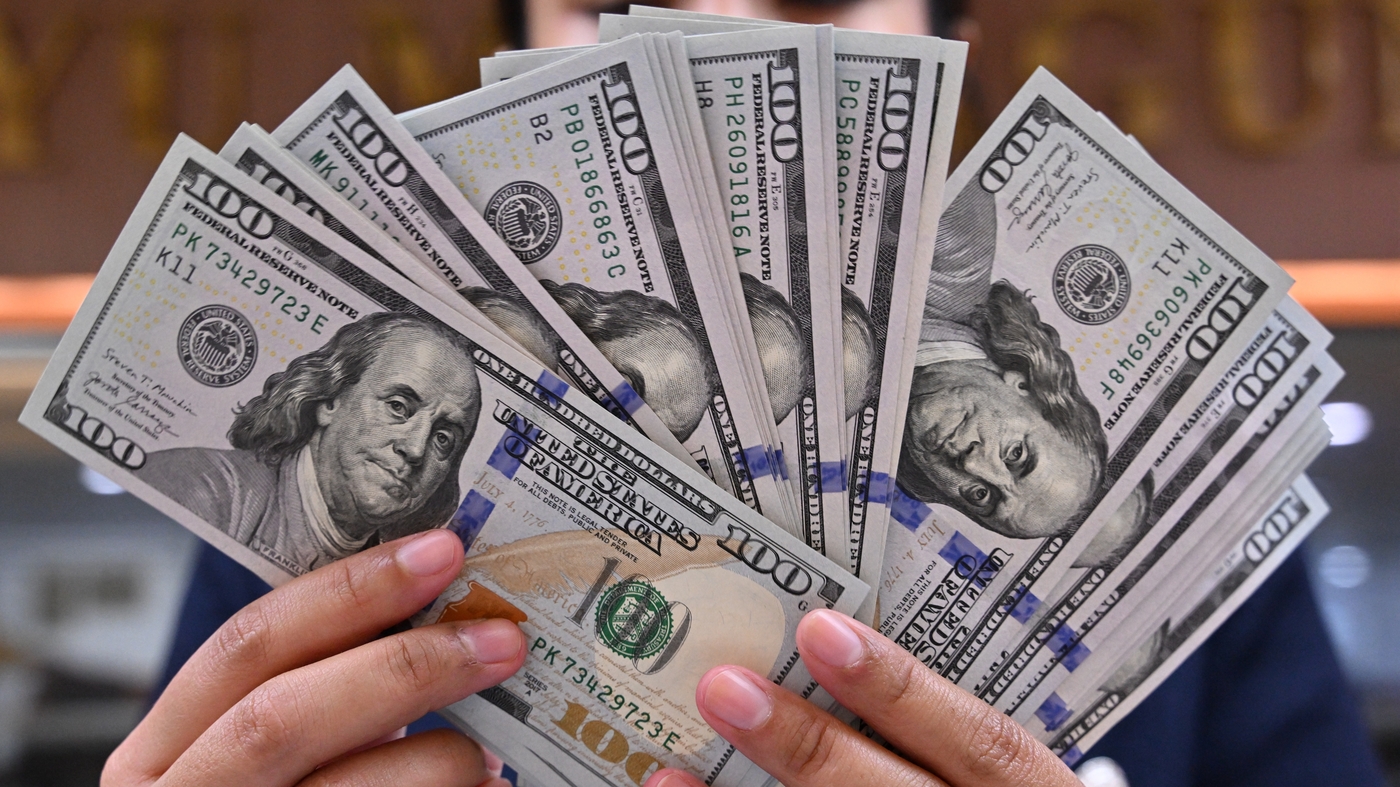
The U.S. dollar consolidated near two-week highs against major currencies on Friday, reflecting growing uncertainty among investors about the Federal Reserve’s next move as markets prepared for Chair Jerome Powell’s highly anticipated speech at the Jackson Hole Economic Symposium.
Currency markets showed clear signs of recalibration, with the euro slipping to $1.1597 and sterling falling to $1.3408—both currencies touching their weakest levels since early August. The dollar index, which tracks the greenback against six major trading partners, rose 0.1% to 98.71, positioning for a 0.9% weekly gain that would snap a two-week losing streak.
Rate Cut Expectations Cool
The dollar’s resilience comes as traders have scaled back aggressive bets on Federal Reserve easing. According to CME’s FedWatch tool, markets are now pricing in just a 73% probability of a 25-basis-point rate cut in September, down sharply from 85.4% a week earlier. This shift reflects growing caution among investors who initially embraced hopes of imminent monetary easing following signs of labor market softening.
However, recent economic data painting a more complex picture has tempered those expectations. Inflationary pressures remain persistent, while Fed officials have struck increasingly cautious tones about the timing and magnitude of potential rate cuts.
“The dollar has been reflecting the risk that he (Powell) could stick to his guns and become more cautious,” explained Jane Foley, head of FX strategy at Rabobank, highlighting the market’s sensitivity to potential hawkish signals from the Fed chair.
Fed Officials Signal Caution
Thursday’s commentary from Federal Reserve officials reinforced the more measured approach. Chicago Fed President Austan Goolsbee acknowledged that September’s Federal Open Market Committee meeting remains “live” for policy changes but emphasized that mixed economic signals and unexpectedly high inflation readings have given policymakers reason to pause.
The central bank faces a delicate balancing act: responding to labor market weakness that emerged over the summer while remaining vigilant against persistent inflationary pressures that could undermine the Fed’s credibility if they resurge.
Jackson Hole in Focus
Powell’s 10 a.m. EDT address at the Wyoming symposium represents a critical moment for monetary policy guidance. Charu Chanana, chief investment strategist at Saxo, noted that with key inflation and employment data still pending before September’s meeting, “Powell has every reason to stay patient and keep optionality open.”
The annual Jackson Hole conference has historically served as a platform for significant Federal Reserve policy pronouncements, making Friday’s speech particularly consequential for market direction.
Broader Currency Dynamics
Despite near-term dollar strength, longer-term outlooks remain mixed. Analysts at Bank of America Global Research maintain a bearish dollar view, citing rising stagflation risks that could ultimately weigh on the currency. The bank has raised its year-end euro forecast to $1.20 from $1.17, reflecting expectations that structural challenges will eventually pressure the greenback.
The euro has gained 12% year-to-date in 2025, primarily benefiting from earlier dollar weakness as markets initially embraced Fed easing expectations.
Global Context
Currency movements extended beyond the dollar’s major pairs. The Japanese yen weakened to 148.56 per dollar, heading for a 0.9% weekly decline despite data showing core inflation remained above the Bank of Japan’s 2% target for the second consecutive month. Japanese 30-year government bond yields hit fresh all-time highs, tracking rising U.S. Treasury yields.
The 30-year Treasury yield climbed to 4.9285%, while the policy-sensitive 2-year yield held steady at 3.79% following Thursday’s increase.
Nordic currencies also felt pressure, with the Swedish krona and Norwegian krone each declining 0.2% against the dollar, while the Swiss franc remained relatively stable.
As markets await Powell’s remarks, the fundamental question remains whether the Federal Reserve will prioritize labor market support or maintain its vigilance against inflation—a decision that could significantly reshape currency trajectories and broader financial conditions in the months ahead.
WHAT YOU SHOULD KNOW
The U.S. dollar is strengthening as investors pull back on expectations of aggressive Federal Reserve rate cuts, with the probability of a September rate cut dropping from 85% to 73% in just one week.
All eyes are on Fed Chair Jerome Powell’s Jackson Hole speech on Friday, which could determine whether the central bank prioritizes fighting inflation or supporting a weakening job market. This decision will likely drive currency markets and broader financial conditions for months to come.