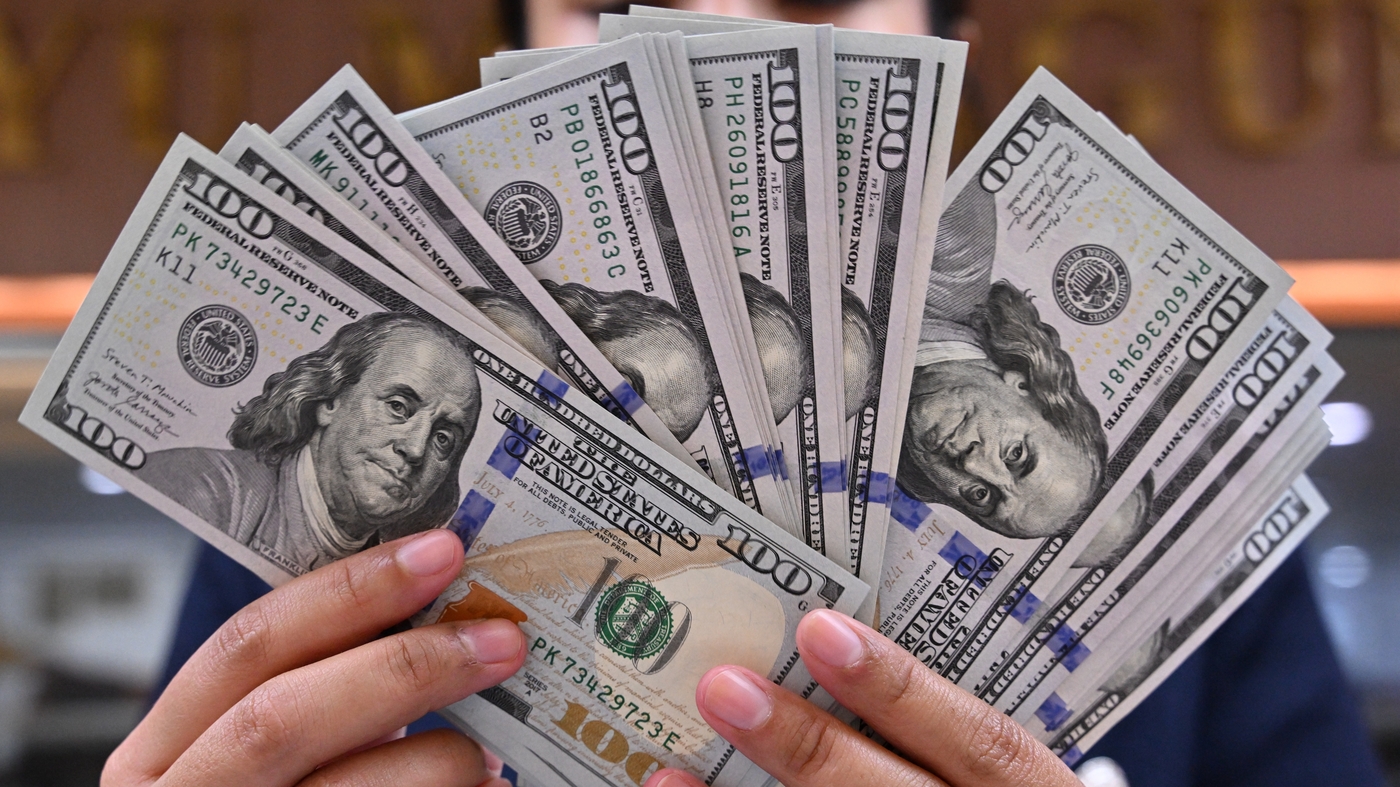
The U.S. dollar mounted a tentative recovery on Monday following a tumultuous end to last week that saw the currency suffer its steepest single-day decline in months after a confluence of troubling economic data and unprecedented political interference in federal statistics.
The greenback had crashed more than 2% against the Japanese yen and approximately 1.5% versus the euro on Friday, marking one of its worst trading sessions this year. By Monday’s close, the dollar had clawed back some ground, rising 0.3% to 147.91 yen, though it remained roughly 3 yen below Friday’s pre-selloff levels.
The currency’s dramatic reversal began with July’s employment report, which revealed not just weaker-than-expected job growth but also massive downward revisions to prior months’ data. The Bureau of Labor Statistics slashed payroll estimates for May and June by a combined 258,000 positions—a revision of staggering proportions that has fundamentally altered economists’ assessment of labor market health.
“The report itself was perhaps not that weak, but the revisions were extremely significant,” explained Mohamad Al-Saraf, foreign exchange strategist at Danske Bank. “We have a hard time seeing how the Fed cannot lower rates at the September meeting.”
The jobs data alone would have been sufficient to rattle markets and fuel speculation about Federal Reserve policy pivots. But President Trump’s decision to fire BLS Commissioner Erika McEntarfer on the same day, accompanied by accusations that she had been “faking the jobs numbers,” sent shockwaves through financial markets already grappling with the implications of deteriorating employment conditions.
The dismissal marked an extraordinary breach of the traditional independence afforded to federal statistical agencies, raising concerns among market participants about the integrity of future economic data releases. Trump’s action came as he has repeatedly criticized the Federal Reserve for maintaining what he considers excessively high interest rates.
Adding another layer of complexity, Fed Governor Adriana Kugler’s unexpected resignation has opened an additional pathway for Trump to reshape the central bank’s composition far earlier than typical presidential cycles would allow. The development has intensified focus on monetary policy dynamics at a time when rate cut expectations are already surging.
Bond markets moved decisively to price in more aggressive Fed easing. Two-year Treasury yields plummeted to three-month lows of 3.659%, while traders now assign nearly 90% odds to a September rate reduction. Market pricing suggests approximately 60 basis points of cuts through December—equivalent to two quarter-point reductions with a 40% probability of a third.
“Market reactions to Friday night’s events were swift and decisive,” observed Tony Sycamore, market analyst at IG. “Equities and the U.S. dollar tumbled, along with yields.”
The dollar’s July performance now appears even more remarkable in hindsight. The currency had surged 3.4% during the month—its largest monthly gain since April 2022 and first positive month this year—as investors grew more comfortable with Trump’s trade policies and economic data had remained relatively resilient despite tariff pressures.
Monday’s trading session also highlighted the global ripple effects of Trump’s trade agenda. The dollar strengthened more than 0.5% against the Swiss franc after the administration imposed some of its highest tariffs on Switzerland as part of what officials termed a “global trade reset.” The franc’s weakness prompted Swiss authorities to schedule an emergency cabinet meeting to formulate their response.
“We saw the franc weakening a lot after the announcement,” Al-Saraf noted. “If these tariffs were to be sustained, the relative downside for the Swiss economy will be quite big.”
The developments underscore the increasingly complex interplay between domestic politics, monetary policy expectations, and currency markets. With Trump promising to announce both a new Fed nominee and BLS commissioner within days, investors face continued uncertainty about the trajectory of both economic policy and statistical reporting.
For currency traders, the week ahead promises heightened volatility as markets continue digesting the implications of Friday’s extraordinary sequence of events while positioning for potential further policy announcements from the White House.
WHAT YOU SHOULD KNOW
The U.S. dollar crashed on Friday after a devastating jobs report revealed the labor market is weaker than previously thought—with massive downward revisions erasing 258,000 jobs from earlier estimates. President Trump’s unprecedented firing of the top statistics official on the same day, accusing her of faking numbers, sent additional shockwaves through markets.
Bond traders now see a 90% chance the Federal Reserve will cut rates in September, marking a dramatic shift in monetary policy expectations. While the dollar recovered modestly on Monday, the combination of deteriorating economic data and political interference in federal statistics has fundamentally altered the investment landscape.