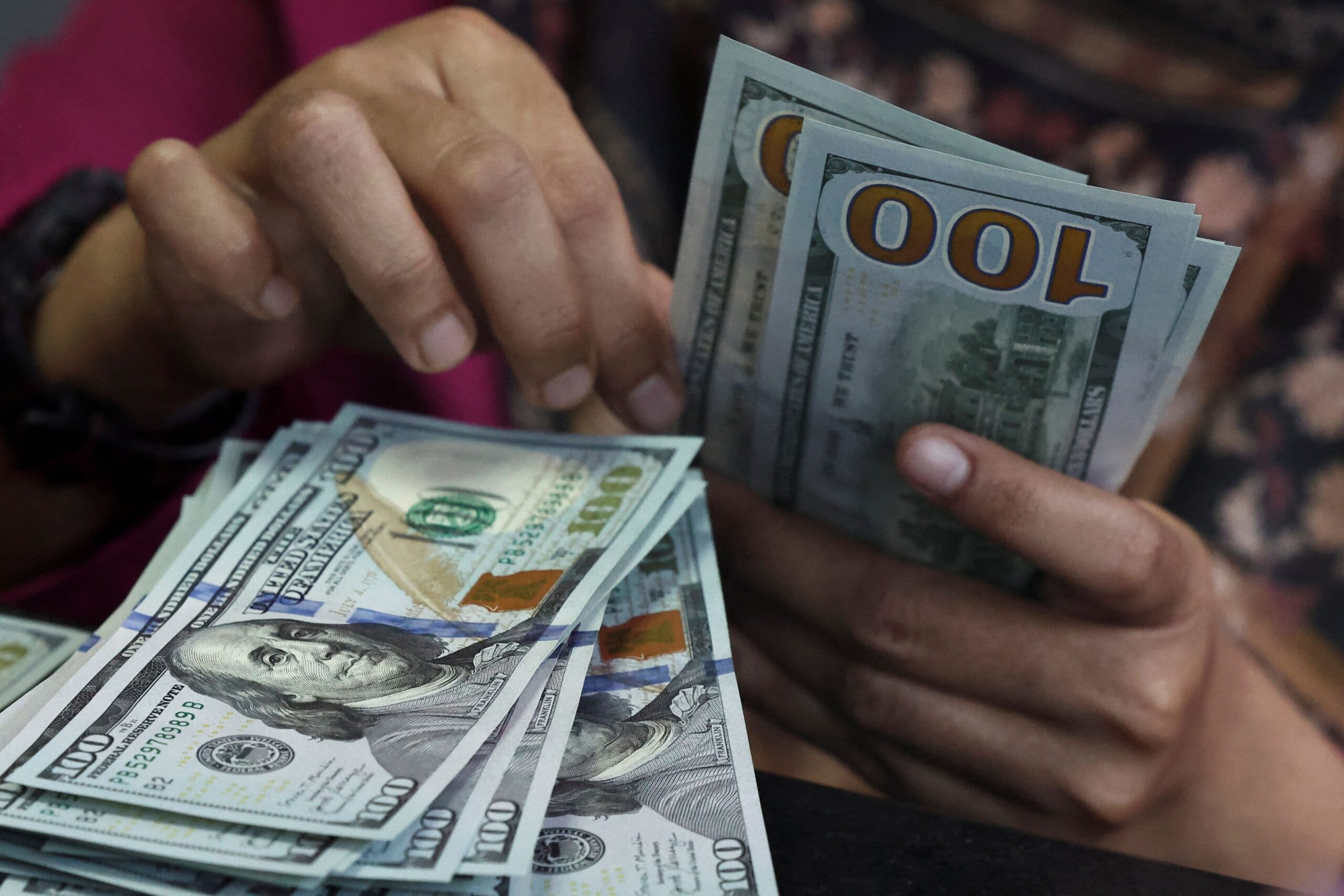
The U.S. dollar found its footing on Monday following a sustained two-week selloff, as traders positioned themselves for what promises to be one of the most consequential weeks for global monetary policy in recent months.
All eyes are on Wednesday’s Federal Reserve meeting, where policymakers are virtually certain to deliver an interest rate cut—but the path forward remains murky amid what market analysts describe as an unusually divided Federal Open Market Committee.
The anticipated rate reduction comes against a backdrop of heightened uncertainty about the central bank’s future trajectory. While the cut itself is “all but priced in,” according to market participants, divisions within the Fed’s policy-setting committee have introduced an element of unpredictability that could trigger significant market volatility.
Beyond the Fed, central banks in Australia, Brazil, Canada, and Switzerland are also scheduled to announce policy decisions this week. However, analysts expect the Federal Reserve to be the sole institution making moves, with the others likely maintaining their current stances.
Currency markets reflected this anticipation Monday, with major pairs trading in relatively narrow ranges. The euro hovered around $1.1652, continuing the tight trading pattern that has characterized the currency since June. Meanwhile, the yen—which had weakened considerably through November—showed signs of stabilization, edging slightly higher to 155.17 per dollar.
What makes Wednesday’s announcement particularly noteworthy is the expected level of dissent within the FOMC. Bob Savage, head of markets macro strategy at BNY, told clients the committee could see opposition from both hawkish and dovish members—a rare occurrence that would mark the first meeting with three or more dissents since 2019.
“We expect to see some dissents, potentially from both hawkish and dovish members,” Savage noted, highlighting that such widespread disagreement has materialized only nine times since 1990.
Several policymakers have already telegraphed their voting intentions in public remarks, setting the stage for what could be a contentious meeting. The division stems from differing views on the appropriate pace of monetary easing as the Fed attempts to balance its dual mandate of maximum employment and price stability.
Market strategists are preparing for what they term a “hawkish cut”—a reduction in rates accompanied by language suggesting a higher threshold for future easing. This scenario would see Chair Jerome Powell and the policy statement signal caution about additional cuts, potentially dampening market expectations for two or three rate reductions in 2026.
Such messaging could provide support for the dollar by forcing investors to recalibrate their outlook for U.S. monetary policy. However, the complicated dynamics within the committee mean the communication strategy remains uncertain.
The Australian dollar has been among the week’s standout performers, trading just below last week’s two-and-a-half-month peak at $0.6642. The currency has rallied through key technical levels—including 200-day and 50-day moving averages—as markets have dramatically reversed course from anticipating rate cuts to potentially pricing in increases.
Tuesday’s Reserve Bank of Australia meeting takes on added significance following a string of robust economic data. Recent reports on inflation, GDP growth, and household spending have all come in hotter than expected, forcing analysts to revise their forecasts.
Futures markets now suggest the RBA’s next move could be upward, possibly as soon as May—a stark reversal from earlier expectations. ANZ analysts, who recently updated their projections, expect the central bank to maintain its cash rate at 3.60% for an extended period.
“We expect the RBA to be on an extended hold, with the cash rate to remain at its current level of 3.60%,” the bank’s analysts wrote, abandoning previous predictions of a cut.
A similar dynamic has played out in Canada, where the loonie surged to a 10-week high Friday following unexpectedly strong employment data. The Bank of Canada is widely expected to keep rates unchanged Wednesday, with markets now fully pricing in a rate hike by December 2026—a dramatic shift from earlier dovish expectations.
The Canadian dollar traded marginally lower Monday at C$1.3822, consolidating after Friday’s sharp gains.
Elsewhere in currency markets, the New Zealand dollar remained range-bound at $0.5784, just below technical resistance at $0.58. The Swiss franc gained 0.1% to 0.8034 per dollar ahead of the Swiss National Bank’s meeting, where subdued inflation is expected to keep the policy rate anchored at 0% for the foreseeable future.
Sterling traded just above its 200-day moving average at $1.3339, while China’s tightly managed yuan held steady at 7.068 per dollar.
In Brazil, where the benchmark rate stands at a hefty 15%, policymakers are expected to maintain their current stance, though some analysts suggest the central bank may hint at potential easing in the first quarter of 2026.
The coming days will be critical for setting the tone of monetary policy heading into year-end and beyond. The Fed’s decision and, crucially, its forward guidance will likely determine whether the dollar’s recent stabilization marks a temporary pause or the beginning of a more sustained recovery.
With central banks navigating divergent economic conditions and inflation trajectories, currency volatility seems likely to persist as traders digest not just the policy decisions themselves, but the signals they send about the future path of interest rates in the world’s major economies.
WHAT YOU SHOULD KNOW
The U.S. Federal Reserve is set to cut interest rates Wednesday, but an unusually divided committee and potentially “hawkish” messaging could actually strengthen the dollar by signaling fewer future cuts.
Meanwhile, a dramatic shift is underway in Australia and Canada, where stronger-than-expected economic data has markets now pricing in potential rate hikes rather than cuts—a complete reversal that’s driving both currencies higher.
This week’s central bank decisions will set the monetary policy trajectory for 2026, with the Fed’s internal divisions and the unexpected resilience of commodity-linked economies creating significant potential for market volatility and currency swings.