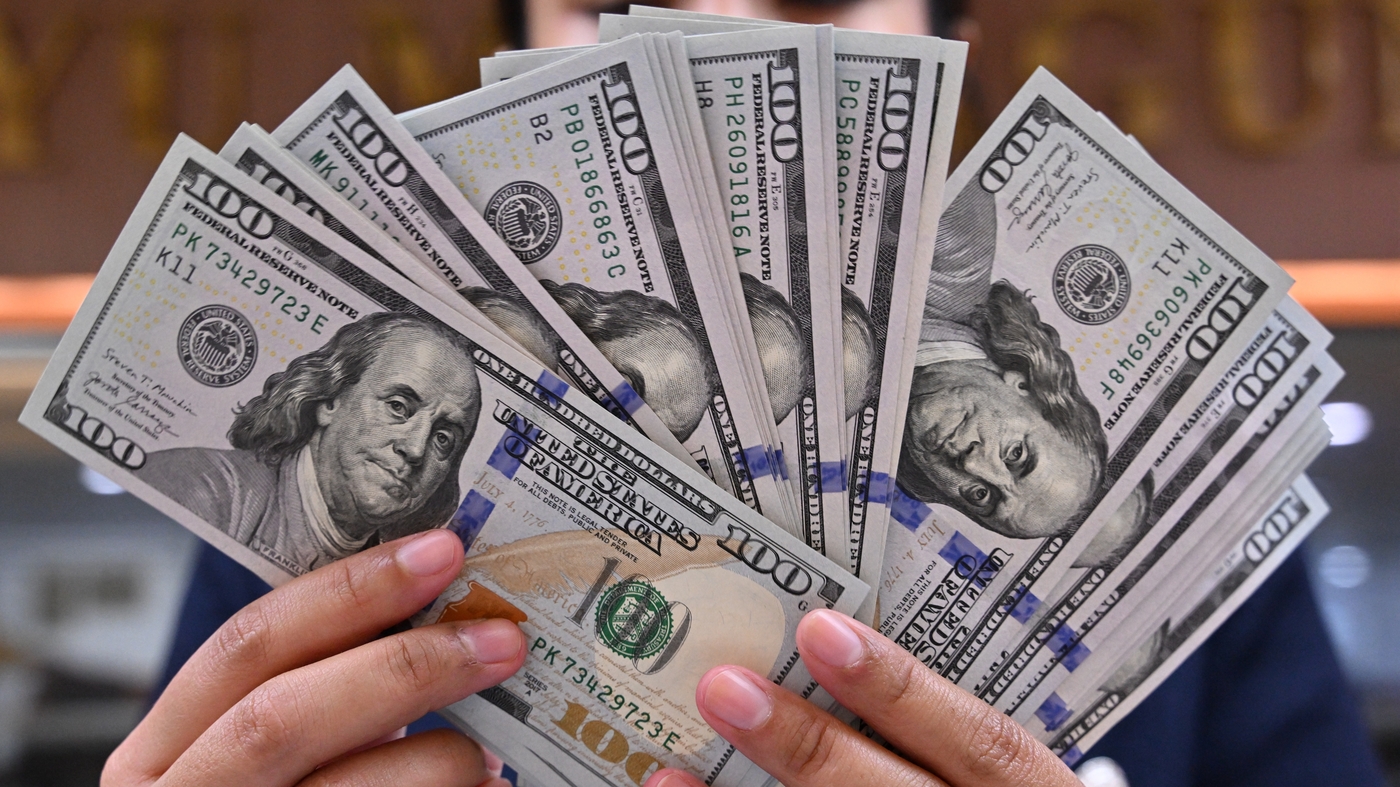
The U.S. dollar pulled back against traditional safe-haven currencies on Wednesday as escalating military tensions between Israel and Iran sent investors scrambling for security, while markets held their breath ahead of a pivotal Federal Reserve interest rate decision.
The greenback weakened 0.2% against the Japanese yen to 144.975 and slipped into negative territory against the Swiss franc at 0.81665, marking a pause in what had been a week-long rally driven by geopolitical uncertainty. Since last Thursday, the dollar has gained approximately 1% against both currencies as the Middle East crisis deepened.
Military Escalation Rattles Markets
The currency movements reflect growing investor anxiety over a conflict that has intensified dramatically over the past six days. Israel has launched sustained attacks on Iranian positions in what officials describe as efforts to halt the Islamic Republic’s nuclear program while asserting that regime change in Tehran has become necessary.
Adding to market jitters, reports have it that U.S. military forces are reinforcing their regional presence, fueling speculation about potential American intervention that could dramatically expand the scope of the conflict. The prospect of wider warfare in a region critical to global energy supplies, shipping lanes, and supply chains has sent ripples through financial markets worldwide.
Oil prices have surged to approximately $75 per barrel, complicating an already challenging economic landscape for policymakers and adding inflationary pressure just as central banks worldwide grapple with monetary policy decisions.
Fed Decision Dominates Trading
Currency volatility remained relatively subdued on Wednesday as traders positioned cautiously ahead of the Federal Reserve’s rate announcement, due just hours after markets close. With Thursday’s Juneteenth federal holiday creating an extended break in trading, market participants appeared reluctant to make bold moves.
The consensus among traders is that the Fed will hold borrowing costs steady, but attention will focus intensely on Chair Jerome Powell’s commentary regarding the economic outlook and future policy direction. Recent economic data has begun reflecting the impact of President Trump’s unpredictable approach to trade policy and tariffs, creating additional uncertainty for monetary policymakers.
Dollar’s Safe-Haven Status Under Scrutiny
Despite Wednesday’s retreat, the dollar has demonstrated its enduring appeal as a crisis currency, though analysts suggest its safe-haven premium may be diminishing compared to historical patterns.
“The dollar is still a haven because of its depth and liquidity,” explained Rodrigo Catril, currency strategist at National Australia Bank. “The structural forces are diluting the dollar safe-haven activities, but they’re not eroding them completely. In a scenario of big risk aversion, the dollar will still gain support, but maybe not to the same extent it has managed in the past.”
This nuanced view reflects broader concerns about U.S. economic fundamentals and diplomatic reliability under the Trump administration. Against a basket of six major currencies, the dollar remains down approximately 8% year-to-date, as confidence in America’s economic trajectory and its role as a dependable trading partner has wavered.
Global Central Bank Week
The Fed’s decision kicks off a critical period for global monetary policy, with the Swiss National Bank, Bank of England, and Norway’s central bank all scheduled to announce rate decisions Thursday. The Swedish central bank delivered an expected rate cut Wednesday, weakening the krona 0.3% against the euro to 10.998.
The British pound gained 0.26% to $1.346 after inflation data showed prices cooling to an annual rate of 3.4% in May, exactly in line with expectations but still well above the Bank of England’s target. The euro also strengthened 0.3% to $1.1514 against the dollar.
Trade Tensions Simmer
Adding to the complex backdrop, investors expressed frustration over a recent Group of Seven meeting in Canada that produced no progress on resolving trade disputes ahead of Trump’s early-July deadline for imposing additional tariffs. The lack of diplomatic breakthroughs has left markets uncertain about the trajectory of global trade relations.
As weekly initial jobless claims data looms later Wednesday, currency traders find themselves navigating a treacherous landscape of geopolitical risk, monetary policy uncertainty, and trade tensions—a combination that historically has favored safe-haven assets but may be testing traditional market relationships in an era of shifting global dynamics.
The coming days will likely prove crucial in determining whether the current Middle East crisis escalates further and how central banks worldwide respond to the growing complexity of managing monetary policy amid multiple international crises.
WHAT YOU SHOULD KNOW
The U.S. dollar weakened Wednesday as escalating Israel-Iran military conflict drove investors toward traditional safe-haven currencies like the yen and Swiss franc. While geopolitical tensions typically strengthen the dollar, its safe-haven appeal appears to be diminishing compared to past crises.
Markets are now focused on the Federal Reserve’s imminent interest rate decision, with traders expecting rates to remain unchanged but closely watching for signals about future cuts.
The combination of Middle East instability, rising oil prices ($75/barrel), and ongoing trade uncertainties under the Trump administration is creating a complex environment that challenges traditional currency relationships.