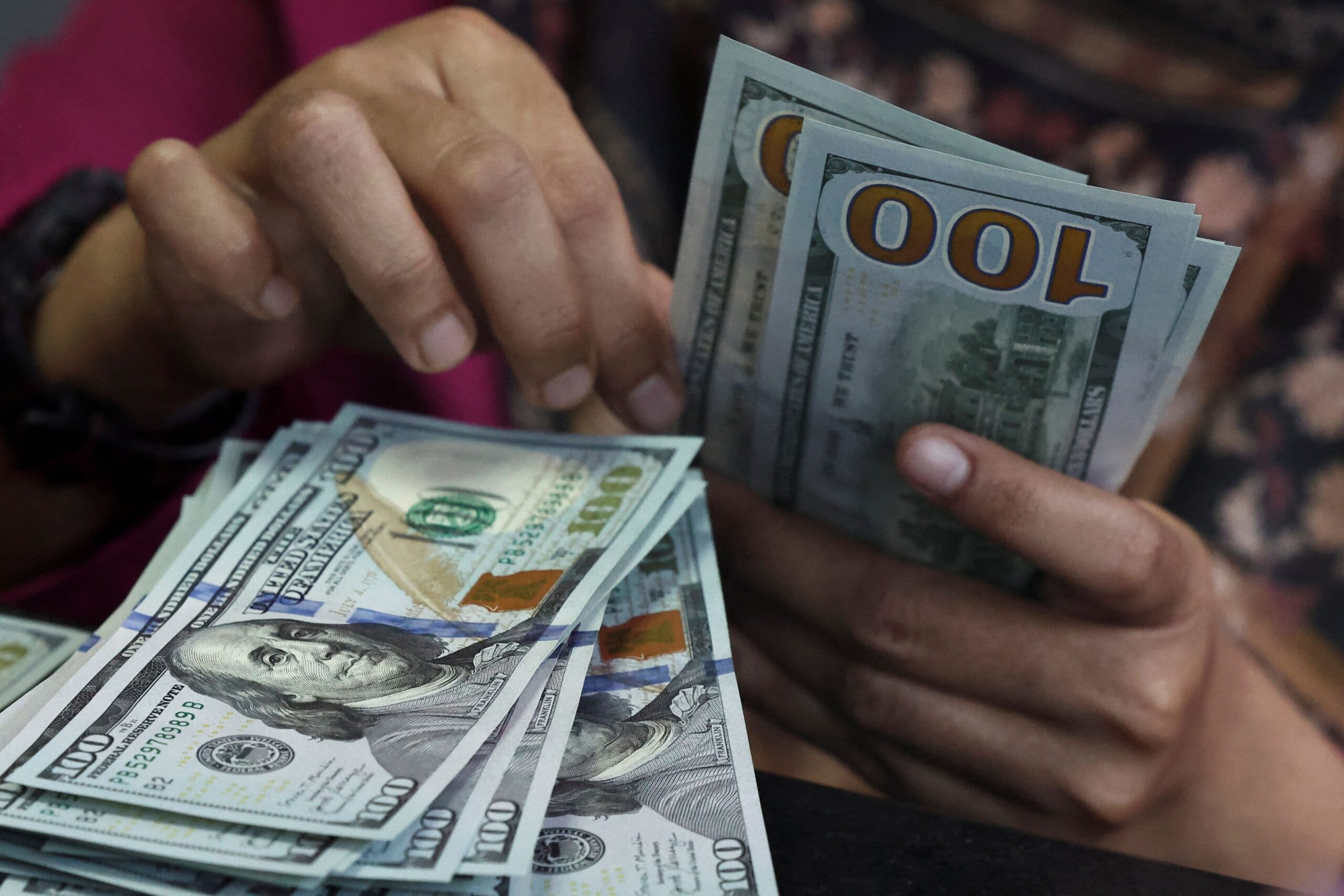
The U.S. dollar slipped against major currencies on Wednesday as global markets entered a holding pattern ahead of the Federal Reserve’s highly anticipated policy announcement, with investors bracing for what analysts are calling a “hawkish rate cut” — a seemingly contradictory move that reflects the central bank’s increasingly difficult position.
The greenback edged lower against both the euro and Japanese yen in morning trading as investors positioned themselves for an expected 25-basis-point rate reduction accompanied by stern warnings about the path forward. It’s a delicate dance that Fed Chair Jerome Powell must perform: satisfying members who want to ease monetary policy while reassuring those concerned about persistent inflation.
The Federal Reserve finds itself at its most fractured point in half a decade, according to Kevin Thozet, a member of the investment committee at Paris-based asset manager Carmignac. The central bank’s board has split into two nearly equal camps, with six members favoring further rate cuts — including two with ties to the “Make America Great Again” movement — and six others advocating to hold rates steady.
“Should, as we and markets expect, Powell deliver a 25-basis-point cut this week to satisfy the doves, he will likely accompany it with a more restrictive message to reassure the hawks,” Thozet explained, capturing the tightrope walk facing the Fed chief.
This internal division comes as markets have dramatically scaled back expectations for rate cuts in 2025, driven by stubborn inflation readings and mounting evidence of economic resilience. Tuesday’s labor market data added another layer of complexity: U.S. job openings rose marginally in October following September’s surge, suggesting the employment market is cooling but remains fundamentally solid.
Adding a political dimension to the Fed’s deliberations, White House economic adviser Kevin Hassett — widely viewed as the front-runner to succeed Powell as Fed chair — told the Wall Street Journal CEO Council on Tuesday that there was “plenty of room” for additional rate cuts. However, Hassett hedged his remarks with a significant caveat: if inflation accelerates, that calculation could change.
The comments underscore the political pressures facing the ostensibly independent central bank as it navigates between competing economic imperatives.
Across the Atlantic, European monetary authorities are singing a decidedly different tune. The euro gained 0.10% to $1.1640 Wednesday, buoyed by hawkish signals from the European Central Bank that have reshaped market expectations dramatically.
Isabel Schnabel, an influential ECB policymaker, sent shockwaves through currency markets on Monday by suggesting a rate hike was more likely than a cut — a remarkable reversal that led traders to completely eliminate expectations for ECB rate reductions in 2026 and assign better-than-even odds to a rate increase by March 2027.
“ECB’s Schnabel validated the hawkish expectations of the market on increased adoption of AI technologies and public investments pushing the neutral rate higher,” said Andrea Appeddu, a strategist at Citi. He noted that the 2-year euro short-term rate overnight index swap recorded its steepest single-day climb in six months early this week.
ECB President Christine Lagarde reinforced this optimistic outlook on Wednesday, indicating the central bank might raise its growth forecasts again in December given the eurozone economy’s unexpected resilience amid geopolitical uncertainty and trade tensions.
Meanwhile, the European Union has moved closer to securing funding for Ukraine through 2026 and 2027, with diplomats indicating the package would win backing from at least a qualified majority of member states — a development markets are monitoring for its potential impact on regional stability and economic confidence.
The Japanese yen presented a mixed picture Wednesday, gaining 0.12% against the dollar to trade at 156.72 after sliding 0.6% toward the psychologically significant 157 level the previous session. However, against the euro, the yen plunged to a record low of 182.64 overnight before recovering slightly to 182.00.
The Bank of Japan meets next week and is widely expected to raise interest rates, yet the yen’s weakness persists — a paradox that reflects deep-seated concerns about Japan’s fiscal trajectory and political stability.
“The yen should find sufficient support ahead of the upcoming BoJ decision, but its policy space will be shaped as much by domestic politics and fiscal aspects as by global (rate) differentials,” explained Geoff Yu, EMEA macro strategist at BNY.
Yu added that while currency flow data suggests tentative stabilization, investors remain reluctant to increase yen exposure until Japan presents a credible long-term fiscal strategy. The traditional view of the yen as a safe-haven currency has been undermined by expectations of more expansionary fiscal measures, complicating the outlook for BOJ policy at a time when Japanese rates remain among the world’s lowest.
Market watchers will scrutinize not only whether Governor Kazuo Ueda raises rates next week, but more importantly, what guidance he provides on the future policy trajectory.
The contrasting monetary policy paths across major economies have created unusual cross-currents in currency markets. Bart Wakabayashi, branch manager at State Street in Tokyo, reported that while positioning on dollar/yen remains neutral, his firm is seeing active buying of euro/yen and Australian dollar/yen pairs — reflecting investor bets on continued divergence.
That divergence extends to the Southern Hemisphere, where Australia’s central bank warned Tuesday of potential rate hikes if inflation pressures persist, adding yet another hawkish voice to the global monetary policy chorus.
As markets await Powell’s statement later Wednesday, the central question remains: Can the Fed chair thread the needle between competing factions and economic signals, or will this unprecedented internal division force a policy misstep that roils markets already on edge?
WHAT YOU SHOULD KNOW
The Federal Reserve faces an unprecedented dilemma: its board is split nearly down the middle on monetary policy for the first time in five years. While markets expect a 25-basis-point rate cut Wednesday, Chair Jerome Powell must simultaneously signal restraint to satisfy inflation hawks — a “hawkish cut” that reflects the central bank’s struggle to balance persistent inflation against a cooling but resilient economy.
Meanwhile, global monetary policy is sharply diverging. The European Central Bank is pivoting toward potential rate hikes in 2027, while Japan prepares to raise rates next week despite a weakening yen. This divergence is creating volatile currency swings and underscores a fundamental truth: central banks worldwide are navigating conflicting economic signals with no clear playbook, making the Fed’s decision Wednesday a critical test of its ability to manage both economic reality and internal division.
The era of coordinated global monetary policy is over, and investors should brace for increased volatility as major central banks pursue opposite strategies.