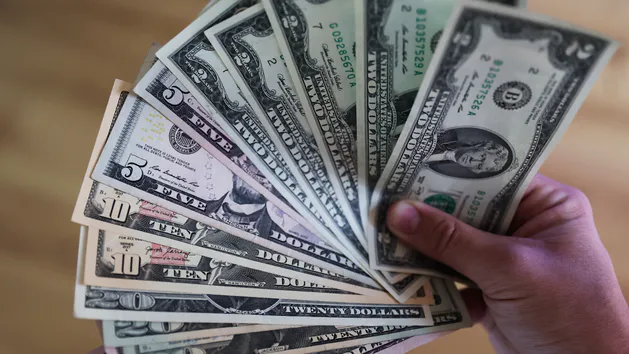
The U.S. dollar staged a modest recovery on Friday, recouping a portion of this week’s sharp losses as market participants retreated to safer ground ahead of the weekend, buoyed by expectations that President Donald Trump would announce his choice to lead the Federal Reserve and by news that lawmakers had reached an agreement to prevent a government shutdown.
The greenback’s rebound came after a tumultuous week that saw the dollar index plunge to four-year lows, battered by mounting investor anxiety over Trump’s aggressive foreign policy stance and domestic immigration enforcement measures that have shaken confidence in American assets.
Trump indicated Friday he would name his nominee to succeed Fed Chair Jerome Powell, with Bloomberg News reporting that former Federal Reserve Governor Kevin Warsh emerged as the frontrunner following a Thursday White House visit. Reuters confirmed through a source familiar with the matter that Warsh had met with the president.
The prospect of Warsh’s appointment appeared to calm some market jitters. “The appointment of Warsh, if it’s true, will be seen as someone who can, in a way, remain independent, and not someone seen as likely to be subservient to Trump’s wishes,” said Khoon Goh, head of Asia research for ANZ in Singapore.
By late trading, the dollar index—which tracks the greenback against a basket of major currencies—had climbed 0.4% to 96.55, though it remained down 0.9% for the week. The euro slipped 0.4% to $1.1922, while the Japanese yen weakened 0.5% to 153.85 per dollar. Britain’s pound fell 0.4% to $1.3751.
Market analysts suggested Friday’s dollar strength reflected cautious repositioning rather than a fundamental shift in sentiment. “Any sensible market participant would not want to carry a big position into the weekend,” Goh explained. “So some of this could just be positioning lighting up. If you’re short on dollars, you’ve done well; take your chips off the table.”
The currency had suffered its steepest weekly decline since April 2024 last week, pressured initially by Trump’s tariff threats against European nations that opposed his stated ambition to acquire Greenland from Denmark. That dispute marked the beginning of a broader deterioration in investor confidence.
“It’s the fact that the ‘Sell America’ trade has resurfaced, and investors are questioning to what extent the United States is still a trustworthy partner for other economies,” said Westpac Group senior economist Mantas Vanagas.
The dollar’s troubles deepened this week as Trump expanded his confrontational approach across multiple fronts. The White House announced the president had signed an executive order imposing tariffs on nations supplying oil to Cuba. He simultaneously threatened new levies on Canada and declared the U.S. would no longer certify business jets manufactured there.
Meanwhile, tensions with Iran continued to simmer. Trump revealed Thursday he planned discussions with Tehran’s leadership even as the Pentagon deployed an additional warship to the Middle East. Defense Secretary Pete Hegseth assured reporters the military stood ready to execute any presidential directive.
The dollar found some footing after Republican and Democratic negotiators in Congress announced they had struck a deal to avert a looming government shutdown, removing one source of domestic uncertainty from the equation.
Additionally, the Federal Reserve’s decision Wednesday to hold interest rates steady provided underlying support for the currency. Fed Chair Powell characterized the economy as solid with diminishing risks to both inflation and employment, though his reassurances failed to fully offset geopolitical headwinds.
The Japanese yen retreated from recent gains despite signals from Tokyo policymakers suggesting possible coordinated intervention with Washington to support the currency. The yen had rallied for two consecutive weeks but remained vulnerable amid concerns about Japan’s fiscal position ahead of a snap election.
Prime Minister Sanae Takaichi and her rivals have centered their campaigns on tax reduction pledges, raising questions about budgetary sustainability. The yen had touched an 18-month low last week before recovering modestly.
Risk-sensitive currencies bore the brunt of Friday’s dollar recovery. The Australian dollar declined 0.7% to $0.6997, while New Zealand’s kiwi dropped 0.5% to $0.6046. Cryptocurrencies also tumbled during the session.
As markets closed for the weekend, traders acknowledged that while Friday’s dollar strength provided temporary relief, the fundamental questions about U.S. policy direction and international partnerships remained unresolved—setting the stage for continued volatility when trading resumes Monday.
WHAT YOU SHOULD KNOW
The dollar recovered Friday after a bruising week, helped by Trump’s promise to name a Fed chair nominee (likely Kevin Warsh, seen as independent) and a deal to avoid a government shutdown.
However, the rebound appears temporary—driven more by traders closing positions ahead of the weekend than genuine confidence. The fundamental problem remains: Trump’s aggressive tariff threats and chaotic foreign policy toward allies and adversaries alike have triggered a “Sell America” sentiment, with investors questioning whether the U.S. is still a reliable partner.
The dollar hit four-year lows this week, and despite Friday’s bounce, it’s still down nearly 1% for the week. Until policy uncertainty clears, expect continued currency volatility.