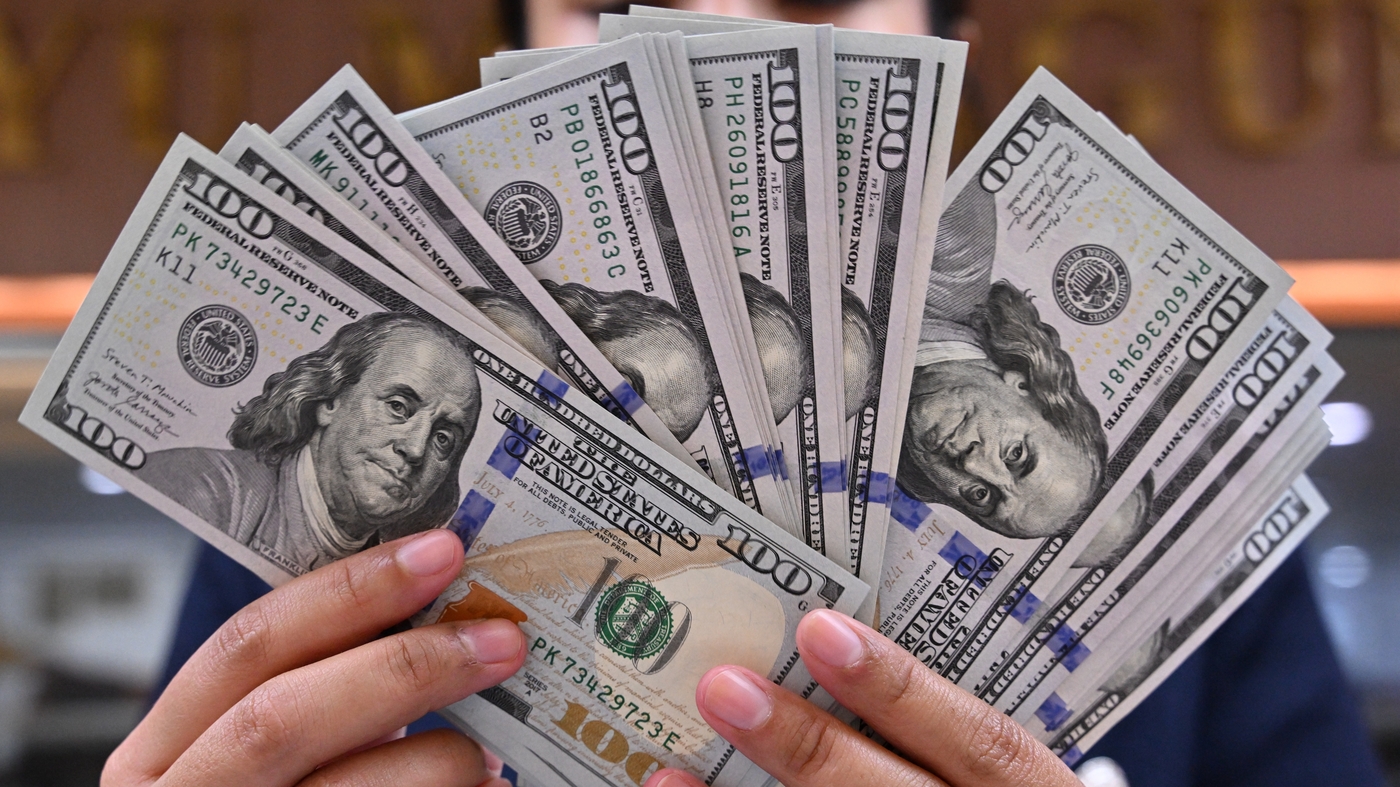
The U.S. dollar tumbled to its weakest position in nearly two months on Tuesday, as global currency markets positioned themselves for what could be a significant downward revision to American employment data—a development that may force the Federal Reserve’s hand toward more aggressive interest rate cuts.
Trading floors from New York to Tokyo witnessed sharp currency swings as the dollar index fell to 97.25, marking its lowest point since late July. The greenback’s decline was most pronounced against the Japanese yen, dropping 0.7% to 146.32—a level not seen since mid-August when markets were still reeling from global growth concerns.
The currency sell-off comes as investors await the release of preliminary benchmark revisions to U.S. jobs data covering the critical period from April 2024 to March 2025. Economic analysts are preparing for potentially stark revisions, with some forecasting downward adjustments of up to 800,000 jobs—a figure that would fundamentally alter the narrative around America’s labor market strength.
“If these revisions materialize at the scale economists are predicting, it would suggest the Federal Reserve has been operating with incomplete information about the true state of employment,” said Samy Chaar, chief economist at Lombard Odier. “This could indicate the Fed is already behind the curve in its mandate to achieve maximum employment.”
The implications extend far beyond currency markets. Money markets have now fully priced in a 25 basis-point rate cut, while the probability of a more dramatic 50 basis-point reduction has climbed to nearly 12%, according to the CME’s FedWatch tool. This shift in expectations has created ripple effects across asset classes, with spot gold prices surging to a record high of $3,659.10 per ounce as investors seek safe-haven assets amid monetary policy uncertainty.
The dollar’s weakness provided a tailwind for several major currencies. Sterling gained 0.2% to $1.3558, while the euro briefly touched its strongest level since July 24 before settling at $1.1752. However, the Japanese yen emerged as the day’s standout performer, bolstered not only by dollar weakness but also by domestic developments.
A Bloomberg report indicating that Bank of Japan officials believe another interest rate hike may be possible before year-end sent additional shockwaves through currency markets. This prospect of policy divergence—with the Fed potentially cutting while the BoJ considers tightening—represents a dramatic shift from recent monetary policy trends.
“The yen is entering a period of heightened volatility,” Chaar noted, pointing to ongoing political uncertainty in Japan following Prime Minister Shigeru Ishiba’s recent resignation. “Market participants are clearly bringing forward their expectations of BoJ action.”
The currency market turbulence reflects broader global political instability that has captured investors’ attention. From Tokyo to Buenos Aires, government changes are creating additional layers of uncertainty. France saw the ouster of Prime Minister Francois Bayrou, while Indonesia abruptly replaced its finance minister, sending the rupiah down 1% as Bank Indonesia intervened in bond markets to maintain stability.
Despite the political upheaval, senior currency analyst Lee Hardman at MUFG remains cautiously optimistic about the euro’s prospects. “While the political uncertainty is an unfavorable development, we continue to believe that it is unlikely to be sufficient on its own to trigger a weaker euro,” he stated.
All eyes now turn to the remainder of the week’s economic calendar. Wednesday brings U.S. producer price inflation data, followed by the closely watched consumer price index on Thursday—the same day the European Central Bank convenes for its policy meeting. Recent data showing eurozone inflation near the 2% target and unemployment at record lows has shifted economists’ sentiment regarding potential ECB rate cuts.
The convergence of these events—potential U.S. jobs revisions, inflation readings, and central bank communications—promises to deliver significant market volatility. For currency traders and policymakers alike, the coming days may well determine the trajectory of monetary policy on both sides of the Atlantic.
As one senior trader at a major investment bank noted, “We’re at an inflection point. The jobs revisions could be the catalyst that forces central banks to recalibrate their entire approach to policy normalization.”
The markets will have their answers soon enough, but for now, the dollar’s decline serves as a harbinger of potentially seismic shifts in the global monetary landscape.
WHAT YOU SHOULD KNOW
The U.S. dollar hit a seven-week low as markets anticipate a potential revision showing up to 800,000 fewer jobs than previously reported—a bombshell that could force the Federal Reserve into deeper interest rate cuts. This jobs data correction, due for release, suggests America’s employment picture may be far weaker than thought, fundamentally shifting expectations for monetary policy and sending investors scrambling into safe-haven assets like gold, which hit record highs.