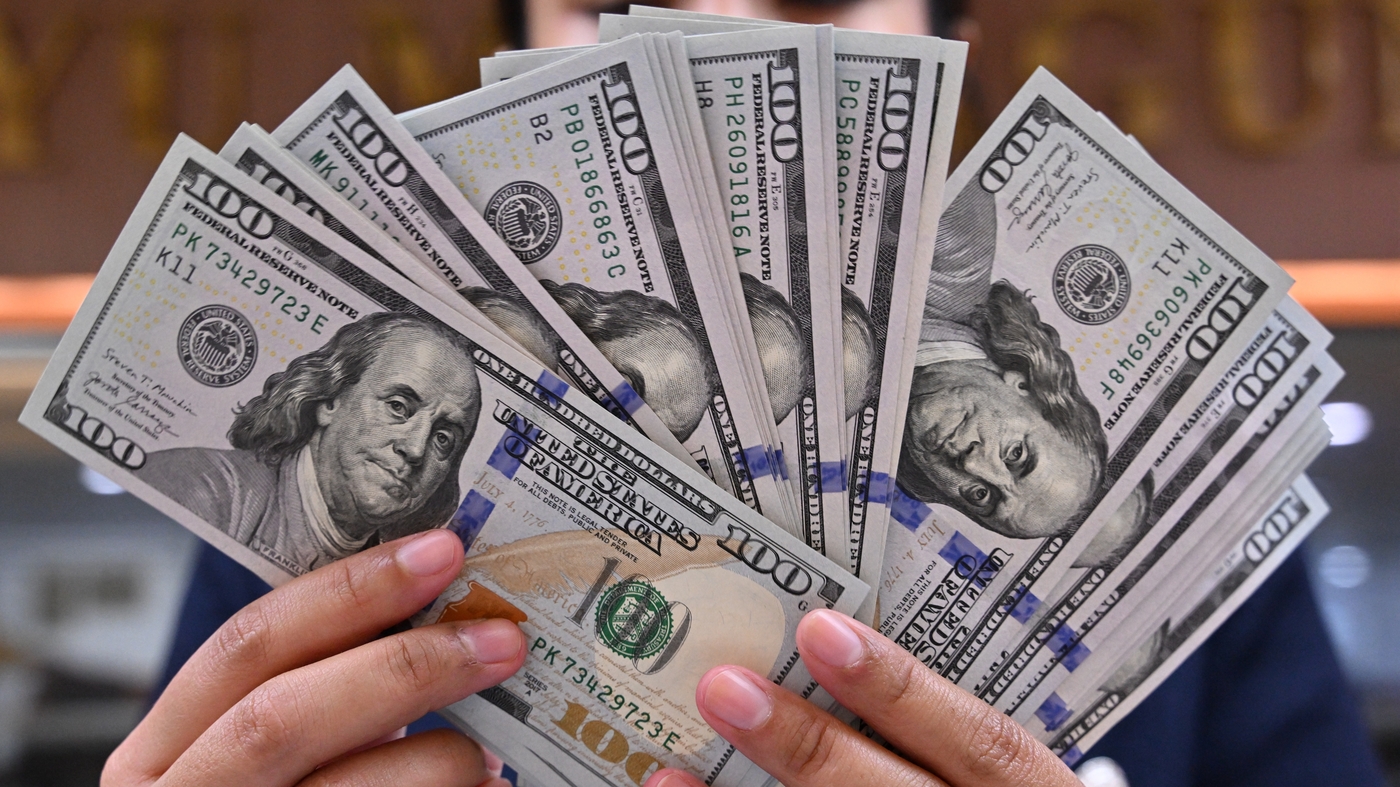
The U.S. dollar suffered its steepest decline against major currencies on Tuesday, with the greenback hitting a decade-low against the Swiss franc and approaching month-long lows versus the Japanese yen, as President Donald Trump’s ambitious fiscal policies triggered widespread concerns about America’s financial stability and monetary policy independence.
The dollar’s broad-based weakness accelerated as markets digested the implications of Trump’s massive tax-cut and spending package, which carries a staggering $3.3 trillion price tag that would significantly expand the national debt. The proposal has exposed deep fractures within the Republican Party, with fiscal hawks expressing alarm over the long-term budgetary consequences.
Currency Markets in Turmoil
The Swiss franc emerged as a clear beneficiary of the dollar’s distress, strengthening to 0.7890 against the greenback, marking a new 10-year high for the safe-haven currency. Meanwhile, the Japanese yen gained 0.8% to trade at 142.86 per dollar, capping off what has been its strongest first-half performance since 2016 with a remarkable 9% surge.
The euro continued its impressive rally, climbing 0.26% to $1.181—its highest level since late 2021. The single currency’s 13.8% gain during the first six months represents its strongest-ever first-half performance, according to LSEG data, underscoring the dramatic shift in global currency dynamics.
Sterling also participated in the dollar’s decline, edging up 0.2% to $1.376, remaining close to the three-and-a-half-year high it reached last week. The dollar index, which measures the U.S. currency against six major peers, fell 0.3% to 96.698—its lowest reading since February 2022.
Historic Decline Reflects Deep Concerns
The dollar index’s performance this year tells a sobering story for American monetary credibility. Down more than 10% year-to-date, the index posted its largest first-half decline since the advent of free-floating currencies in the early 1970s. This historic weakness reflects mounting investor anxiety about two critical factors: fiscal sustainability and Federal Reserve independence.
“One of the things that underlies the dollar’s reserve status and haven value is the idea that monetary policy will be independent,” explained Michael Brown, senior research strategist at Pepperstone. “And it’s pretty clear that in 9 or 10 months, whoever is Fed chair, the only reason they’re going to be in the job is because they’ve likely promised President Trump that they are going to deliver sizeable rate cuts.”
Political Pressure Intensifies
Trump’s relentless campaign against Federal Reserve Chair Jerome Powell reached new heights this week, with the president reportedly sending Powell a handwritten note featuring global interest rates, suggesting U.S. rates should fall between Japan’s 0.5% and Denmark’s 1.75%. This unprecedented political interference has raised serious questions about the central bank’s autonomy—a cornerstone of American monetary policy since the Fed’s founding.
The president’s inability to directly fire Powell over policy disagreements has not deterred his public pressure campaign, including last week’s call for Powell’s resignation. This sustained attack on Fed independence has contributed significantly to the dollar’s decline, as international investors reassess the reliability of U.S. monetary institutions.
Market Expectations Shift Dramatically
The political pressure appears to be working. Goldman Sachs has dramatically revised its Federal Reserve outlook, now expecting three quarter-point rate cuts this year compared to its previous forecast of a single December reduction. The investment bank cites “muted tariff effects and labor market weakness” as justification for the more aggressive easing cycle.
Traders have responded accordingly, pricing in 68 basis points of Fed easing for 2025—a significant increase from earlier expectations. This shift reflects a growing belief that the central bank will capitulate to political pressure despite potential long-term consequences for its credibility.
Critical Week Ahead
Market participants are bracing for a pivotal week of economic data that could further influence Fed policy expectations. Tuesday’s manufacturing survey and job openings report will provide early indicators, but Thursday’s nonfarm payrolls data represents the marquee event that could cement expectations for aggressive rate cuts.
Any signs of labor market deterioration would likely accelerate dollar weakness and reinforce bets on rapid Fed easing. Conversely, resilient employment data might provide some support for the beleaguered currency.
Trade Uncertainty Compounds Concerns
Adding to the dollar’s woes, uncertainty surrounding Trump’s trade agenda continues to weigh on sentiment. With the July 9 deadline for threatened tariffs approaching rapidly, investors remain on edge about potential trade disruptions with key partners. Despite months of negotiations, concrete trade agreements have been notably absent, leaving markets to grapple with policy uncertainty.
Senate Showdown Looms
Treasury Secretary Scott Bessent’s suggestion that the Senate could approve Trump’s budget bill as early as Tuesday afternoon has intensified market focus on Capitol Hill. The legislation’s fate remains uncertain amid internal Republican divisions over its fiscal impact, with deficit hawks challenging the administration’s growth projections and debt sustainability arguments.
The bill’s $3.3 trillion addition to national debt has prompted some institutional investors to begin diversifying away from dollar-denominated assets, contributing to the currency’s broad-based decline.
As markets await resolution of these multiple uncertainties, the dollar’s position as the world’s dominant reserve currency faces its most serious challenge in decades. The intersection of fiscal excess, political interference in monetary policy, and trade tensions has created a perfect storm that threatens to fundamentally alter global currency dynamics.
The coming days will prove crucial in determining whether this represents a temporary setback for American financial leadership or the beginning of a more profound shift in the international monetary system.
WHAT YOU SHOULD KNOW
The U.S. dollar is experiencing its worst performance since the 1970s, falling to multi-year lows against major currencies due to a dangerous combination of factors: Trump’s $3.3 trillion spending plan that threatens fiscal stability, unprecedented political interference with Federal Reserve independence, and mounting trade uncertainties.