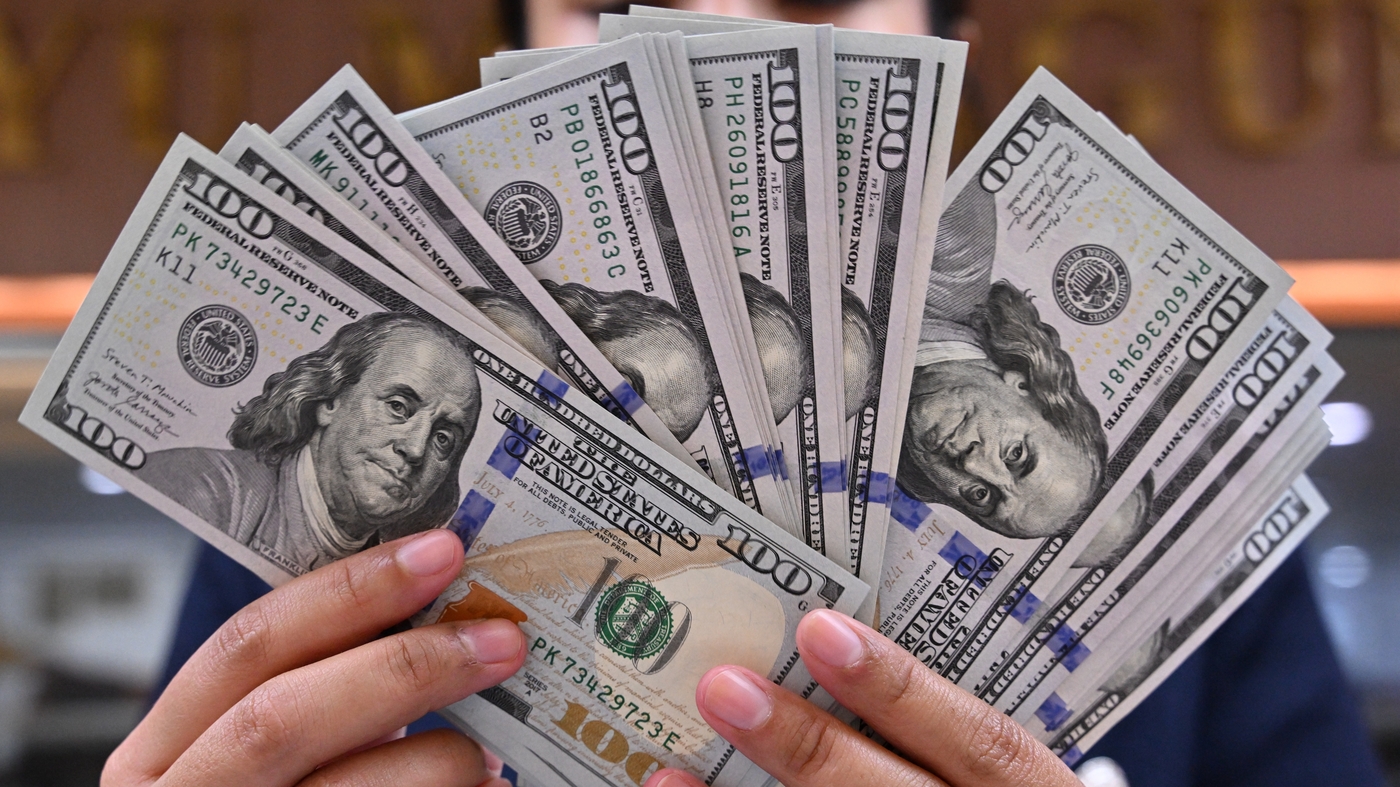
The U.S. dollar maintained its ground in Friday trading, positioning itself for a modest weekly advance against major currencies as market participants awaited crucial inflation figures and prepared for what many consider an all-but-certain Federal Reserve rate cut next week.
Trade War Tensions Resurface
The relatively calm currency markets belied renewed anxieties over global trade relations after President Donald Trump abruptly announced the termination of all trade negotiations with Canada. The breakdown stemmed from Trump’s accusations regarding what he characterized as a “fraudulent advertisement” produced by Ontario featuring former President Ronald Reagan’s critical remarks about tariffs.
The Canadian dollar weakened marginally to 1.4008 per U.S. dollar following Trump’s announcement, though market response remained notably muted—a testament to investors’ growing desensitization to trade-related headlines.
“The Canada escalation could also be part of a deal process,” suggested Ben Bennett, head of investment strategy for Asia at L&G Asset Management, reflecting a widely held view that aggressive rhetoric has become standard negotiating practice for the Trump administration.
All Eyes on Trump-Xi Summit
Market attention has shifted decisively toward next week’s scheduled meeting between Trump and Chinese President Xi Jinping in South Korea—a high-stakes encounter that has ignited optimism for a potential breakthrough in the protracted U.S.-China trade conflict.
“I think expectations are quite high for the Trump-Xi meeting, with the upside risk of a significant de-escalation following the face-to-face meeting,” Bennett noted. “Investors are getting used to the process of aggressive statements followed by compromise and headline deals, so hopefully this is another example.”
The summit represents a critical juncture for the world’s two largest economies, whose on-again-off-again trade hostilities have repeatedly roiled global markets.
Delayed Data Takes Center Stage
Despite the federal government shutdown entering its third week, the Commerce Department is still expected to release September’s Consumer Price Index data later Friday. Economists surveyed by Reuters are forecasting a 0.4% monthly increase in headline inflation and a 0.3% rise in core prices, which exclude volatile food and energy components.
“It’s obviously important because we haven’t had any official data for a while, so I think the marketplace will place slightly more importance on this than they might normally,” explained Dominic Bunning, head of G10 FX strategy at Nomura.
While analysts broadly agree the figures won’t derail the Fed’s anticipated 25-basis-point rate reduction next week—which traders have essentially priced in with near certainty—the data could provide critical signals about the central bank’s December intentions. Market pricing currently reflects expectations for back-to-back cuts.
Mixed Signals from Global Markets
The euro traded flat at $1.1614, on track for a 0.3% weekly decline despite surprisingly robust eurozone business activity data for October, driven primarily by the services sector. Sterling edged down 0.1% to $1.3311, even as stronger-than-expected UK retail sales—bolstered by online gold jewelry purchases—suggested consumer resilience.
The dollar index, measuring the greenback against six major currencies, advanced less than 0.1% to 98.99, positioning for a 0.5% weekly gain.
Energy Sanctions Ripple Through Markets
Oil prices surged following new U.S. sanctions targeting Russian energy giants Rosneft and Lukoil over Moscow’s ongoing war in Ukraine—measures that followed similar British sanctions imposed last week. The energy market volatility particularly impacted the currencies of oil-importing nations.
Yen Under Pressure Amid Policy Uncertainty
The Japanese yen bore the brunt of multiple headwinds, weakening to a two-week low of 152.85 per dollar. The currency faces mounting pressure from the policies of new Prime Minister Sanae Takaichi, widely regarded as favoring looser fiscal and monetary conditions.
Takaichi’s government is reportedly preparing an economic stimulus package expected to exceed last year’s $92 billion, aimed at helping households cope with inflation. Earlier Friday, data showed Japanese core consumer prices remained above the Bank of Japan’s 2% target—typically a catalyst for tightening—yet traders assign only a 19% probability to a rate hike at next week’s BOJ meeting.
“We have a risk of looser fiscal and relatively loose monetary policy coming together and undermining the value of the yen over time,” Bunning warned. “It’s hard to make the case that we’re getting a massive shift towards a more positive yen story at the moment.”
As markets head into the weekend, investors find themselves balancing multiple competing narratives: dovish central bank expectations, escalating trade tensions, and the promise—or peril—of high-stakes diplomatic engagement. The coming week promises to deliver answers to at least some of these questions, with monetary policy decisions and the Trump-Xi summit likely to set the tone for currency markets through year-end.
WHAT YOU SHOULD KNOW
The dollar is poised for weekly gains as markets await a near-certain Fed rate cut next week, but the real story is geopolitical uncertainty. Investors are laser-focused on the upcoming Trump-Xi meeting in South Korea, which could either ease or intensify the U.S.-China trade war.
Meanwhile, Trump’s abrupt termination of Canada trade talks adds fresh tension, though markets barely flinched—suggesting traders have grown accustomed to aggressive rhetoric as standard negotiating tactics.