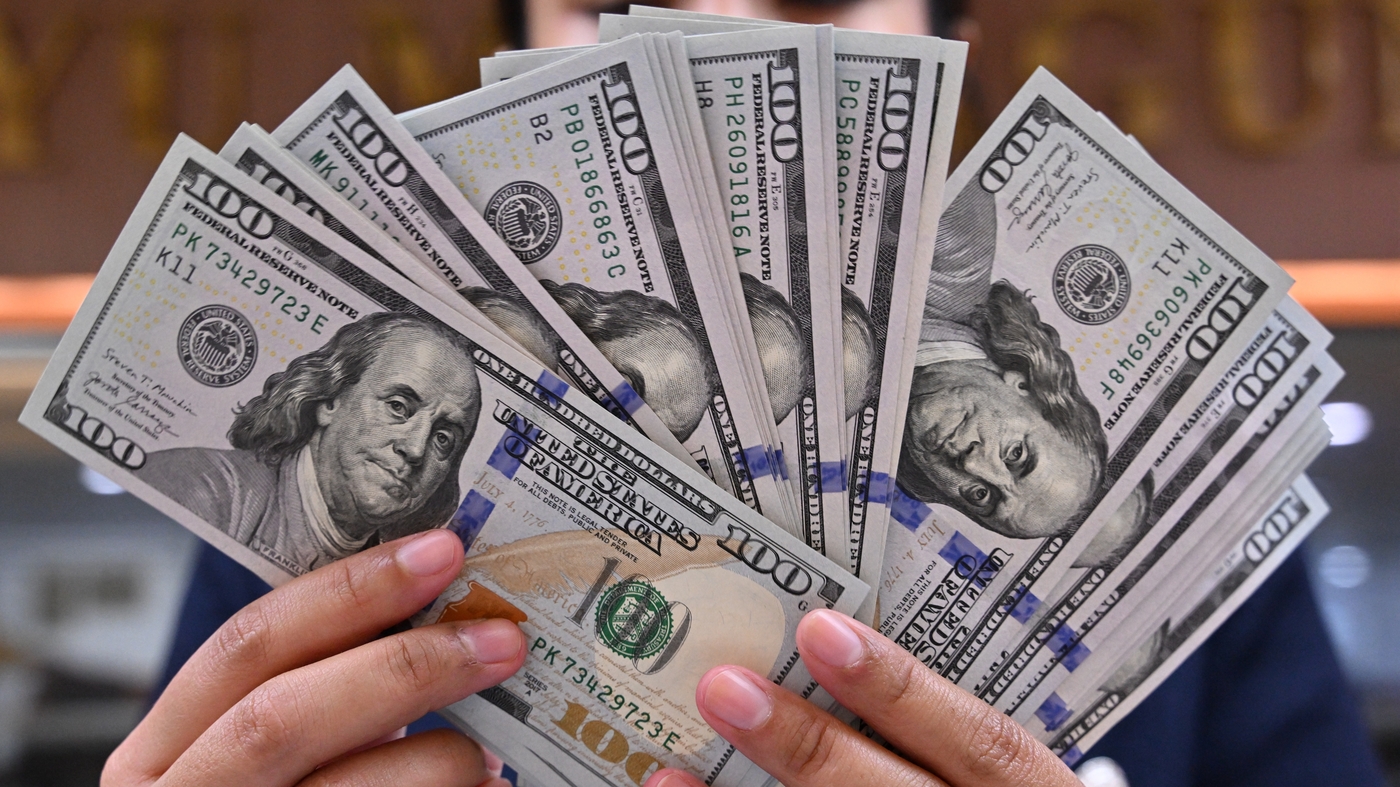
The U.S. dollar maintained its position against major currencies on Friday, consolidating steep gains after a series of stronger-than-expected economic indicators dampened market expectations for aggressive Federal Reserve policy easing this year.
The greenback showed resilience in early trading, with the euro hovering near three-week lows at $1.1669, while sterling remained flat at $1.3347 after touching its weakest levels in nearly two months on Thursday. The dollar index, which measures the currency against six major trading partners, was positioned for its largest weekly advance in two months.
The Japanese yen faced particular pressure, trading at eight-week lows following the announcement of new tariff measures by President Donald Trump. The comprehensive package includes a 100% levy on branded pharmaceuticals, 25% tariffs on heavy-duty trucks, and 50% duties on kitchen cabinets.
Thursday’s economic releases painted a picture of robust U.S. economic momentum. The Commerce Department’s revised gross domestic product figures showed the economy expanded at an annualized rate of 3.8% in the second quarter, significantly higher than the initially reported 3.3% and exceeding economists’ expectations for no revision.
This upward revision, combined with better-than-expected data on unemployment claims, durable goods orders, and wholesale inventories, has prompted markets to reassess the Federal Reserve’s monetary policy trajectory.
The shifting economic landscape has altered market expectations for Federal Reserve policy. According to the CME FedWatch Tool, markets now assign a 12% probability to the Fed maintaining current interest rates at its next meeting, up from 8.1% just a day earlier. The total policy easing expected by year-end has also declined to below 40 basis points.
“At a time when Fed members are worried about elevated inflation, we think such a report will be encouraging,” said Bansi Madhavani, senior economist at ANZ, referring to the anticipated personal consumption expenditures data.
Market attention now turns to Friday’s release of U.S. consumer spending data, specifically the personal consumption expenditures (PCE) price index—the Federal Reserve’s preferred inflation gauge. Economists surveyed by Reuters expect the index to show a 0.3% month-on-month increase for August and a 2.7% year-on-year rise.
This data will provide crucial insights into whether the economy requires additional monetary stimulus, with implications for the dollar’s trajectory in the coming weeks.
The latest round of tariff announcements has drawn a measured response from currency markets, reflecting what analysts describe as growing market sophistication in interpreting trade policy developments.
“It’s not surprising to see the muted reaction in currencies as markets have been through multiple rounds of this already and are inclined to see the announcements more as a negotiating position being set up by the White House,” explained Nick Rees, head of macro research at Monex Europe.
Rees noted that bilateral trade agreements negotiated during the previous Trump administration have proven less disruptive than initially anticipated, contributing to reduced market sensitivity to new trade measures.
European pharmaceutical stocks demonstrated resilience despite the 100% tariff threat on branded drugs, with shares recovering from early session declines. Market analysts highlighted exemptions for companies establishing U.S. manufacturing facilities, suggesting that major players like Roche and Novo Nordisk may face limited impact due to their existing American operations.
The currency movements reflect diverging monetary policy paths globally. While the Federal Reserve faces reduced pressure to ease policy aggressively, Japan’s central bank continues on a tightening trajectory. Tokyo’s core inflation data for September remained well above the Bank of Japan’s 2% target, maintaining expectations for potential interest rate increases.
Digital assets showed modest gains amid the broader currency market movements, with Bitcoin advancing 0.4% to $109,639.28 and Ethereum rising 1.3% to $3,939.60, suggesting continued investor appetite for alternative assets.
The confluence of stronger U.S. economic data, evolving trade policies, and shifting monetary policy expectations has created a supportive environment for dollar strength. However, traders remain focused on incoming economic indicators, particularly consumer spending patterns, which will provide additional clarity on the Fed’s policy path.
As markets digest these developments, the dollar’s performance will likely depend on whether upcoming data confirms the economic resilience suggested by recent indicators, potentially supporting the currency’s recent gains against major trading partners.
WHAT YOU SHOULD KNOW
The U.S. dollar is strengthening significantly after better-than-expected economic data, particularly a revised GDP growth of 3.8% (up from 3.3%), which is reducing expectations for aggressive Federal Reserve rate cuts. Markets now see only a 12% chance the Fed will hold rates steady next month, down from earlier expectations of more substantial easing.
The critical factor to watch is Friday’s consumer spending data (PCE inflation index), which will determine whether the Fed continues its gradual 25 basis point rate cuts or potentially pauses monetary easing altogether. This shift in Fed policy expectations is the primary driver behind the dollar’s recent strength against major currencies.