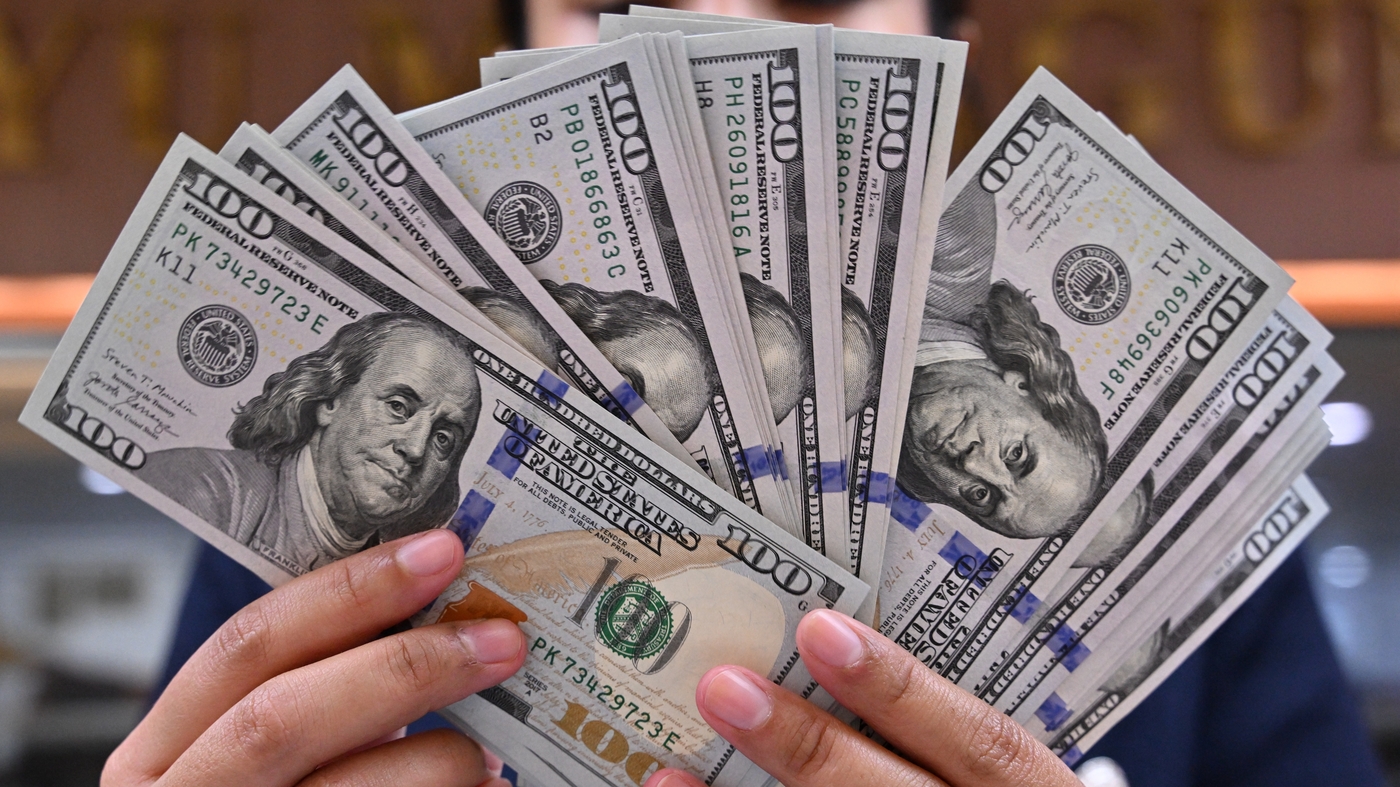
The U.S. dollar maintained its commanding position near multi-month peaks on Thursday, though a modest resurgence in risk appetite pulled the greenback marginally off its recent highs, while the British pound remained under pressure ahead of a critical Bank of England policy meeting.
Dollar Holds Ground Against Euro
Trading at $1.1505 against the euro during Asian trading hours, the dollar showed little movement from Wednesday’s close, though it retreated slightly from Tuesday’s three-month high of $1.1469. The currency’s resilience reflects continued investor confidence in the U.S. economic outlook, despite mounting uncertainty over key economic indicators.
Sterling Braces for BoE Verdict
The British pound emerged as the day’s focal point, trading largely unchanged at $1.3065 ahead of the Bank of England’s noon GMT rate decision. The currency has been treading water after touching a seven-month nadir of $1.3011 in overnight trading, as markets brace for what many analysts expect will be a dovish policy statement.
Market pricing reveals significant uncertainty about the central bank’s next move. Investors are placing roughly 40% odds on an immediate rate cut from the current 4% level, with speculation intensified by recent comments from Finance Minister Rachel Reeves hinting at potential tax increases that could dampen economic growth.
Even if policymakers opt to hold rates steady, currency strategists warn that the accompanying guidance is likely to signal an easing bias. “It’s difficult to see sterling getting a pop on this one,” said Rodrigo Catril, senior currency strategist at National Australia Bank in Sydney. “Even if they don’t cut… we think that they will signal that one is coming.”
The market has already fully priced in a 25-basis-point reduction for early next year, leaving sterling vulnerable to further downside. Technical analysts note that a decisive break below the psychologically important $1.30 level could trigger a slide toward April’s low of $1.2712.
Antipodean Currencies Lead Risk Rally
The past 24 hours saw the most dramatic moves in the risk-sensitive Australian and New Zealand dollars, which surged alongside a broader equity market recovery as a punishing selloff in technology stocks showed signs of easing.
The Australian dollar climbed approximately 0.9% from Wednesday’s three-week low, reaching $0.6513 in afternoon Asian trading. Its trans-Tasman counterpart, the New Zealand dollar, similarly rebounded from a seven-month trough to trade at $0.5666.
The rally in these commodity-linked currencies came despite a sharp increase in U.S. Treasury yields, which typically bolster the dollar’s appeal. The yield surge followed encouraging U.S. labor market data and indications from the Treasury Department of potential increases in future debt issuance.
“The market was a little bit more sensitive to the improvement in risk appetite,” NAB’s Catril explained, noting the unusual dynamic of Antipodean currencies strengthening even as U.S. yields climbed.
Data Drought Constrains Larger Moves
Currency strategists caution that any substantial or sustained dollar weakness would require greater clarity on the U.S. economic trajectory—a commodity currently in short supply as a protracted government shutdown continues to halt the release of key economic data.
“Bigger moves, however, and especially any durable fall in the dollar would need a clearer picture of the U.S. economy than is currently available,” Catril said, describing investors and policymakers as “flying blind” amid the data blackout.
The yield advantage enjoyed by U.S. government bonds continues to provide fundamental support for the greenback. “The dollar carries better than the yen or the euro,” Catril noted. “So for now, gravity tells you the dollar will be supported.”
Yen Steady, Bitcoin Holds Above $100,000
Against the Japanese yen, the dollar traded unchanged at 153.98, while the broad dollar index held steady at 100.06.
In cryptocurrency markets, bitcoin has established support above the psychologically significant $100,000 threshold, last changing hands at $104,000, reflecting continued institutional interest in digital assets despite recent volatility.
As European markets prepare to open, all eyes will be on the Bank of England’s noon announcement, with sterling’s trajectory potentially setting the tone for broader currency market moves in the sessions ahead.
WHAT YOU SHOULD KNOW
The U.S. dollar remains strong near multi-month highs, supported by higher Treasury yields and economic uncertainty that favors safe-haven currencies.
The British pound faces immediate downside risk as markets expect the Bank of England to signal future rate cuts—even if they hold steady today—due to weak economic growth concerns.
Meanwhile, a brief recovery in risk appetite has lifted the Australian and New Zealand dollars, but without clearer U.S. economic data (currently blocked by the government shutdown), any major currency moves are unlikely.
The dollar’s yield advantage keeps it supported, while sterling is vulnerable to further losses below the critical $1.30 level.