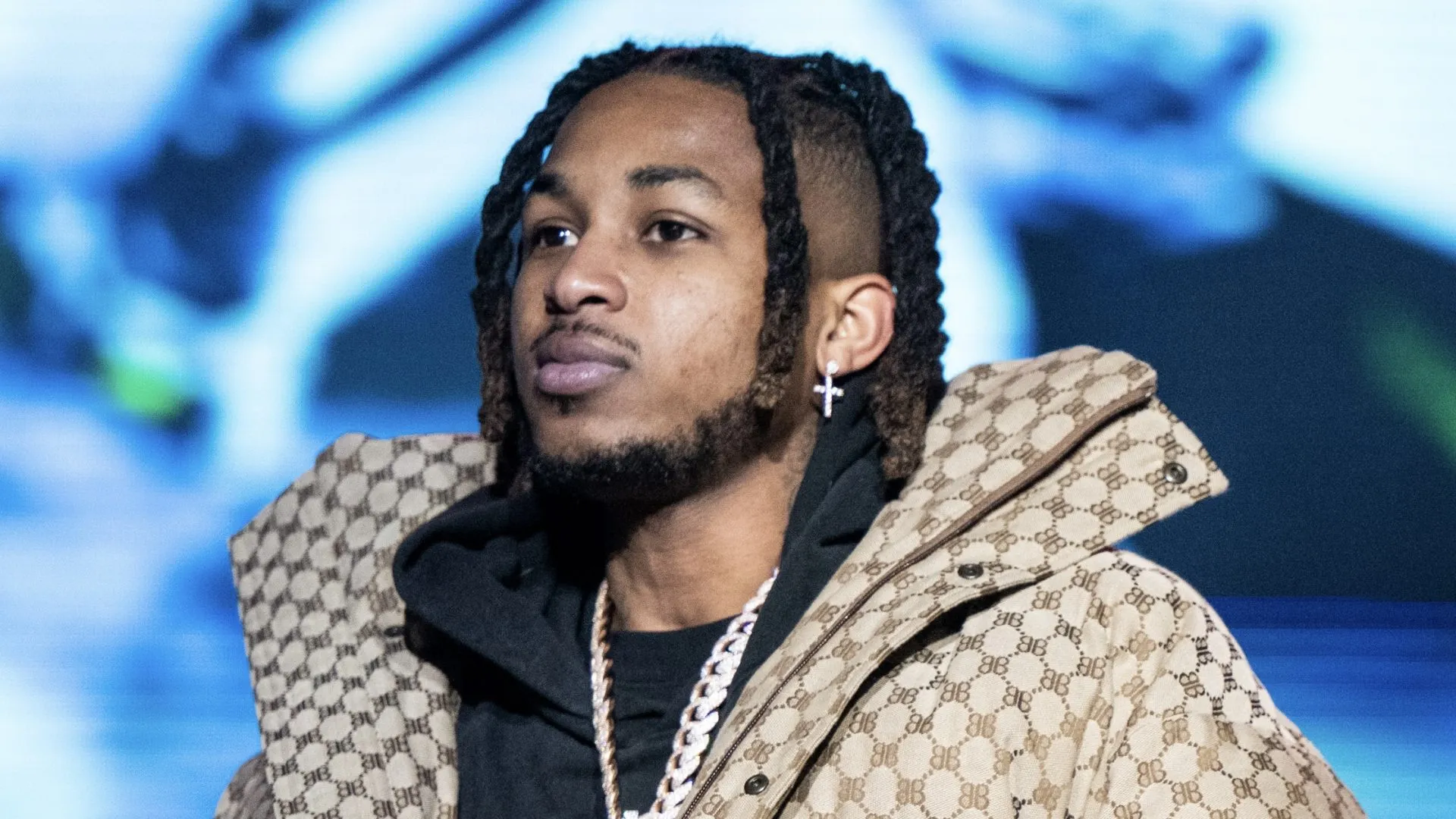
American hip-hop artist Darryl Dwayne Granberry Jr., known professionally as DDG, has sparked conversation about Western media portrayals of Nigeria after spending time in the country’s bustling commercial capital.
The rapper, who boasts millions of followers across social media platforms, used his considerable reach to push back against what he termed “fake” Western propaganda about the West African nation, arguing that his firsthand experience painted a dramatically different picture from prevailing narratives abroad.
“I honestly think America is the most dangerous country. I don’t think Nigeria is as dangerous as America—nowhere near,” DDG said in a video statement that has since circulated widely online. The 27-year-old entertainer acknowledged security concerns exist in Nigeria but drew sharp distinctions between the nature of violence in both countries.
“No doubt, there is insecurity in Nigeria. But gun violence and gangsterism are not as common in Nigeria as in America,” he continued, directly challenging assumptions many Westerners hold about safety on the African continent. His comments come at a time when Nigeria, Africa’s most populous nation, continues to grapple with various security challenges, including insurgency in the northeast and kidnapping incidents in some regions.
DDG’s intervention adds a celebrity voice to longstanding complaints from Nigerians and African diaspora communities that Western media coverage disproportionately highlights negative aspects of life on the continent while downplaying comparable or worse conditions in Western nations. The rapper encouraged his audience not to rely solely on media narratives, urging them instead to “pull up” and experience Nigeria themselves.
Beyond security concerns, DDG also addressed cultural misconceptions he encountered before his trip. He revealed he had been warned that Nigerian cuisine was unhealthy and advised to boil all drinking water—common travel advisories given to Westerners visiting developing nations. However, his experience contradicted these warnings.
“Contrary to the propaganda against Nigerian foods, I found them very healthy, especially jollof,” he said, referencing the beloved West African rice dish that has become something of a cultural ambassador for the region.
DDG’s holiday in Lagos appears to be part of a growing trend of African American entertainers reconnecting with the continent and using their platforms to reshape narratives about African nations. His comments have resonated particularly strongly with young Nigerians who frequently criticize what they view as persistently negative and often outdated Western coverage of their country.
The rapper’s observations, while anecdotal and based on a tourist’s experience in one of Nigeria’s most developed cities, have nonetheless reignited debates about media representation, the African diaspora’s relationship with the continent, and how safety and quality of life are measured and reported across different societies.
WHAT YOU SHOULD KNOW
American rapper DDG is using his platform to challenge Western media stereotypes about Nigeria after visiting Lagos. His main message: Nigeria is safer than America when it comes to gun violence and gang activity, and negative Western narratives about African nations are often exaggerated or false. He’s encouraging people to visit Nigeria and experience the reality for themselves rather than relying on biased media portrayals.
His comments reflect a broader pushback by African Americans and Africans against persistently negative Western coverage of the continent that ignores comparable or worse issues in Western countries.