Biography and Early Life
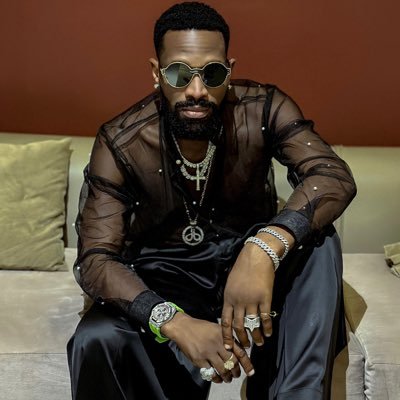
Oladapo Daniel Oyebanjo, globally recognized as D’banj (a combination of his first name “Dapo” and surname “Oyebanjo”), was born on June 9, 1980, in Zaria, Kaduna State, in northern Nigeria. He was born to Daniel Duro Oyebanjo, a military officer who commanded an artillery regiment, and Faith Olubukolola Oyebanjo, a devout church dignitary and businesswoman from Shagamu in Ogun State.
Growing up as the son of a military officer meant constant relocation across Nigeria and even internationally, exposing young D’banj to diverse cultures, languages, and musical influences that would later shape his artistic identity. His siblings include twin brothers Taiwo and Kehinde Oyebanjo, as well as Shola Oyebanjo and Femi Oyebanjo, whose tragic death would profoundly impact D’banj’s life and musical journey.
The name “D’banj” is also known by numerous nicknames that have defined different eras of his career: Koko Master (2005), Skibanj (2006), Mr. Endowed (2010), Eja Nla (Big Fish, 2012), and Banga Lee (2013). Each nickname reflected his evolving brand and musical phases.
The Tragedy That Changed Everything
At age 14, D’banj was introduced to the harmonica by his older brother, Femi Oyebanjo. This seemingly simple introduction would change D’banj’s life forever, but not in the way anyone expected. Shortly after teaching D’banj to play, Femi tragically died in a plane crash at age 17.
Devastated by his brother’s death, D’banj processed his grief through music. When Femi’s possessions were brought home, D’banj arranged them on his bed and picked up the harmonica. “I’d play it to remember him,” he later recalled. The harmonica became more than an instrument; it became D’banj’s connection to his late brother, his emotional outlet, and eventually the signature sound that would distinguish him from every other African artist.
D’banj’s incredible self-taught harmonica skills became legendary. “I play the harmonica like it was built for me,” he once said. This unique musical ability, rare in African pop music, would become his trademark and help him stand out in Nigeria’s competitive music industry.
Educational Background
Nigerian Military School (Age 11-14): Following family tradition, D’banj was enrolled in the prestigious Nigerian Military School at age eleven, where his father hoped he would embrace military life. D’banj joined the renowned drum corps of the Nigerian Army, gaining musical training that would later prove valuable. However, after three years, young D’banj resisted the military system and left, frustrating his father’s military aspirations for him.
Nigerian Navy Secondary School, Ibara, Abeokuta: After leaving Nigerian Military School, D’banj transferred to another military institution, the Nigerian Navy Secondary School in Ogun State, where he completed his secondary education while continuing to play in the school band.
Lagos State University (LASU): In 1999, D’banj enrolled at Lagos State University to study Mechanical Engineering, a practical field his parents hoped would provide stable career prospects. However, constant strikes and irregularities plaguing Nigerian universities frustrated D’banj, and he eventually withdrew without completing his degree.
By this time, D’banj’s passion for music had grown stronger than any academic or military ambitions his family held for him. His song “All Da Way” from his debut album poignantly documents his struggles for parental approval to pursue music, a battle many Nigerian artists face against families favoring “serious” professions.
The London Years and Meeting Don Jazzy
Unable to complete his degree due to university strikes, D’banj moved to London, United Kingdom, where he worked odd jobs while pursuing music. During this period, D’banj associated with Nigerian artists in the UK, including Solek, JJC, Kas, and The 419 Squad, performing as a guest artist at their shows, including WOMAD Rivermead.
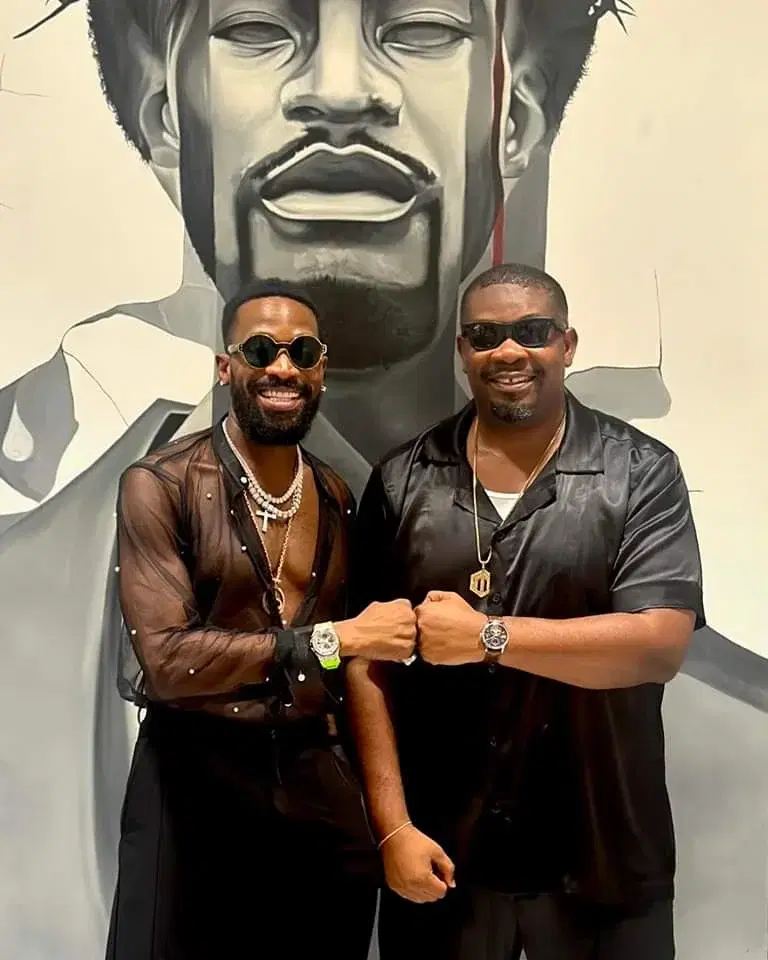
In London, D’banj met Michael Collins Ajereh (Don Jazzy), a meeting that would change both their lives and Nigerian music history. Don Jazzy was working as a security guard at McDonald’s while learning music production. The two quickly recognized their complementary talents: D’banj had charisma, star power, vocal ability, and his signature harmonica sound, while Don Jazzy possessed production genius and beat-making skills.
They formed a creative partnership, with Don Jazzy producing beats and D’banj delivering vocals and star presence. This fortuitous collaboration would birth one of Africa’s most successful musical partnerships.
Mo’ Hits Records: The Golden Era (2004-2012)
Founding Mo’ Hits
After returning to Nigeria in 2004, D’banj and Don Jazzy officially co-founded Mo’ Hits Records, a label that would become synonymous with excellence in Nigerian music. D’banj served as the label’s flagship artist and public face, while Don Jazzy was CEO and chief producer.
The label’s name, “Mo’ Hits,” reflected their ambition: to consistently produce hit records. They succeeded beyond anyone’s wildest expectations.
“No Long Thing” (2005): The Breakthrough
D’banj’s debut album “No Long Thing” was released in 2005 under Mo’ Hits Records, produced entirely by Don Jazzy. The album’s lead single “Tongolo” (also called “Tongollo”) became an instant nationwide hit, launching D’banj into mainstream stardom.
“Tongolo” introduced D’banj’s “Koko Master” persona, the ultimate male charmer, the smooth-talking ladies’ man who captivated women (whom he called “Kokolets”). The term “koko” took on various meanings in Nigerian pop culture, but primarily signified excellence, premium quality, and irresistible charm.
The album earned D’banj:
- Most Promising Male Artist at KORA All Africa Music Awards (2005)
- Best Newcomer at Channel O Music Video Awards (2006)
- Artist of the Year at Nigeria Music Awards (2006)
“Rundown Funk U Up” (2006)
D’banj’s sophomore album solidified his commercial dominance with hits including:
- “Why Me?” – The lead single that became a massive hit
- “Tongolo (Remix)” – Updating his breakthrough single
- Other tracks cementing his “Koko Master” brand
Awards from this album:
- Hottest Single of the Year (“Why Me”) at Nigerian Entertainment Awards (2007)
- Artist of the Year at Global Excellence Awards (2007)
“The Entertainer” (2008): The Masterpiece
Released in July 2008, “The Entertainer” is widely considered D’banj’s magnum opus and one of the greatest Nigerian albums ever recorded. Don Jazzy’s production reached new heights, and D’banj’s performance was electrifying.
Hit singles:
- “Gbono Feli Feli”
- “Kimon”
- “Olorun Maje”
- “Entertainer” (title track)
- “Suddenly”
- “Fall in Love”
- “Igwe”
The album earned D’banj:
- Best African Act at MTV Europe Music Awards (2007)
- Artist of the Year at the MTV Africa Music Awards (2008 and 2009)
- African Artist of the Year at Ghana Music Awards (2007)
Mo’ Hits All Stars and Collective Success
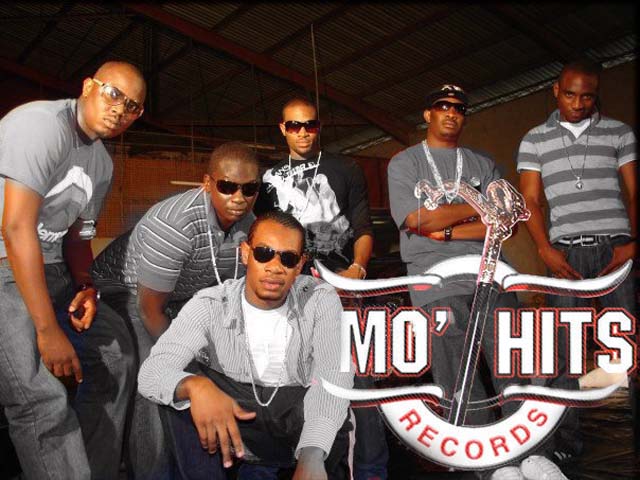
D’banj was the flagship artist of Mo’ Hits All Stars, the label’s collective group featuring:
- D’banj
- Don Jazzy (producer)
- Wande Coal
- Dr SID
- D’Prince (Don Jazzy’s brother)
- K-Switch (D’banj’s younger brother)
In December 2007, Mo’ Hits All Stars released “Curriculum Vitae”, a compilation album featuring massive hits:
- “Pere”
- “Move Your Body” (lead single)
- “Ten Ten”
- “Booty Call”
- “Ololufe”
“Curriculum Vitae” became one of Nigerian music’s most successful albums, with every track receiving heavy airplay and the album reportedly becoming Nigeria’s best-selling album of its era.
Political Campaigns and Influence
In 2007, D’banj’s single “Koko” was adopted by the People’s Democratic Party (PDP), Nigeria’s ruling party, as the campaign theme for the 2007 general elections, demonstrating his cultural penetration and political influence.
In 2010, D’banj openly campaigned for presidential candidate Goodluck Jonathan, even remixing his 2009 hit “Scape Goat” into a campaign anthem. Reports suggest D’banj and Don Jazzy received ₦40 million for this political service, a controversial move that drew criticism from some fans but demonstrated D’banj’s commercial savvy.
International Collaborations and G.O.O.D Music (2011)
D’banj’s international breakthrough came through a chance encounter with Kanye West on a plane ride, a meeting that would change African music’s global trajectory.
On June 9, 2011 (his birthday), D’banj announced via Twitter (@iamdbanj): “Just like yesterday, my brother and I did Tongolo… now signed to Kanye West’s G.O.O.D Music!”
This signing was monumental:
- First Nigerian artist signed to a major American label of this caliber
- Validation of Afrobeats on the global stage
- Opening doors for future African artists internationally
D’banj called it “the best birthday gift” of his life.
Through G.O.O.D Music, D’banj gained:
- Signing to Mercury Records in the UK
- Distribution through Sony Music Entertainment
- Collaborations with Kanye West, Jay-Z, Snoop Dogg, Big Sean, Pusha T, and others
“Oliver Twist” (2011): Global Domination
Following his G.O.O.D Music signing, D’banj released “Oliver Twist” in 2011, the song that would make him an international superstar.
Inspired by Charles Dickens’ orphan “Oliver Twist,” the infectious danceable single:
- Topped African charts for months
- Debuted at #9 on the UK Top 10 National Charts
- Reached #2 on UK R&B Chart
- Sold over 11 million records worldwide
- Accumulated over 25 million YouTube views
- Sparked a viral dance competition with fan videos
“Oliver Twist” proved that African artists could achieve mainstream international chart success without compromising their sound. The song’s success opened doors for the Afrobeats global explosion that followed in the 2010s and 2020s.
International Performances
D’banj performed on some of the world’s biggest stages:
- Hackney Weekend (2012), celebrating the London Olympics, headlined by Jay-Z and Rihanna
- SCALA London with Rita Ora (August 2012)
- O2 Arena, London, for Koko Concert
- Performances across Europe, America, and Africa
Mo’ Hits Breakup (March 2012)
In March 2012, after eight years of unprecedented success, Mo’ Hits Records officially disbanded. The breakup between D’banj and Don Jazzy shocked the Nigerian music industry.
Causes included:
- Creative differences and diverging visions
- D’banj’s focus on an international career vs. Don Jazzy’s preference for building the Nigerian music industry
- Management disputes
- Financial disagreements
- Personal tensions that had built over the years
The split was acrimonious, with both parties making public statements. Fans took sides, with debates raging about who contributed more to Mo’ Hits’ success. The breakup ended one of Nigerian music’s most successful partnerships but opened new chapters for both artists.
DB Records and Post-Mo’ Hits Career (2012-Present)
Founding DB Records
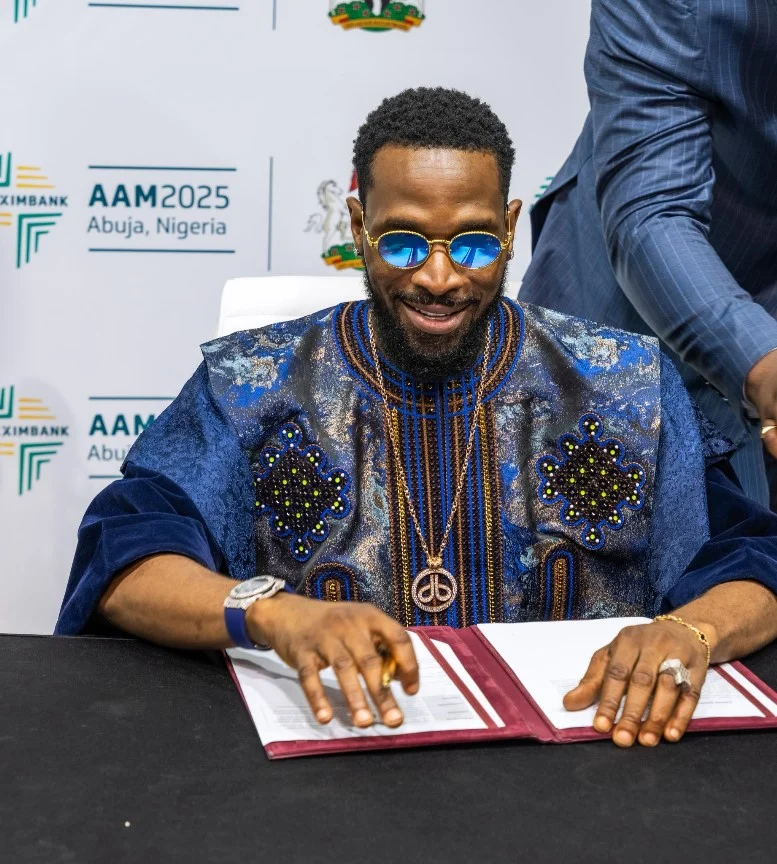
After the Mo’ Hits breakup, D’banj founded DB Records (later DKM Media), signing:
- Kayswitch (his younger brother)
- Producers Jaysleek and Deevee
- Other artists, including rappers MossKriss and Ralph Kriss
- Actress Tonto Dikeh (briefly)
- Ebeneztizzy
While DB Records never achieved Mo’ Hits’ collective success, D’banj maintained his solo career momentum through his G.O.O.D Music/Mercury Records deals.
“King Don Come” (2014)
In August 2014, D’banj released his album “King Don Come”, featuring international collaborations:
- Gucci Mane
- Wande Coal (his former Mo’ Hits labelmate, signifying some reconciliation)
- Harry Songs
- Bucie
- Busiswa
Singles included:
- “It’s Not A Lie” (featuring Harrysong)
- “El Chapo”
- “Oliver Twist” (album version)
Other Notable Singles
Throughout the 2010s and 2020s, D’banj released numerous singles:
- “Bother You” (2013) – Inspired by the film “Half of a Yellow Sun.”
- “Emergency” (2016) featuring Phyno
- “Shoulda” (2018)
- “Shake It” (2021) featuring Tiwa Savage
- “Ikebe” album announcements (repeatedly promised but delayed)
While post-Mo’ Hits D’banj never quite recaptured his 2005-2012 peak, he remained relevant and continued performing, recording, and maintaining his star status.
Personal Life
Marriage and Family Tragedy
On June 2, 2016, D’banj secretly married Lineo Didi Kilgrow (also known as Didi Lineo) in low-key ceremonies in both Lagos and Abuja. The secret wedding shocked fans who had expected D’banj to marry actress Genevieve Nnaji, whom he had publicly eulogized and even called his “dream wife” in interviews, quoting biblical verses about her being a “treasure.”
In May 2017, D’banj joyfully announced the birth of their son, Daniel Oyebanjo III, named after D’banj’s father, continuing the family naming tradition.
The Drowning Tragedy (June 2018)
On June 24, 2018, tragedy struck when Daniel Oyebanjo III drowned in the swimming pool at D’banj’s Ikoyi, Lagos mansion. The one-year-old’s death devastated D’banj and his wife, plunging the couple and the Nigerian entertainment industry into mourning.
D’banj later revealed he was traveling for a performance when the accident occurred, adding layers of guilt and pain to an already unbearable loss. The tragedy forced D’banj into a period of reflection and spiritual reckoning.
Faith and Restoration
Following his son’s death, D’banj underwent a spiritual transformation, becoming born-again and deepening his Christian faith. He later testified: “Three years ago, I lost my first son. But the Lord restored me… When I said Jesus is the Koko, I meant it.”
D’banj and Didi welcomed subsequent children, including son Zane Oyebanjo. D’banj has spoken about God’s restoration, saying: “God has replenished me by blessing me with not one but two children.”
The Rape Allegation (June 2020)
In June 2020, after D’banj posted “say no to rape” on social media, Seyitan Babatayo accused him of raping her in 2018, calling out his “hypocrisy.”
Shortly after the accusation:
- Seyitan went missing for two days
- Posts appeared on her social media claiming the allegations were a “publicity stunt.
- According to The Guardian and NGO Stand to End Rape (STER), Seyitan was found and revealed that she’d been abducted by Nigerian police.
- She claimed police turned her over to D’banj’s management team, who co-opted her social media and made the retraction posts.
D’banj vehemently denied the accusations, calling them “false allegations and lies from the pit of hell.”
The case sparked intense debate about:
- Sexual violence in Nigerian entertainment
- Abuse of police power
- Celebrity privilege
- Victim intimidation
The legal proceedings’ outcome remains unclear, but the controversy significantly damaged D’banj’s reputation, particularly among younger Nigerians and women’s rights advocates.
Business Ventures and Entrepreneurship
Koko Foundation for Youth and Peace Development
D’banj founded the Koko Foundation, focusing on youth empowerment and peace initiatives across Africa.
Failed Business Ventures
Koko Mobile: D’banj launched a mobile phone line that ultimately failed commercially.
Koko Garri: Attempted to enter the food processing market with garri (cassava) products, which also failed to achieve commercial success.
These failures demonstrated that celebrity status doesn’t automatically translate to business success, though D’banj’s willingness to take entrepreneurial risks showed ambition beyond music.
Endorsement Deals
D’banj secured lucrative endorsements:
- Globacom (two separate deals: 2008-2010 and renewed in 2013) – valued at approximately $442,000
- Power Fist energy drink
- Virgin Colours soft drink
- Various jewelry companies
United Nations Youth Ambassador for Peace
Due to his influence, awards, and continuing relevance, D’banj became the first Nigerian artist named United Nations Youth Ambassador for Peace, recognizing his cultural impact and potential for positive social influence.
Performance Fees and Earnings
At his peak, D’banj commanded:
- $31,000-$44,200 for local performances
- Significantly higher fees for international shows
- Regular Saturday night performances generate substantial income
These fees placed him among Africa’s highest-earning live performers and explained his consistent ranking among the continent’s wealthiest artists.
Awards and Recognition
D’banj’s trophy cabinet includes:
- Best African Act – MTV Europe Music Awards (2007)
- Artist of the Year – MTV Africa Music Awards (2008, 2009)
- Best International Act: Africa – BET Awards (2011)
- Best-selling African Artist – World Music Awards (2014)
- Evolution Award – MTV Africa Music Awards (2015)
- KORA Legend (November 17, 2023)
- Numerous Channel O, Headies, and other African music awards
Net Worth and Financial Status
Various sources estimate D’banj’s net worth between $10-20 million (as of 2025), accumulated through:
- Music sales and streaming
- Live performances
- Endorsement deals
- Business ventures
- International collaborations
Forbes Africa and Channel O ranked him the fourth richest African artist in September 2013, though his financial position has likely fluctuated since, particularly following the Mo’ Hits breakup and changing music industry economics.
Legacy and Impact
D’banj’s legacy in African music is profound:
As Afrobeats Pioneer
- First African artist to achieve major UK chart success with “Oliver Twist.”
- Opened doors for Afrobeats globally, paving the way for Wizkid, Davido, Burna Boy, and others
- Proved African artists could compete internationally without compromising their sound
- Pioneered the harmonica in Afropop, creating a unique signature sound
As Cultural Icon
- Defined 2000s-2010s Nigerian pop culture through the “Koko Master” persona
- Influenced fashion, language, and lifestyle across West Africa
- Made “koko” a cultural phenomenon with multiple meanings and applications
- Bridged Nigerian music to international markets through strategic collaborations
As Performer
- Legendary live shows, including annual Koko Concerts
- Charismatic stage presence that captivated audiences worldwide
- Consistent hitmaker across multiple albums and eras
As Businessman
- Co-founded Mo’ Hits Records, one of Nigeria’s most successful labels
- Founded DB Records/DKM Media
- Demonstrated entrepreneurial ambition, though not all ventures succeeded
Current Status and Reflection
As of 2025, at 44 years old, D’banj remains active in music, though no longer at his 2005-2012 commercial peak. He continues:
- Recording and releasing music
- Performing at concerts and events
- Managing DB Records
- Maintaining celebrity status
- Raising his family with emphasis on faith and restoration after tragedy
His journey from military school rebel to international superstar, from the tragic loss of his brother, who gave him the harmonica, to the devastating loss of his own son, from Mo’ Hits glory to solo navigation, encapsulates both triumph and tragedy. His story reminds us that even the most successful lives contain profound pain, that fame and wealth cannot shield us from grief, and that resilience and faith can provide paths through darkness.
Whether remembered primarily as the “Koko Master” who dominated Nigerian music for a decade, the artist who brought “Oliver Twist” to UK charts, or the survivor who rebuilt after personal and professional losses, D’banj’s place in African music history is secure.
Oladapo Daniel Oyebanjo (D’banj) transformed from the son of a military officer who resisted his father’s plans to become the “Koko Master” who conquered African music and charted internationally. His harmonica, taught to him by a brother who tragically died young, became the sound that distinguished him from every other artist. His partnership with Don Jazzy created Mo’ Hits Records, one of the most successful African music labels ever. His signing to Kanye West’s G.O.O.D. Music and “Oliver Twist’s” UK Top 10 success proved African artists belonged on global stages. Yet his journey also includes profound tragedy, losing his brother, losing his son, and facing serious allegations, reminding us that even legends are human. His legacy extends beyond hit songs to opening doors, proving possibilities, and demonstrating that African music deserves global recognition. The harmonica that connected him to his lost brother became the instrument that introduced him to the world, a poignant reminder that sometimes our deepest pain births our greatest gifts.