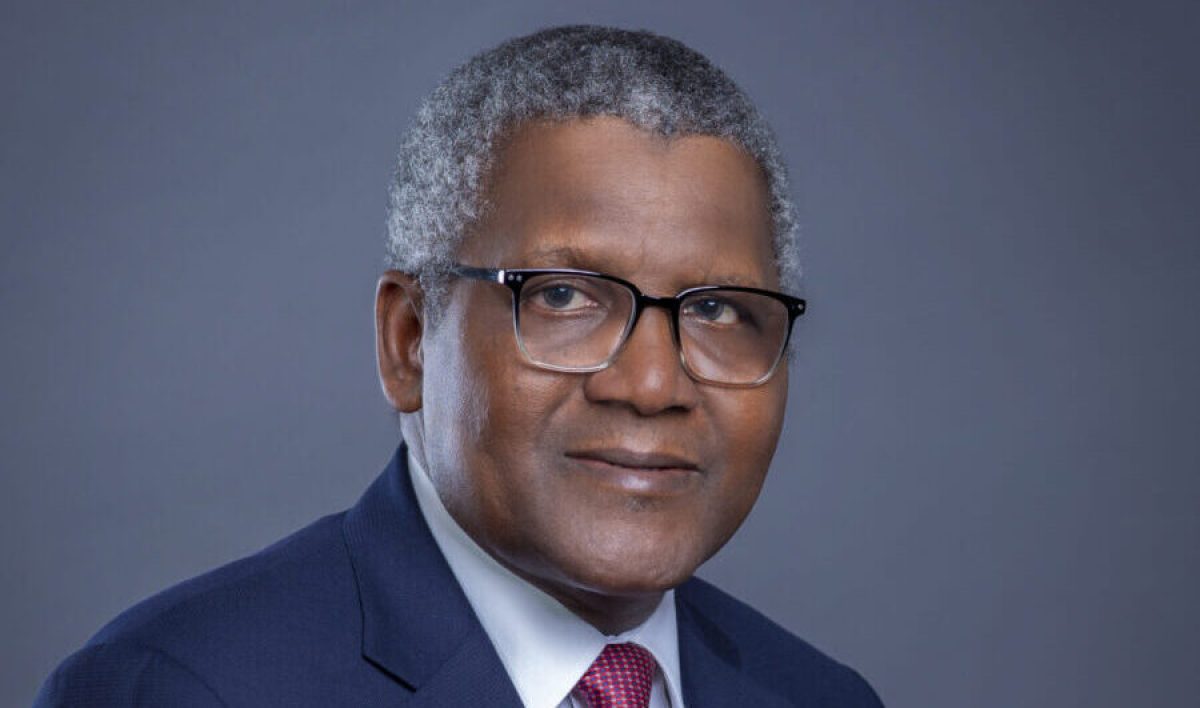
In a damning assessment of Nigeria’s petroleum sector, billionaire industrialist Aliko Dangote has declared that the country’s three state-owned refineries are beyond salvation, despite consuming a staggering $18 billion in public funds over nearly two decades.
Speaking to members of the Global CEO Africa delegation from Lagos Business School during a tour of his sprawling Dangote Petroleum Refinery in Lekki, Africa’s richest man painted a stark picture of institutional failure and mismanagement that has plagued Nigeria’s oil refining capacity for years.
The roots of this crisis trace back to 2007, when Dangote initially acquired the Port Harcourt, Warri, and Kaduna refineries under the administration of President Olusegun Obasanjo. However, the deal unraveled within months when Obasanjo’s successor, the late President Umaru Yar’Adua, bowed to pressure from refinery managers who claimed the facilities had been sold below cost as a “parting gift.”
“The managing director at that time convinced Yar’adua that the refineries would work,” Dangote recounted, his voice carrying the weight of nearly two decades of vindication. “They said they just gave them to us as a parting gift or something. And as of today, they have spent about $18 billion on those refineries, and they are still not working.”
Dangote’s analogy for the refineries’ predicament is both vivid and telling. He compared attempts to rehabilitate the aging facilities to “trying to modernize a car that was built 40 years ago, when technology and everything have changed.” The businessman argued that even with new engines, the infrastructure simply cannot accommodate modern refining technology.
This assessment gains particular weight when contrasted with Dangote’s facility, which boasts a 650,000-barrel-per-day capacity and dedicates over 50 percent of its output to Premium Motor Spirit (petrol)—more than double the 22 percent allocation typical of government refineries.
The recent history of Nigeria’s refineries reads like a chronicle of false starts and dashed hopes. The 60,000-barrels-per-day Port Harcourt refinery was shuttered just six months after being declared operational in late 2024. The Warri refinery met a similar fate, closing one month after former NNPC Group Managing Director Mele Kyari’s December inauguration ceremony.
Financial records paint an even grimmer picture. The federal government approved $1.4 billion for Port Harcourt’s rehabilitation in 2021, with $897 million earmarked for Warri and $586 million for Kaduna. Additional reports indicate that ₦100 billion was spent on refinery rehabilitation in 2021 alone, with monthly expenditures of ₦8.33 billion. Between 2013 and 2017, $396.33 million was consumed in turnaround maintenance projects.
Dangote’s skepticism finds an unlikely ally in former President Obasanjo, who has repeatedly warned about the refineries’ fundamental problems. In a particularly candid moment, Obasanjo revealed that international oil companies, including Shell, had refused to operate the facilities when he requested their involvement.
“NNPC knew that they could not do it, but they knew they could eat and carry on with the corruption that was going on in NNPC,” Obasanjo stated, adding that in “a civilized society, those people should be in jail.”
The former president’s frustration boiled over into a Yoruba proverb, comparing the situation to a farmer who plants 100 heaps of yams but claims to have planted 200: “After he has harvested 100 heaps of yams, he will also have 100 heaps of lies.”
The Manufacturers Association of Nigeria has joined the chorus of criticism, describing the refineries as “a drain on the country’s economy” and calling for their immediate sale. Crude refiners have gone further, advising the government to sell the facilities as scrap and redirect proceeds toward modular refineries.
This growing consensus reflects a broader recognition that Nigeria’s refining strategy has failed spectacularly, leaving the country dependent on petroleum product imports despite being one of Africa’s largest oil producers.
Against this backdrop of institutional failure, Dangote’s refinery stands as both a rebuke and a beacon of possibility. The facility represents what focused private investment and modern technology can achieve, potentially transforming Nigeria from a petroleum product importer to a regional hub for refined products.
However, the contrast also highlights the opportunity cost of the government’s persistent attempts to revive obsolete infrastructure. The $18 billion consumed by the state refineries could have funded multiple modern facilities or supported the development of Nigeria’s downstream petroleum sector.
As Nigeria grapples with fuel shortages and import dependency, the refinery crisis has become a symbol of broader governance challenges. The inability to reach NNPC officials for comment, with the organization currently lacking a spokesperson and maintaining unreachable contact lines, only reinforces perceptions of institutional dysfunction.
The question now is whether Nigeria’s leadership will heed the warnings of Dangote, Obasanjo, and industry experts or continue pouring resources into what increasingly appears to be a futile endeavor. With Dangote’s facility demonstrating the potential for successful refining operations in Nigeria, the contrast between private efficiency and public failure has never been starker.
For a nation that has long prided itself on its oil wealth, the refinery crisis represents more than an industrial failure—it embodies the cost of poor governance, corruption, and the resistance to acknowledging uncomfortable truths about institutional capacity.
WHAT YOU SHOULD KNOW
Nigeria has essentially burned through $18 billion trying to fix three obsolete state-owned refineries over nearly two decades, with nothing to show for it. Billionaire Aliko Dangote, who was blocked from buying these same refineries in 2007, now says they’re beyond repair, comparing the effort to “modernizing a 40-year-old car with today’s technology.”