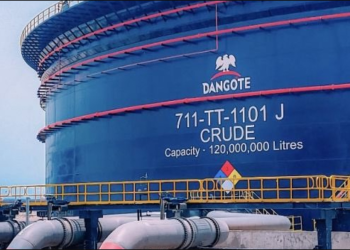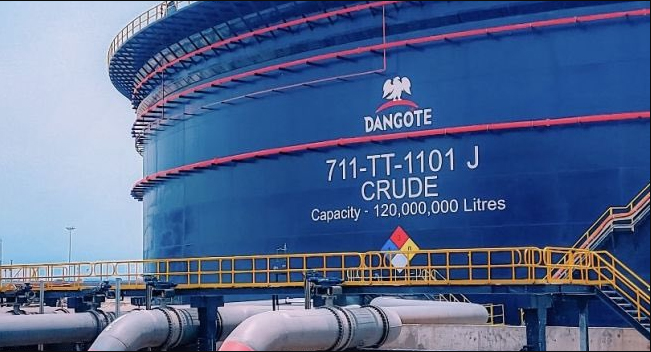
In a strategic shift that could reshape Nigeria’s energy sector landscape, billionaire industrialist Aliko Dangote has confirmed plans to list shares of his $20 billion Dangote Petroleum Refinery on the Nigerian Exchange Limited within the next twelve months.
Speaking in an exclusive interview with S&P Global, the refinery’s chairman revealed that between five and 10 percent of the company’s equity would be offered to public investors, mirroring the successful listing strategy previously employed by other Dangote Group entities, including Dangote Cement and Dangote Sugar Refinery.
Strategic Dilution to Fund Growth
The planned share offering represents a significant departure from the group’s traditional ownership model. “We don’t want to keep more than 65%-70%,” Dangote stated, signaling the conglomerate’s willingness to cede substantial control in exchange for capital and strategic partnerships. The shares will be released gradually, with timing and volume dependent on prevailing market conditions and investor appetite.
This measured approach suggests management is keen to maximize valuation while maintaining orderly market conditions—a particularly important consideration given the Nigerian Exchange’s relatively shallow liquidity compared to international bourses.
Middle East Investment on the Horizon
Beyond the domestic listing, Dangote disclosed that his group is actively pursuing partnerships with investors from the Middle East to finance both the refinery’s expansion and a new petrochemicals venture in China. This marks a notable pivot in the group’s capital strategy.
“Our business concept is going to change,” Dangote explained. “Now, instead of being 100 percent Dangote-owned, we’ll have other partners.” The statement underscores a pragmatic recognition that the scale of investments required for the refinery’s ambitious growth trajectory may exceed even the considerable resources of Africa’s wealthiest individual, whose net worth Forbes estimates at approximately $11 billion.
NNPC Stake Under Review
Adding another layer of complexity to the ownership structure, Dangote hinted at potential changes to the Nigerian National Petroleum Company Limited’s current 7.2 percent stake in the facility. The state oil company had previously scaled back from a larger initial commitment, but discussions may be reopened once the refinery demonstrates its full operational capabilities.
“I want to demonstrate what this refinery can do, then we can sit down and talk,” Dangote said, suggesting confidence that proven performance metrics will strengthen his negotiating position with the national oil company.
Capacity Expansion: From Regional Player to Global Leader
Operationally, the refinery—which commenced commercial production in 2024—is already ramping up capacity. Current throughput stands at 650,000 barrels per day, with plans to reach 700,000 bpd by year’s end. However, Dangote’s long-term vision is far more ambitious: expanding capacity to 1.4 million bpd, which would surpass India’s Reliance Industries Jamnagar refinery, currently the world’s largest at 1.36 million bpd.
If realized, this expansion would position the Lagos-based facility as the globe’s premier single-location refining complex and dramatically alter Nigeria’s position in regional and global petroleum markets. For decades, Africa’s largest oil producer has paradoxically relied on imported refined products due to chronic underinvestment in domestic refining infrastructure.
Diversification into Petrochemicals
Beyond traditional refining operations, Dangote outlined plans to significantly expand the facility’s petrochemical capabilities. Polypropylene production is slated to increase from one million to 1.5 million metric tons annually, while new production lines for base oils and linear alkylbenzene are in development.
This vertical integration strategy would enable the complex to capture higher-margin downstream products, reducing exposure to volatile crude oil spreads while meeting growing regional demand for plastics, lubricants, and industrial chemicals.
Maintenance Window Planned
Addressing operational challenges, Dangote acknowledged that while most technical issues encountered during the start-up phase have been resolved, a one-month shutdown may be necessary for final adjustments. However, management plans to schedule this maintenance window strategically to avoid the year-end period when fuel demand traditionally surges.
“We have resolved most, not all, but most of the problems. And I think we’re looking for a window when we shut down for another month,” he stated, projecting transparency about the operational realities of bringing such a massive industrial complex online.
Market Implications
The planned listing could provide Nigerian retail and institutional investors with rare access to equity in what is arguably the continent’s most significant energy infrastructure project. However, questions remain about valuation methodology, the refinery’s profitability trajectory, and how minority shareholders will be protected given the controlling stake retained by the Dangote Group.
Energy analysts will be watching closely to see whether the refinery can achieve its ambitious production targets while navigating Nigeria’s complex regulatory environment, infrastructure challenges, and the ongoing transition toward renewable energy globally.
For now, Dangote’s announcement signals confidence that his signature project—years in the making and repeatedly delayed—is finally positioned to reshape Nigeria’s energy independence and potentially transform regional petroleum markets across West Africa.
WHAT YOU SHOULD KNOW
Aliko Dangote is opening up his $20 billion refinery to outside investors for the first time, planning to sell 5-10% of shares on the Nigerian stock exchange within a year while pursuing Middle East partnerships. The refinery, which started operations in 2024, aims to more than double its current 650,000 barrels-per-day capacity to 1.4 million bpd—making it the world’s largest.
This move marks a fundamental shift from Dangote’s traditional 100% ownership model to a partnership-driven approach, positioning the facility to end Nigeria’s decades-long dependence on imported fuel while capturing Africa’s growing petrochemicals market. The NNPC may also increase its current 7.2% stake once the refinery proves its full capabilities.